ArcelorMittal: behind ‘French made’ steel, Liberia’s stolen land
ArcelorMittal: behind ‘French made’ steel, Liberia’s stolen land
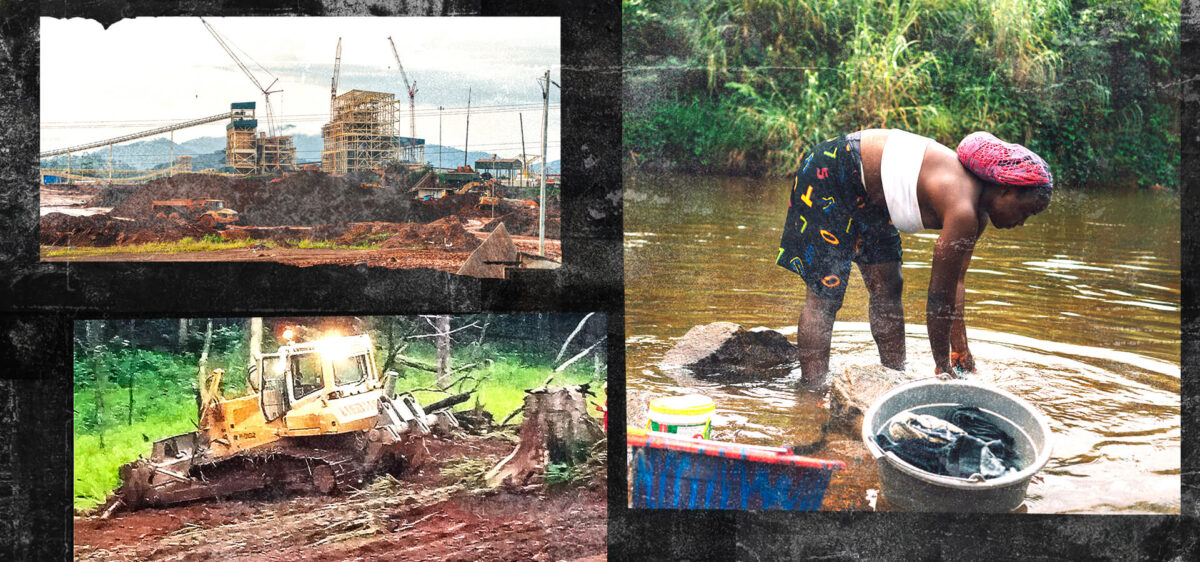
To make steel in Dunkirk and Fos-sur-Mer, ArcelorMittal has been mining iron ore deposits in Liberia. By monopolising agricultural land and contaminating water resources, the company endangers the lives of thousands of people in the West African country. Revelations on the steel world leader’s postcolonial practices contributing to climate change.
Promises only bind those who believe in them, and this has not escaped ArcelorMittal. For several years, the steel multinational has pledged to achieve carbon neutrality in 2050. This is an emergency: with 98 million tonnes of CO2 released into the atmosphere last year, ArcelorMittal is one of the main contributors to the climate crisis on the planet. Its steel works in France, located in Dunkirk (north) and Fos-sur-Mer (south), are the two biggest polluters in the country: they release 15% of the industry’s greenhouse gases.
In spite of the climate emergency, ArcelorMittal has suspended or cancelled as many as seven projects that were supposed to decarbonise its steel production in Europe. This turnaround is as harmful for the climate as it is for the communities bearing the brunt of this fanatic extractivism, as revealed by Disclose’s latest investigation on the raw materials feeding the factories of France’s top polluter.
ArcelorMittal’s steel is ubiquitous: in cars (including the latest Renault and Peugeot models), Coca-Cola and Heineken cans as well as Miele and Samsung washing machines. To produce steel, the multinational preys upon two essential components, carbon and iron ore, and this fossil postcolonialism involves Africa, among other continents. In April 2026, Disclose revealed that some of ArcelorMittal’s coal burned in France comes from a mine in Mozambique, where fumes poison locals. Regarding iron ore, we have discovered that the steelmaking company gets huge supplies from Liberia, where half the population lives below the poverty line.
In the small West African country, ArcelorMittal has indulged in the postcolonial predation of resources, claiming mining, railway and port infrastructures. According to unpublished documents and a score of testimonies from locals, indigenous communities are paying the price for this iron ore rush: close to a thousand farmers have had their land grabbed by ArcelorMittal, which is also accused of poisoning rivers and sources of drinking water, all for the sake of its factories in France. With 12.7 million tonnes shipped between January 2020 and August 2026, mainland France is the top destination for Liberian iron ore, according to exclusive data that trade intelligence company Kpler provided to Disclose.
Bulldozers rip apart indigenous land
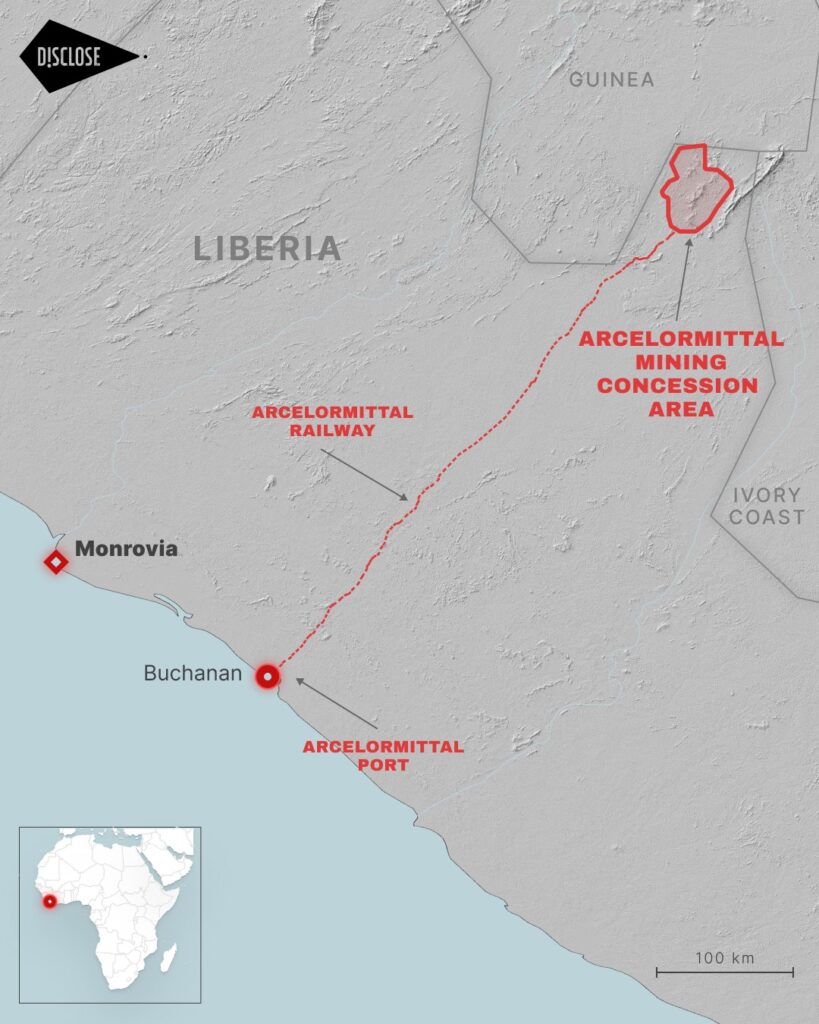
ArcelorMittal started operating in Liberia in 2005. The country was still reeling following a civil war that left more than 200,000 dead. On the basis of a very unbalanced deal with the government of the day, the multinational set up business in the north of the country on a mining concession five times the size of Paris. ArcelorMittal also grabbed two assets that were the property of the Liberian state, the railway connecting the mines and the Atlantic Ocean, and the port of Buchanan, from which cargo boats leave for France. According to the agreement, which has since been extended and runs until 2050, a 15% share of the mines is owned by the state while ArcelorMittal has claimed an 85% share.
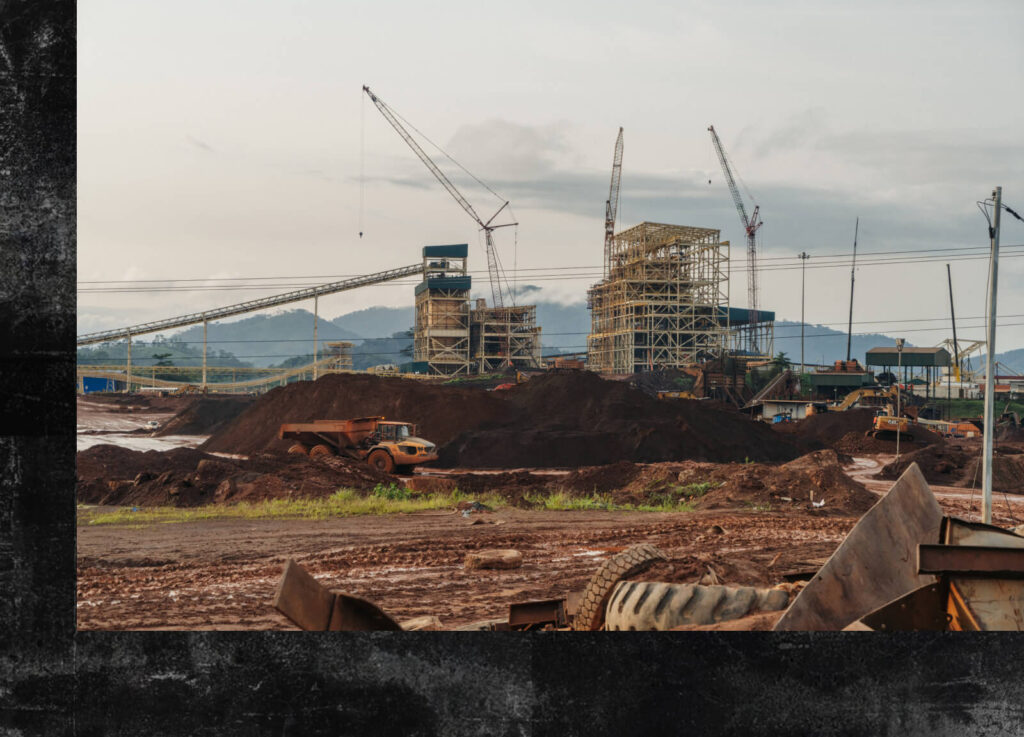
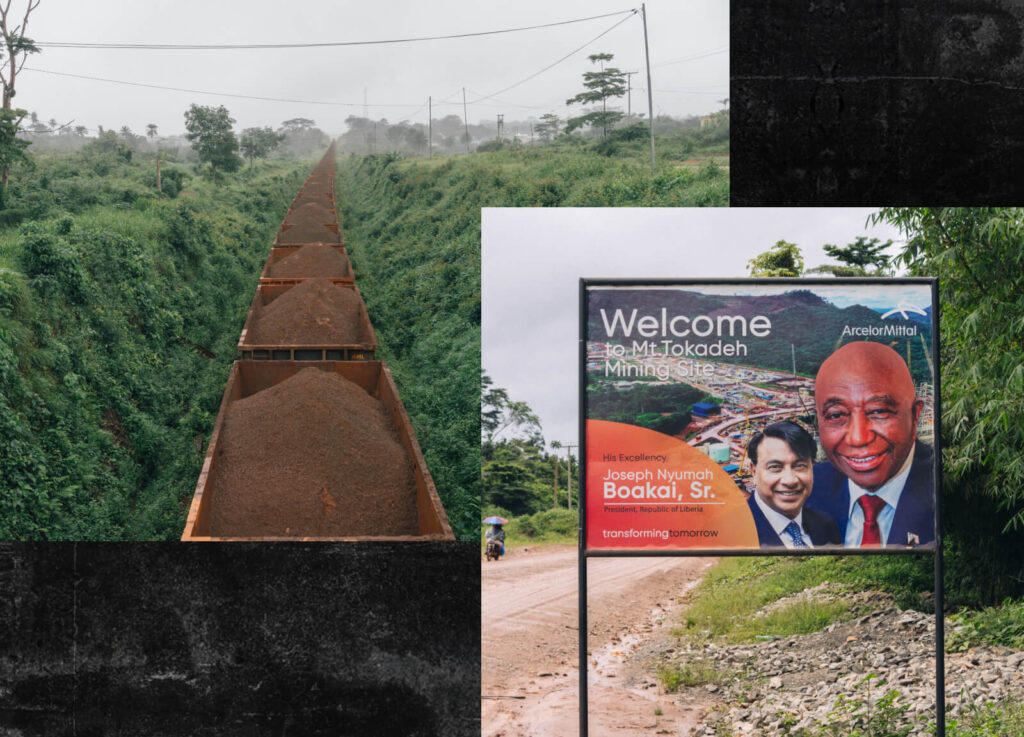
Bulldozers now run at full capacity. Blasting to loosen rock can be heard deep in the jungle, as observed by Disclose. ArcelorMittal is expected to have exported 18 million tonnes of iron ore this year, a 57% increase on last year. In return for its mining operations in the country, the group claims that it paid the Liberian state close to $28m in 2025. A win-win partnership, according to the billboards that can be seen all over the mining concession. The multinational’s executive chairman, Lakshmi Mittal, is all smiles next to President Joseph Boakai.
The tragedy experienced by thousands of locals in this farming region, where the Mano and Gio indigenous communities are in a majority, is in stark contrast to this success story, as shown by the testimony of Dada Konkah, a farmer in Gbarpa, at the foothills of two mountains mined by ArcelorMittal. In March 2022, while he was away for a few days, the excavators of a subcontractor used by ArcelorMittal tore to pieces a large part of his rubber, cacao and avocado crops. Neither the steel giant nor its local service providers bothered to inform him, which is illegal as the law in Liberia makes provision for the “free, prior and informed consent” of land owners, and guarantees “equitable” and “timely” financial compensation. Three months later, the group pledged to compensate his losses — close to 600 trees — in accordance with a Ministry of agriculture scale. The farmer was eventually paid a paltry $9,000. He had expected double that amount.
“I have three children. How are you expected to feed your children?”
Ernest Belleh Dolo, Gbarpa resident
“I was greatly cheated in the compensation process,” says Dada Konkah. Not only did ArcelorMittal clear his fields in early 2022, but the multinational flooded them two years later after building a dam that was supposed to hold back its wash waters but which, it turns out, was badly designed.
Since then, the plants that survived have been floating in brownish water. “I am really affected. I no longer have access to my land,” he says. After he aired his grievances, the multinational wrote to him in January 2024 that he would not receive compensation for the destruction of his crops.
Disclose spoke to six people with stories similar to Dada Konkah’s between August 2024 and September 2025. They said ArcelorMittal employees had barged into their fields to take stock of crops and were soon followed by “yellow machines” crushing vegetation and regrading the ground to build a road, a dam or a waste landfill facility. Ancestral land wiped off the map, without notice. “My land was destroyed over the space of two months,” says Ernest Belleh Dolo, another Gbarpa resident. “I have three children. How are you expected to feed your children? Since there is no money at the moment, the children had to drop out of school.” Here, villagers farm to feed their families but also to generate the largest part of their income.
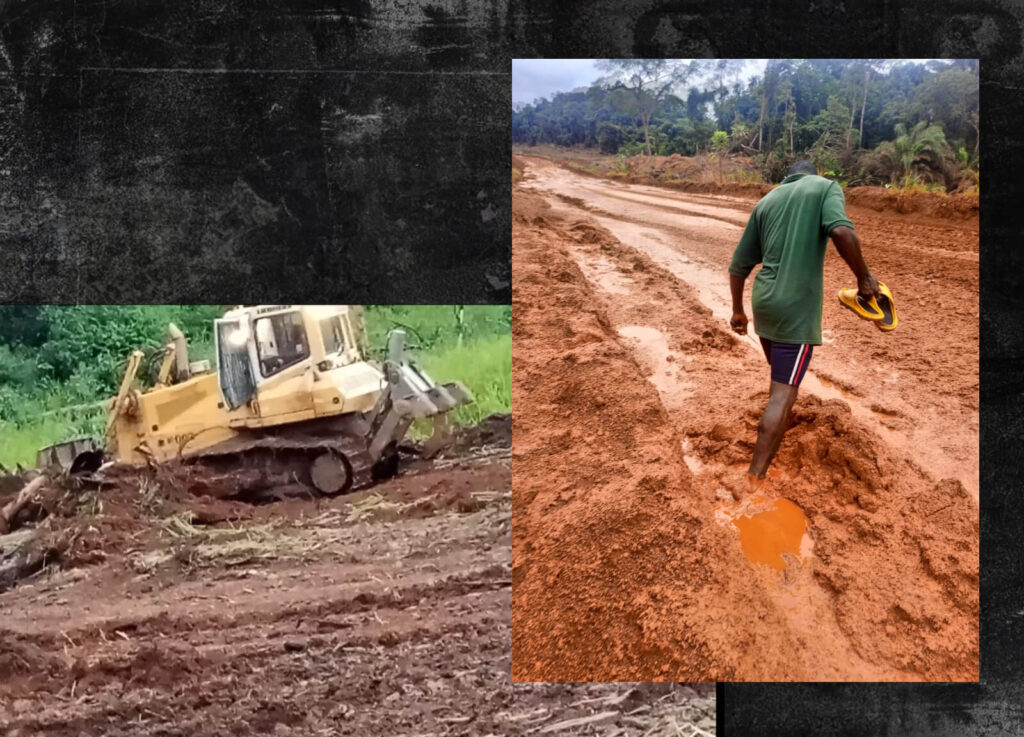
ArcelorMittal has acknowledged that “22.1% of agricultural land” that have been either destroyed, either made inaccessible because of its operations, have led to compensation. This is confirmed by a letter the company sent to local authorities in March 2026 and seen by Disclose. Two months later, mediators appointed by the Liberian government worked out that 694 farmers were still waiting to be compensated. Another 160 farmers in the concession have not been taken into account by the authorities. To this day, they have not been indemnified.
The total sum the aggrieved farmers are asking for — 4 million dollars, or about $5,400 per person — is, however, just a tiny drop in the ocean compared with the multinational’s $3bn in profits. But ArcelorMittal believes it has paid its dues. Its senior management told Disclose that “those who needed to be compensated have been”. They insist that ArcelorMittal Liberia “does not authorise land clearing activities outside of its established land access, consultation, compensation and permitting processes, and any allegation that these requirements were not followed is taken seriously and is subject to review”.
“There will be nowhere in Europe that you will give your mineral resources to expats in which your people don’t benefit,” Liberian Senator Crayton O. Duncan told Disclose. He is one of the few members of parliament who abstained from voting on the extension of ArcelorMittal’s concession. The survival of these residents, not just their livelihood, is now at stake.
Heavy metals in wells and rivers
Indeed, another evil has been affecting people living near the mines for months: the chemical contamination of water. In photos and videos shot by residents between September 2024 and March 2026, the rivers Gba and Velee, which flow near the extraction site, have turned a murky orange. A dead fish and dying plants can also be seen.
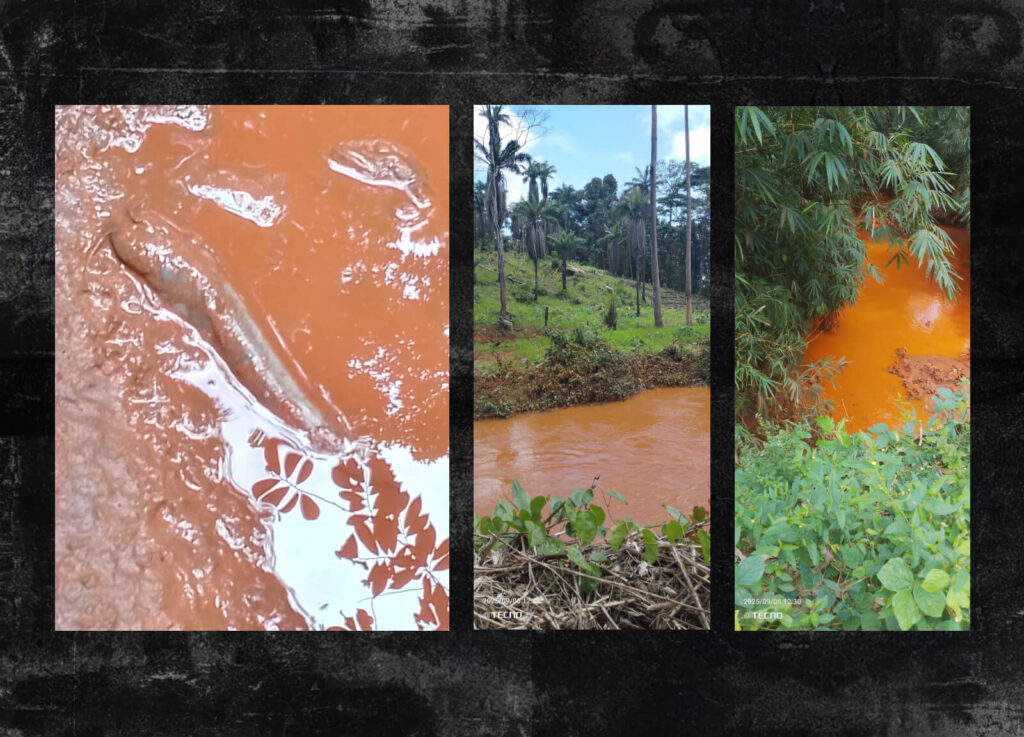
Alfred Guane is a farmer in the village of Bonla, about one km upstream. “We can no longer grow vegetables along the river banks. Soon we will produce zero,” he says. Like many of his neighbours, he had to resign himself to renting a plot of land away from the rivers.
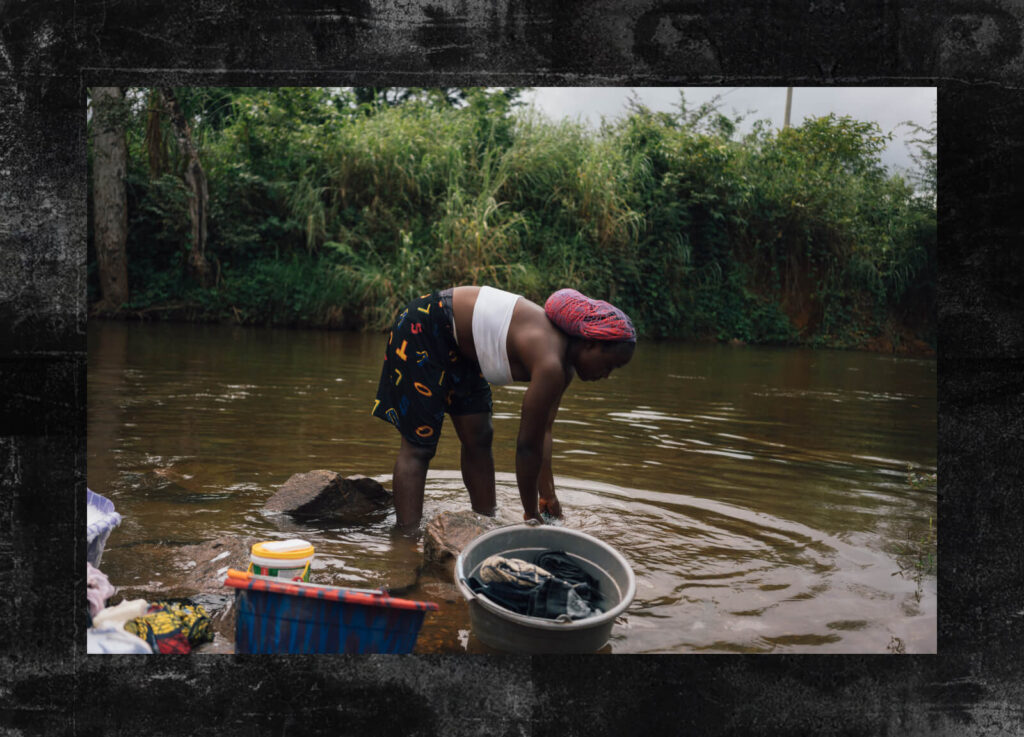
In Nimba County, water is used to water crops but people also drink it, use it to wash clothes and dishes, to bathe… Some 15 km south of Bonla, in the village of Zolowee, residents have stopped drinking water from streams that they had used since time immemorial. Meanwhile, “ArcelorMittal brings drinking water from [the capital] Monrovia for their staff,” seethes Roland S. Dolo, the village chief.
The scale of the pollution is confirmed by an independent laboratory in a report dated January 2025 seen by Disclose. According to the document, drawn up for the benefit of the Liberian government, heavy metals were found in rivers, wells and pumps used by the residents of five villages located in the mining concession. High levels of fluoride, suspected to be toxic for brain development and reproduction, were found in 19 samples out of a total of 37. Contamination is 17 times higher than the levels recommended by the World Health Organisation (WHO). Moreover, lead was found in all samples — up to 63 times the levels recommended by the WHO (0,01 mg/l). Lead impurity can be found in iron ore and is a particularly toxic compound for children and pregnant women.
Researcher and geologist Levi Nya Paye, a water specialist at Monrovia University who did not take part in the study, told Disclose that “the report gives real reason for concern about water quality in several of the sampled communities.” He added that “the report, on its own, cannot establish that ArcelorMittal caused the contamination […], but it states that ArcelorMittal Liberia’s baseline and routine monitoring data were requested and not provided. To me, it is a kind of red flag”.
The Liberian government declined Disclose’s request for comment on its follow-up to the report. However, the Environment Protection Agency (EPA), which is under the authority of President Boakai, told Disclose that in late 2025 its laboratory analyses of soil, water and sediments showed “elevated levels of iron and certain heavy metals, including lead and chromium, exceeding national water-quality standards.” Moreover, “EPA investigators observed iron-rich, sediment-laden discharges [..] entering nearby water resources through six discharge points” used by ArcelorMittal. The company was fined $500,000 by the authorities, in addition to the $295,000 worth of sanctions in connection with its water pollution since 2022.
ArcelorMittal, approached for comment, told Disclose that “it acknowledges concerns raised regarding sediment discharges associated with its mining operations and takes these matters seriously”, that “the company maintains a comprehensive environmental monitoring programme and routinely undertakes water quality monitoring.”
According to our information, two court cases are about to be brought against the multinational in Liberia for abusing human rights and all living organisms in Nimba County, one by local NGO Green Advocates International and the other by residents of a village in the mining concession. But this is not expected to rein in the steel giant’s ambitions. ArcelorMittal is planning to excavate 30 million tonnes of Liberian ore per year by 2030 so it is likely to keep contributing to climate change for a long time yet.
↗ Read ArcelorMittal’s full responses
Investigation: Camille Corcoran
Editorial coordination: Pierre Leibovici
Fact-checking: Rémi Labed
Editor: Mathias Destal
Translation from French: Béatrice Murail
Composite images: Thomas Steffen
Photos: Berta Vicente Salas