ArcelorMittal: revelations on a rogue polluter
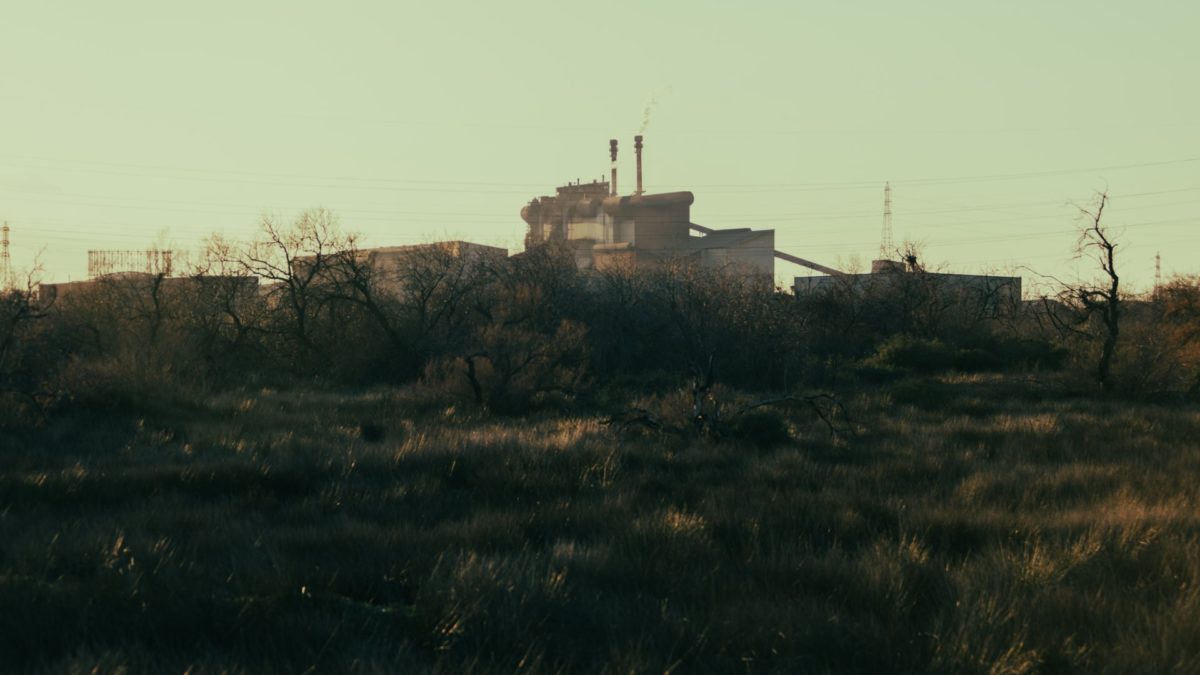
Europe’s steel industry leader has been exceeding legal pollution limits despite the health risks and the millions of euros of public funds the corporation has received over the past ten years. Confidential documents seen by Disclose and Marsactu show repeated breaches until 2022 at ArcelorMittal’s two main steel plants in France, in Dunkirk and Fos-sur-Mer.
Brown smoke billows up from one of the steel factory’s tall chimneys. Smoke plumes scatter over roads, marshes and houses nearby before fine particles settle, who knows where. But one thing is for certain: the dust from ArcelorMittal’s steelworks in Fos-sur-Mer, in the heart of a huge industrial area 50 kilometres from Marseille (Bouches-du-Rhône), is extremely toxic for humans. Once inhaled, it may cause heart disease, cancer and early death.
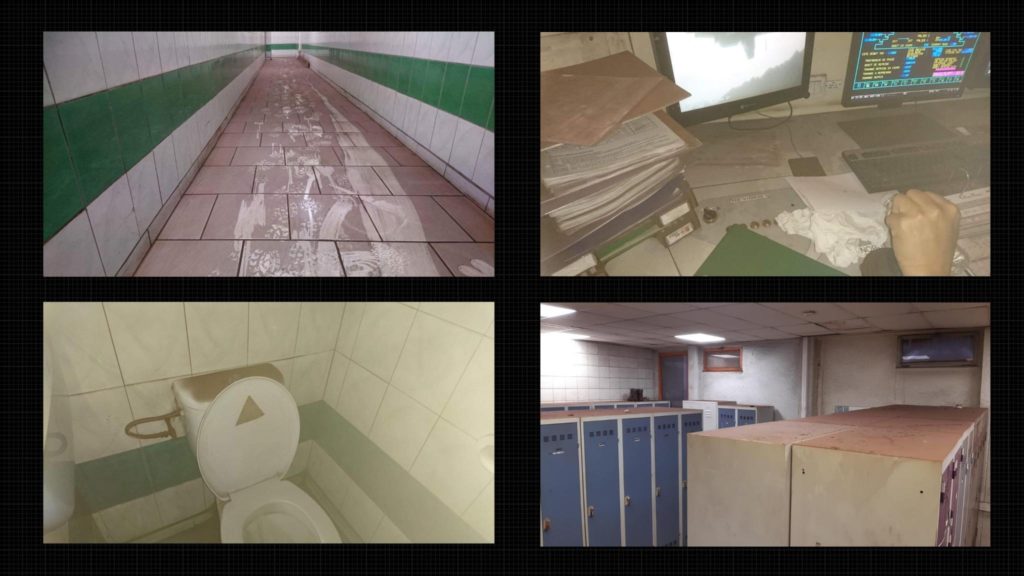
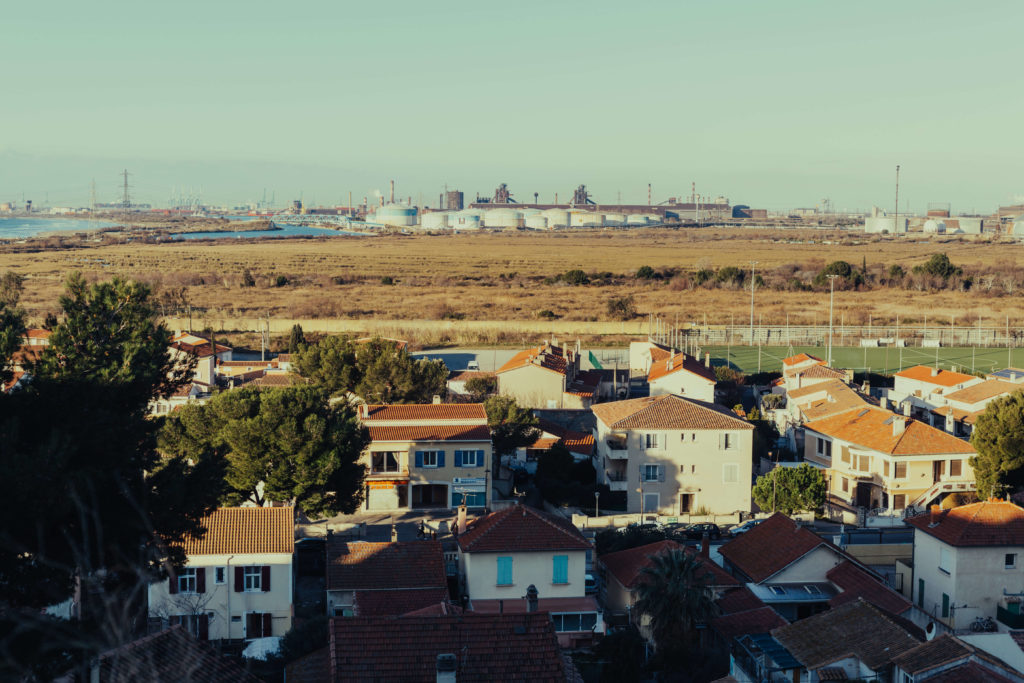
The 400,000 people who live around Etang de Berre have been breathing in this foul air every day for years. And the plant’s 4,000 workers, including 1,500 sub-contractors, work in the dusty atmosphere. As a result, on some days, they need to wear a mask over their nose and mouth for eight hours. “They do so even if they are not required to because every time they blow their nose, black stuff comes out,” says Nordine Laimeche, the plant’s CFDT trade union representative. On 23 January 2023, workers found that the inside of their lockers was covered with a thick layer of dust. “The workers’ clean clothes stored inside the lockers had become grey,” Laimeche says. Earlier, in spring 2022, a private laboratory had visited the plant to measure the quantity of dust. The evaluation report seen by Disclose is unequivocal: in two control rooms, the levels of dust were two to five times higher than the company’s cleanliness goals.
The international steel giant is aware of industrial pollution and its likely impact on the health of close to half a million people: it emits no less than 80% of the fine particles that can be found in the air in the area, where more than 400 factories are located. The authorities are aware too: a recent survey financed by the French agency for food, occupational and environmental health and safety (ANSES) shows that the number of cancer cases in Fos-sur-Mer and a neighbouring municipality is double the national average. Residents are also more prone to chronic diseases such as asthma and diabetes, as well as autoimmune disorders.
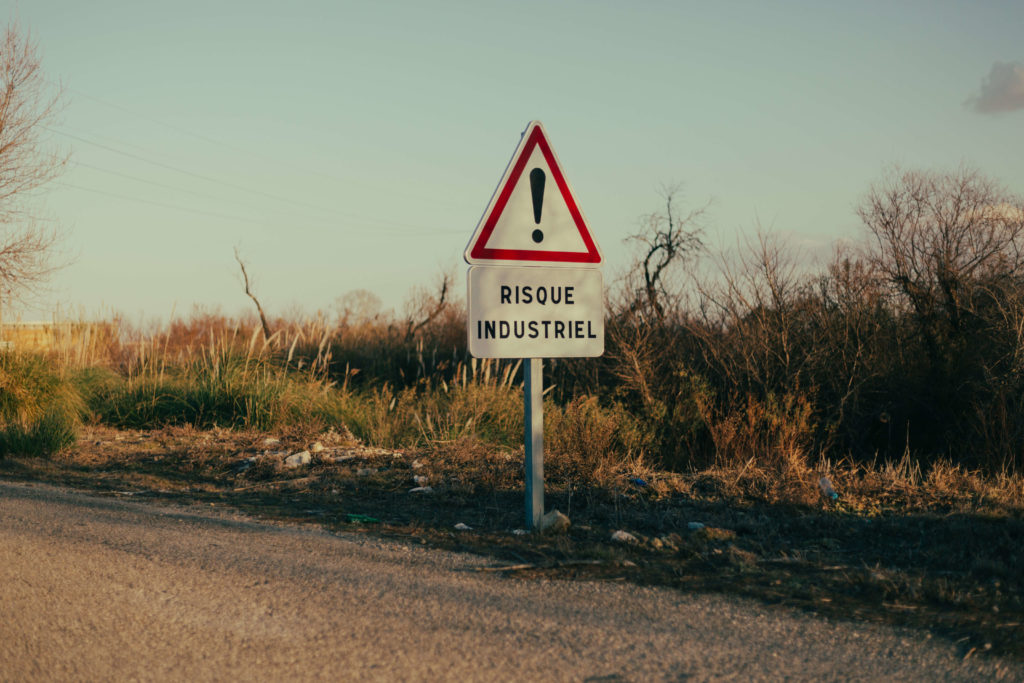
Health hazards may be obvious but pollution problems are not getting better. Quite the opposite, in fact. Our investigation, conducted in partnership with Marsactu, shows that the ArcelorMittal plant in Fos-sur-Mer has been exceeding emission limits set by the French government and the European Union. Reminders of the law issued on six occasions, two court convictions and two €30,000 administrative fines have made no difference. Neither has the order issued in April 2021 for the corporation to pay €30,000 to the France Nature Environnement association for 36 environmental offences in connection with polluting emissions.
240 days of illegal pollution in 2022
According to a 56-page ArcelorMittal internal report seen by Disclose, the Fos-sur-Mer plant breached environmental regulation on numerous occasions between 2021 and 2023.
In 2022, the site’s sintering plant, where the iron ore is prepared before it is turned into pig iron, exceeded fine particle emission limits over a period of 240 days, i.e. 65% of the year.

Yet the sintering process has been subsidised twice, precisely in order to prevent this type of offence. The first time was in 2015, when the French environment agency, Ademe, operating under the environment ministry, released €8m for the Mistral scheme which was expected to lead to a 25% decrease in dust emissions caused by sintering. The second subsidy was granted in 2019 to finance a fine particle filtering system called Odas. The project, which was supposed to reduce emissions by 40%, received a €5m subsidy from the European Union out of the 20 million that had been budgeted. The first phase of the Odas filter only came into service in the summer of 2022, i.e. two years later than planned. A second phase is expected to be operational at the end of 2023, to be followed by a third and last phase. According to ArcelorMittal, “initial results in terms of dust emission reduction [are] very positive”.
Allegations of falsification
There are further alarming findings in the self-monitoring documents we have had access to, including the fact that orange fumes laden with benzene and benzopyrene, two carcinogenic components, have escaped from the coking plant ovens where coal is turned into metallurgical coke before it can be used as fuel in blast furnaces. The leaks, above legal limits, were observed over 21 weeks, i.e. more than a third of the year 2022. This has been confirmed by the Bouches-du-Rhône prefecture where officials add, however, that “oven doors [of the coking plant] are once again airtight, which has made it possible for the site to return to compliance since December 2022”.
In Fos-sur-Mer, offences may be an entrenched practice. That is what two anonymous witnesses suggest. The two former employees, who worked at the coking plant until the first half of 2018, say that some pollution records submitted to state agencies may have been deliberately undervalued. “When I went round ovens at the coking plant, I would count between 15 and 20 irregular plumes of smoke,” says Mathieu, who was in charge of self-monitoring records at the time. “When I submitted to my supervisor the real records, which exceeded legal limits, he intimated that I needed to give him ‘better’ results.” These allegations are confirmed by Patrick, who was responsible for oven maintenance. “I would accompany on his round the technician who was in charge of records, and I saw him amend figures once he sat at his computer,” he says.
“A few hours before an inspection visit, we were asked to go in to work earlier in the morning in order to stop leaks.”
According to Patrick, inspectors from the regional environment, planning and housing authority (DREAL), the body responsible for monitoring the most polluting plants, may also have been deceived by ArcelorMittal during some twenty inspection visits to the site. “A few hours before inspection visits that had been announced in advance, there were more of us around and we were asked to go in to work earlier in the morning in order to stop leaks as much as possible. In the control room, a technician would lower the central dust collectors to capture the smoke inside ovens,” the former employee said. He added that this practice was repeated over more than a decade, at least until the beginning of 2018.
When approached for comment, ArcelorMittal strongly denied the allegations. “Our staff act with professionalism, ethics and conscience,” the corporation’s communication service told Disclose. They added that “emission samples and analyses are subject to rigorous monitoring and are submitted to the relevant authorities”.
Mathieu and Patrick have given evidence before a court investigating a complaint against persons unknown lodged in November 2018 for “endangering the lives of others” by 211 local private individuals, seven environmental associations from the municipalities in the Fos-sur-Mer industrial area and the CFDT Métallurgie trade union.
An offence committed over 100 days in Dunkirk
Fos-sur-Mer is not the only site where the steelmaker has breached environmental regulations. In Dunkirk, where ArcelorMittal emits 2,800 tonnes of fine particles every year, i.e. nearly 85% of all industrial emissions in the Hauts-de-France region, reports issued by inspectors of facilities specifically authorised by decree to treat high-risk material reveal that the site has also exceeded fine particle emission limits on many occasions. The Nord prefecture has taken three decrees in that respect since 2017. One was taken following an inspection visit by DREAL in September 2021, which established there had been six “breaches” in connection with dust emissions. On 3 March 2022, the Nord prefect ended up taking a decree demanding the steelmaker comply with environmental regulation. An inspection visit by DREAL “will take place soon,” prefecture officials told Disclose.
Despite this warning, breaches by ArcelorMittal have continued. According to self-monitoring data seen by Disclose, fine particle emissions at the Dunkirk site’s sentering plant exceeded 1.5-2 times legal limits over 100 days between January and October 2022. When approached, the environment ministry said that “measurements by outside agencies show that emission limits were not exceeded” but did not give any details. Analyses carried out by plant workers show that legal limits were exceeded at the coking plant over 58 days out of the 300 days when checks were made. Excessive nitrogen oxide (NOx) emissions have also been recorded at the plant. The acrid brownish red gas can cause serious lung infections. But Nord and Hauts-de-France prefecture officials say legal limits have not been exceeded either according to “outside agencies”.
Despite multiple breaches of environmental regulation in Dunkirk and Fos-sur-Mer, public money has been thrown at the company (read our investigation). According to our calculations, between 2013 and 2022, ArcelorMittal’s French subsidiary received €392m of French and European public funds. No less.
Nina Hubinet and Ariane Lavrilleux
This investigation was conducted with support from the Journalismfund
Do you have public interest information about ArcelorMittal ? Contact us confidentially via Signal, Proton or our Secure Drop.
Read also
ArcelorMittal: coal arriving in Dunkirk causes environmental and health disaster in Mozambique
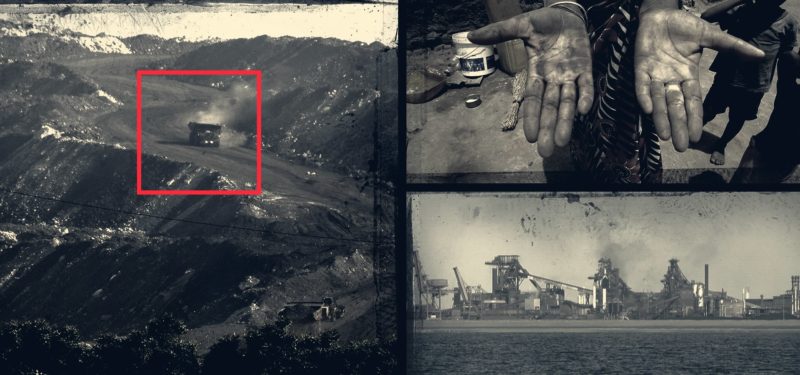
The factory that produces the most pollution in France is using more coal than ever. In August 2025, ArcelorMittal Dunkirk took delivery of several thousand tonnes of coal from an extremely toxic mine in Mozambique. Some residents of the town of Moatize have been exposed to serious air pollution and seen their homes destroyed by blasts, an investigation by Disclose and Socialter can reveal.
ArcelorMittal: coal arriving in Dunkirk causes environmental and health disaster in Mozambique
The factory that produces the most pollution in France is using more coal than ever. In August 2025, ArcelorMittal Dunkirk took delivery of several thousand tonnes of coal from an extremely toxic mine in Mozambique. Some residents of the town of Moatize have been exposed to serious air pollution and seen their homes destroyed by blasts, an investigation by Disclose and Socialter can reveal.