Lützerath: French banks finance the extension of one of Europe’s largest coal mines
Lützerath: French banks finance the extension of one of Europe’s largest coal mines
The village of Lützerath, in Germany, is going to be razed to the ground so energy company RWE’s Garzweiler mine can be expanded. According to exclusive data obtained by Disclose, RWE’s coal power plants, which are financed by French banks to the tune of hundreds of millions of euros, are responsible for the premature deaths of more than 36.000 people in Europe.
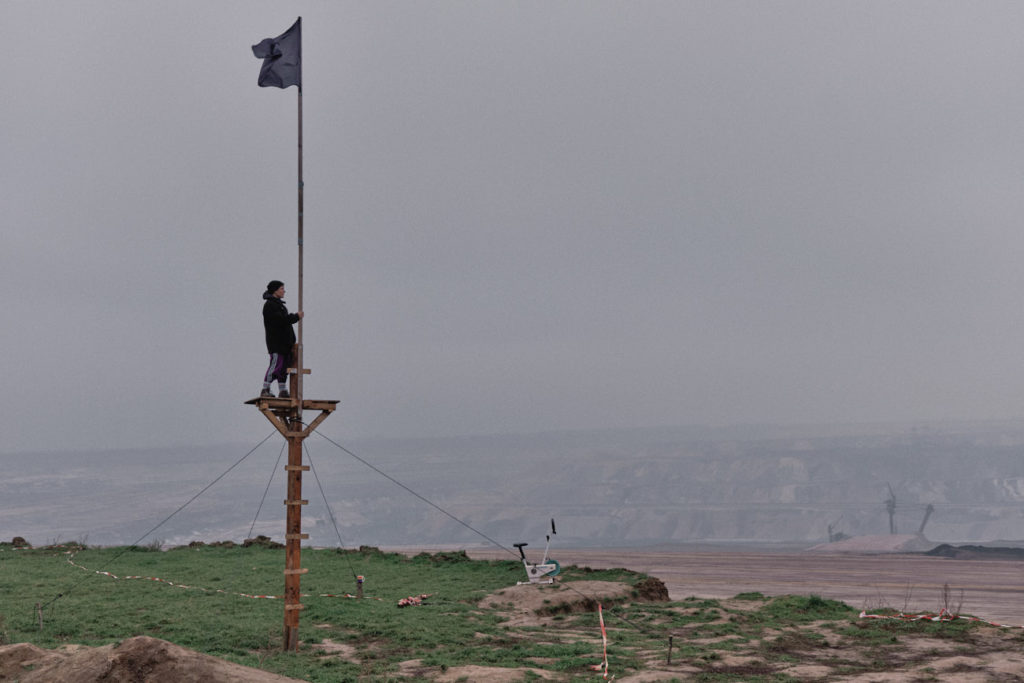
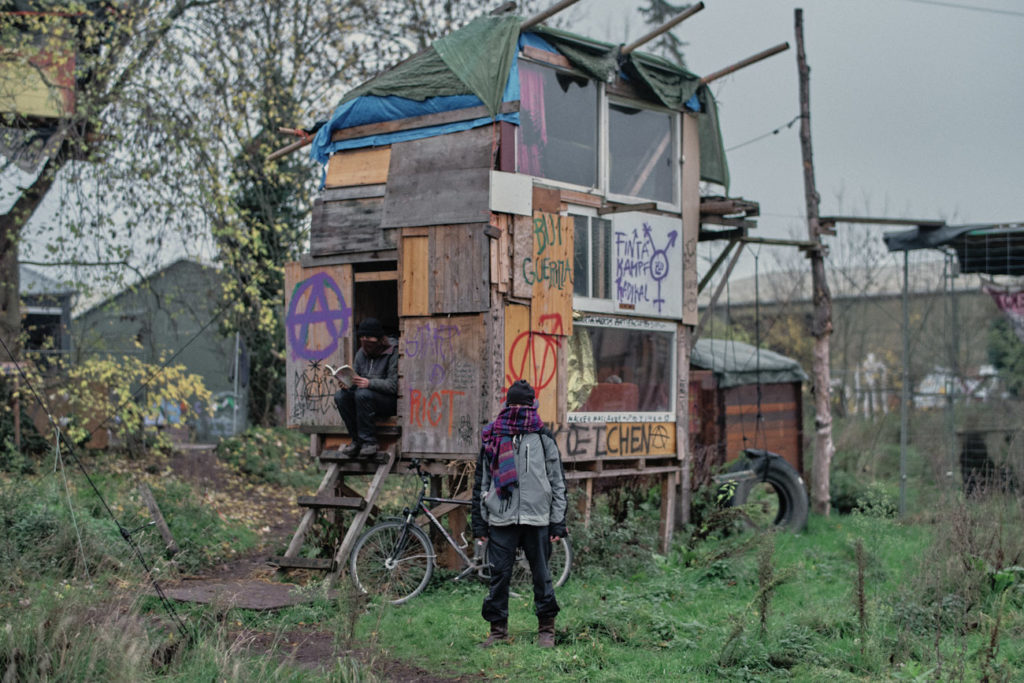
As she fills her cup with lukewarm coffee, Ronni Zepplin gazes towards the cliff that stands between her and Garzweiler, one of Europe’s largest open-pit coal mines. The 27-year-old woman is one of the 100 or so people who settled a few months ago in Lützerath, the abandoned village that overlooks the mine in the Rhine basin, the epicentre of German coal. The activists’ objective is to prevent the destruction of the village and the extension of the site where 25 million tons of coal are mined each year. “Since I was born, there has been a long line of COPs but nothing has changed,” Zepplin says. “Here, we are face to face with the destruction caused by our lifestyle.” Coal accounted for nearly a third of energy production in Germany during the first quarter of 2022.
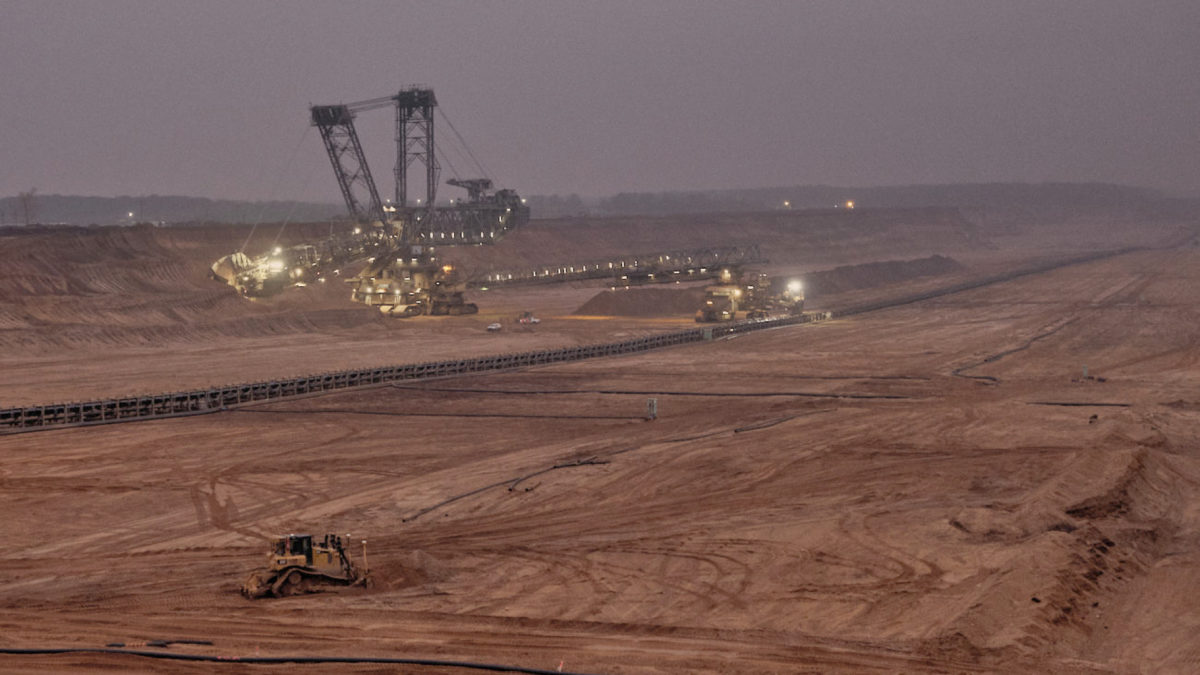
For several days now all eyes have been on the small village of Lützerath, where the dismantling of the activists’ camp began on 11 January. Below, huge excavators lacerate the ground to mine precious brown coal. The machines discharge thousands of cubic metres of coal day in day out on to a conveyor belt connected to a rail terminal. There carriages depart to feed the furnaces of the four coal power plants in the surrounding area. Some of the production units of the plants were recently restarted to make up for the shortage of Russian gas caused by the war in Ukraine and the drop in France’s nuclear power production. Environmental organisation BUND says that the facilities, which are used by German energy giant RWE, are the “top climate killer” in the country.
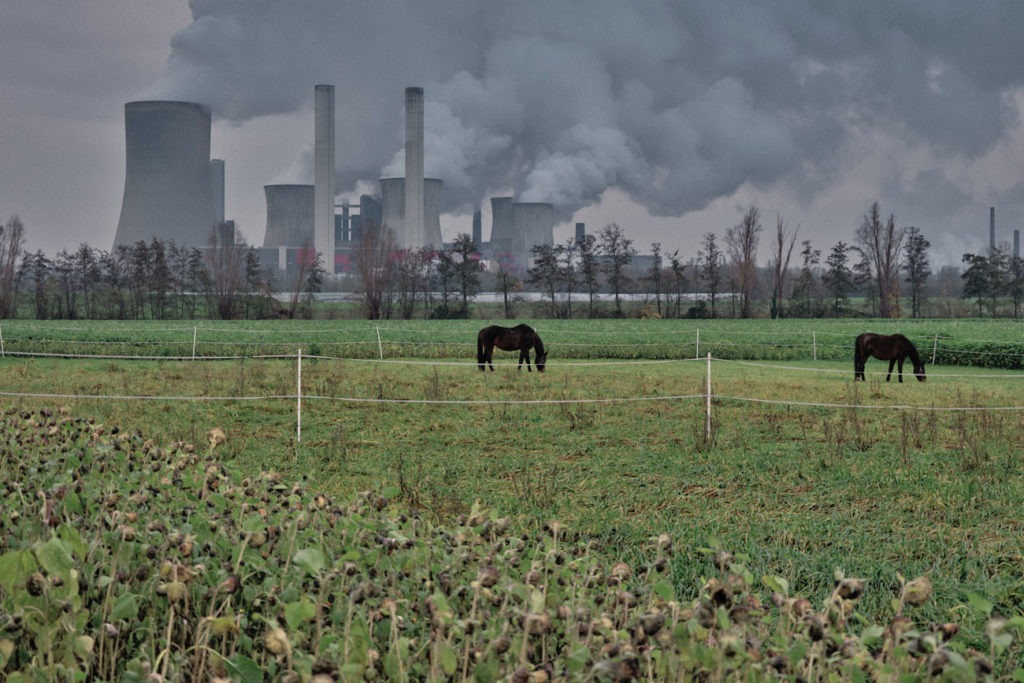
“Lützerath coal is needed without delay to operate brown coal high-intensity [plants] during an energy crisis,” RWE told Disclose. The company is confident as it can rely on a favourable environment: Vice Chancellor and Minister for Economic Affairs and Climate Action Robert Habeck of the Green Party announced last summer that RWE’s coal power plants would be used as a result of the energy crisis. Yet a consortium of German scientists has worked out that it is not necessary to mine the coal in the ground under Lützerath to guarantee the country’s energy security.
RWE, a coal giant financed by french banks
RWE, which was set up in the late 19th Century to provide power to the city of Essen, a few dozen kilometres from the camp, has become Germany’s third largest energy provider and a multinational company operating in more than 20 countries. The group, which had a turnover of 24 billion euros in 2021, readily describes itself as “green” and insists that it aims to be “carbon neutral” by 2040, was until recently one of the biggest emitters of CO2 in Europe and remains above all a coal producer. As many as 8,000 employees keep its mines and plants running. These still made up nearly a third of the group’s energy production in 2021, ahead of gas, renewables and nuclear energy.
The company’s greenhouse gas emissions are such that some partners like insurance company AXA have decided to stop supporting it. However the energy company can still count on international banks to finance its climate-harming activities including major French banks: Credit Agricole, Credit Mutuel, the BPCE group (Banque Populaire, Caisse d’Epargne and Natixis) as well as Societe Generale and BNP Paribas.
800 million in loans
Credit Agricole, which holds 760 million euros worth of shares in the company, was RWE’s second biggest shareholder at the end of 2021 behind US finance giant BlackRock, according to Urgewald, an NGO that researches coal companies. It was followed by BNP Paribas, Societe Generale, Credit Mutuel and the BPCE group. The banks hold more than 900 million euros worth of shares in RWE or nearly 10% of all shares, according to Urgewald.
Societe Generale and BNP Paribas have more than RWE shares: the two banks provided loans and subscriptions worth €800m to the multinational company between 2019 and 2021 or 7 % of the €10bn provided to the multinational company at the time, Urgewald says. It adds that BNP Paribas and Societe Generale also granted the group €340m worth of so-called “green” loans and subscriptions. The funds, which are supposed to go towards renewable energy projects, make up more than 15 % of the budget earmarked for this kind of investment, still according to the German NGO. But Katrin Ganswindt, who is in charge of Coal and Divestment Campaigns at Urgewald, says that “the money can end up in the company’s common pot”. In other words, lending banks cannot guarantee that the funds they provide will not be used to finance coal.
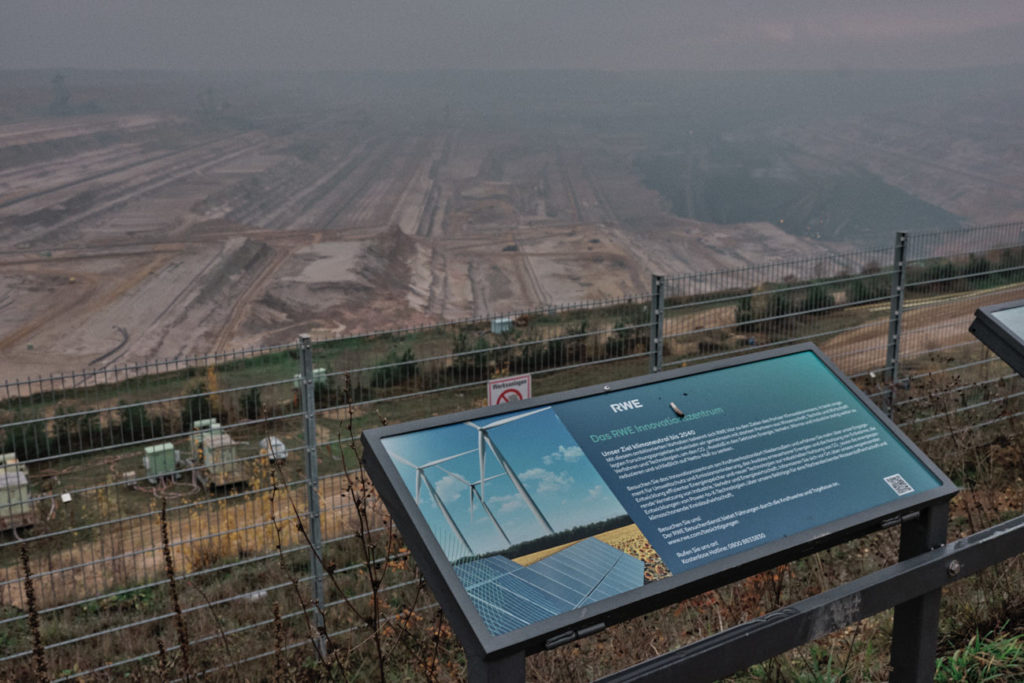
Yet these bankers keep trumpeting their fossil fuel divestment. BNP Paribas announced in 2020 that it demanded that the companies it finances phase out the use of coal by 2030. The bank told Disclose that it had already excluded “about half of [its] power production customers” by the end of 2021. But RWE still banks with BNP Paribas and now pledges to phase out the use of coal in… 2030.
Societe Generale says that it is aiming for a “coal industry phase-out by 2030 in EU and OECD countries and by 2040 in the rest of the world”. But it does not demand a detailed phase-out plan from the companies it finances. Credit Agricole pledged as early as 2019 “to stop working with companies developing or planning to develop new thermal coal capacities”. The bank, which is RWE’s second largest shareholder, told Disclose that its “thermal coal activities are now residual”. The NGO Reclaim Finance revealed in early 2022 that Credit Agricole had not fulfilled its commitments as it financed companies developing new coal-based activities.
German coal has killed more than 36,000 people in Europe
RWE’s coal plants are killing, and not just the climate. According to exclusive data Disclose has obtained from the NewClimate Institute, a German thinktank, the fine particles released by its coal plants have caused the premature deaths of 22,000 people in Germany. But the German scientists’ modelling shows that, if the scope of the analysis is broadened to all the countries affected by the pollution produced by RWE’s coal plants, whose particles may travel thousands of kilometres, there have been 36,000 premature deaths. To reach these results, the Cologne-based organisation developed a scientific model that makes it possible to convert coal plant emissions into premature deaths, i.e. deaths caused by diseases developed after exposure to pollutants released by the plants.
When it was approached for comment about the NewClimate Institute’s damning figures, RWE only referred to rules and regulations: “RWE’s coal plants have heeded and are heeding emission limit values set by the EU and national authorities. These thresholds are set to protect the health of people and plants’ employees”.
“We need to apply pressure from the bottom up”
Sophie, 21, who has lived in the Lützerath camp for nearly two months, is aware that she has taken on a tough opponent. The student, who initially joined Greta Thunberg’s Fridays for Future, says she has become “radicalised”. Like Zepplin, she is preparing for the final standoff. Their camp is likely to be evacuated but the activists know that money is key when it comes to their fight against coal and for climate protection. “I still have a bank account and I am aware of the responsibility that goes with it,” Sophie says. She adds that she admires activists who no longer have one or have a joint account. “There would be no point asking banks to change. We need to apply pressure from the bottom up,” she says.
Across Germany, nine villages are currently threatened by RWE and the coal industry, according to environmental movement Alle Dörfer bleiben (“All the Villages are Staying”). Manheim is one of them, with its red brick church only a stone’s throw from another mine operated by RWE in western Germany: Hambach. The latter generates as much as 3 % of the PM10 fine particles emitted by the entire European energy sector. The company would like to raze Manheim to the ground in order to mine the gravel pit there and use it to shore up the villages that will remain once the mine is closed. But a farmer will not hear of it.
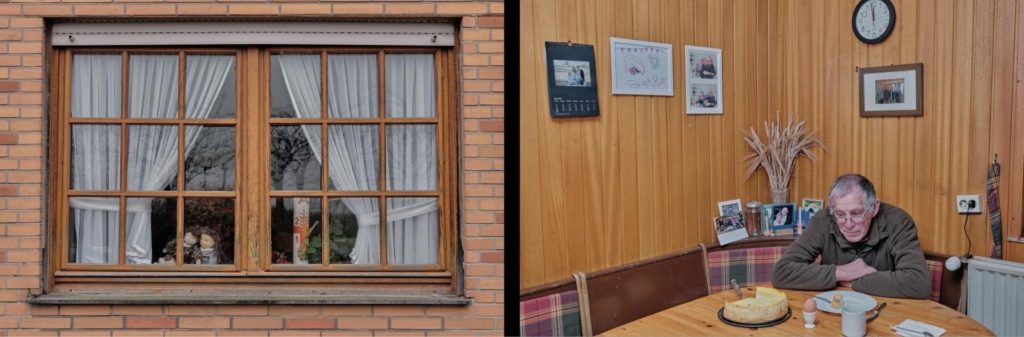
“My brother has been working for RWE since he was 15. When I tell him about my situation, he says I am mad,” Heinrich Portz says with a smile. He is sitting at his kitchen table. His is one of only six households standing their ground locally, Portz says, but he intends to stay firm and to have his rights upheld against the group with a €24bn turnover. The bone of contention: the compensation that the energy giant has offered him and which he deems too low. As he shows Disclose around his ghost village, Portz feigns indifference: “I have got used to all this,” he says, pointing to his neighbours’ recently abandoned house.
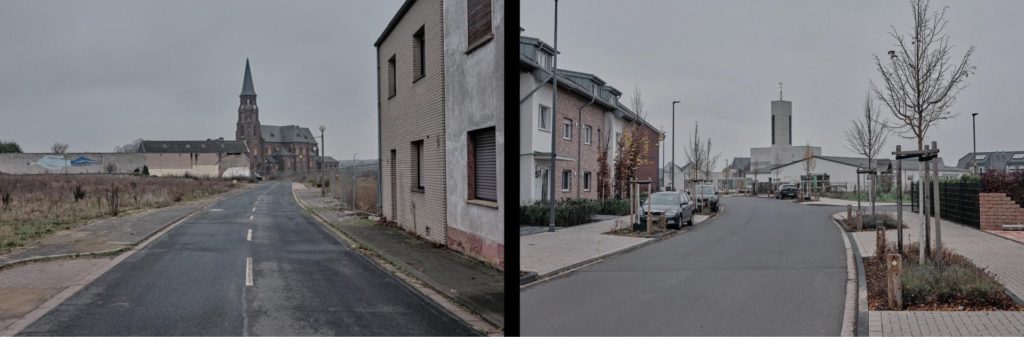
As the old Manheim dies a slow death to total indifference, the new village is doing well. The plan-designed tidy new municipality, built to rehouse the residents of the abandoned village, managed to keep its mayor, Loni Lamberts, a member of the CDU, the conservative party. Lamberts, who is in touch with “those who stayed” – her words for those families who have not yet signed on the dotted line with RWE – says that 80 % of Manheim residents have come to live in Manheim-neu (“New Manheim”). Facilities, a creche, a fire station and green areas: RWE has not skimped to fund the new village. The coal giant swears that it does not have a “record of relocation costs”. For RWE, coal is priceless.
Alexander Abdelilah
This reporting is support by The Sunrise Project.