Decathlon’s Quechua shoes manufactured by suppliers linked to deforestation in Brazil
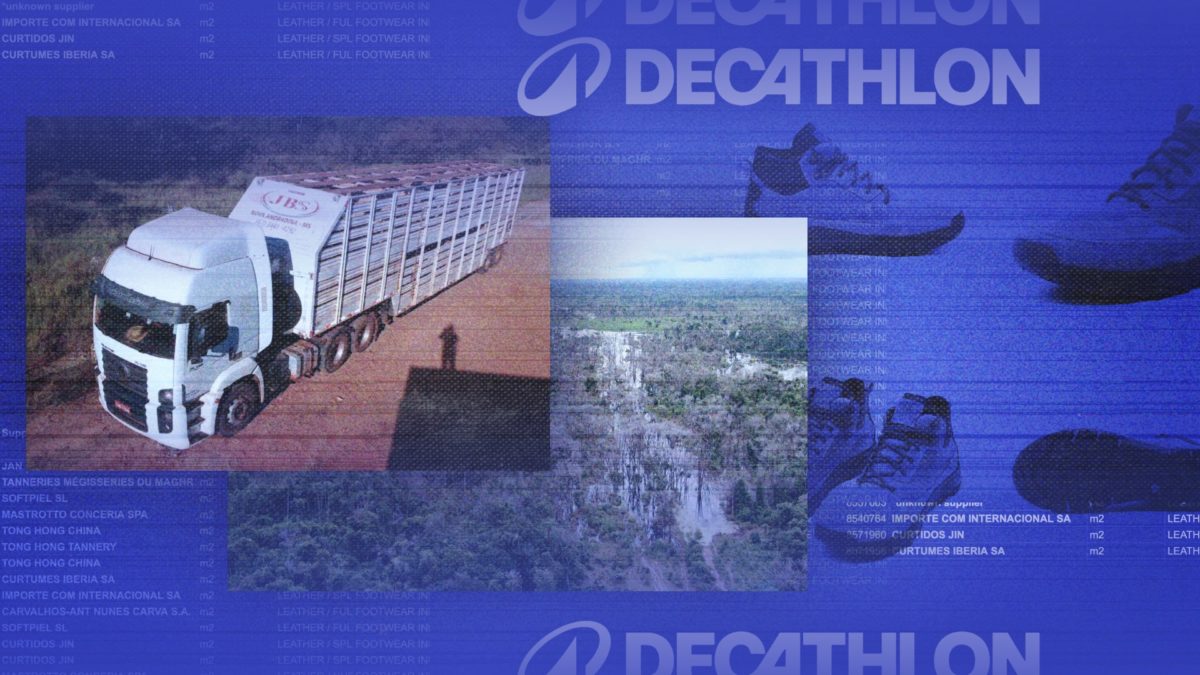
Decathlon’s Quechua shoes manufactured by suppliers linked to deforestation in Brazil
Decathlon’s top two footwear manufacturers source leather that may have come from illegally deforested areas in Brazil. Disclose and Follow the Money have traced back the production chain of the famous Quechua hiking shoes after seeing confidential documents.
On a river crossing, a stony mountain path or the edge of a dense forest: the rows of Quechua NH500 hiking shoes are surrounded by photographs of areas of unspoiled nature in Decathlon’s store in Villeneuve-d’Asq (Nord department in France). “Grip, cushioning and watertightness” are key words associated with the full-grain cow hide covering 90% of each shoe. The ad gives no other information. The shoe label may indicate that each pair was made in Vietnam but says nothing about the origin of the raw material used by Decathlon.
As is the case for other styles sold by Quechua, the leather used to make the NH500 hiking shoe is likely to have come from animals that grazed in Brazil, the planet’s green lung. “The pieces of leather from Brazil are roughly two to three times bigger in size than in Asia, because of the size of the cows,” says a former Decathlon production manager, an expert on its supply chain. “If the cow hides are smaller, the tanneries have to process two pieces of leather together, which takes more space. With bigger cows, the wastage percentage is lower. And the profit is higher.” The sports multinational pays particular attention to “profit”, as revealed by Disclose’s investigations about its suppliers in Bangladesh and China.
But using Brazilian leather comes with a major environmental risk. Cattle farming is the prime cause of deforestation in the country, well ahead of soya, palm oil and cocoa crops. Most land clearing is illegal but is encouraged by agribusiness giants who slaughtered a record 38 million heads of cattle in 2024. All animal parts are used, including their hide, much sought after by footwear manufacturers.
Disclose has partenered with Dutch media outlet Follow the Money to investigate Decathlon’s leather supply chain. Using confidential documents and customs data, we can reveal that a major Brazilian cattle business which has been charged several times for illegal deforestation, has been selling leather to one of the French brand’s strategic suppliers called Tong Hong. The tannery in Vietnam chemically treats the hides for local footwear manufacturers who are none other than Decathlon’s top two shoe production subcontractors. Their factories have supplied several million pairs of Quechua shoes to the French brand. A banal forest walk may contribute to global deforestation.
Chemical deforestation in Brazil
Our investigation begins more than 9,000 kilometres from Villeneuve-d’Ascq. In the largest wetland area on the planet, the Pantanal, in the south of the Brazilian state of Mato Grosso, the bark of thousands of trees has turned white. Their leaves have disappeared, dissolved by an extremely toxic herbicide called 2,4-D, a component of the infamous agent orange used by the US military in the Vietnam war. The product was spread from aircraft in 2022 and 2023, according to an investigation by Brazilian police. It then leached into groundwater, poisoning the fauna and soils. A total of more than 81,000 hectares of forest have been wiped off the map, an area eight times the size of Paris.
The man responsible for this environmental crime, the worst ever recorded in the Mato Grosso state, is agribusinessman Claudecy Oliveira Lemes. He owns eleven cattle farms in Pantanal and is well-known to the Brazilian environment police. He was charged eight times in connection with illegal deforestation between 2018 and 2022. Despite embargoes imposed by the authorities, Lemes has continued to sell his cattle through several abattoirs in the region, including those owned by JBS, a leading cattle business, as shown by animal transfer certificates obtained by media outlet Repórter Brasil. Between 2018 and 2023, Lemes’s farms sent no fewer than 8,639 heads of cattle to four slaughter houses owned by the Brazilian group. Three, in Pedra Preta, Barra do Garças and Campo Grande, specialise in transforming hides into leather for the footwear industry.
This spectacular deforestation operation is not the first in which JBS has been involved, far from it. For several years international investigations, including one published by Disclose, have been pointing to the firm’s responsibility in illegal clearing across Brazil. When contacted by Disclose, the food company claims to have a “zero-tolerance policy for illegal deforestation, forced labour, misuse of indigenous lands and violations of environmental embargoes.” The Brazilian authorities have fined the group many times in connection with the damage it has caused to the environment, from thousands of euros to several million. But this has not dampened its appetite: JBS slaughters 75,000 heads of cattle per day, which makes the firm the world leader in the beef industry – and the top global company transforming hides into leather.
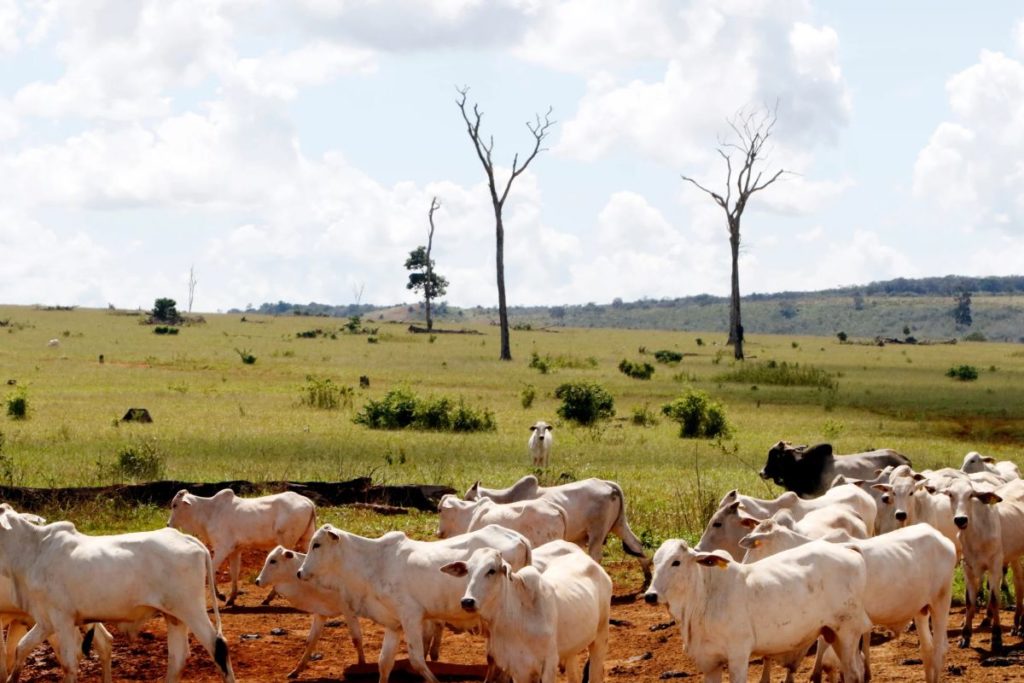
Disclose and Follow the Money have found many instances of JBS’s involvement in Decathlon’s vast supply chain. In June 2023, for instance, when JBS sourced cattle raised on deforested land in the Pantanal, the company sent three containers from the Brazilian port of Santos. The cargo included 90 pallets of “wet blue”, hides treated with chromium salts to avoid rotting. The were bound for the Tong Hong tannery, in Vietnam, which works for Decathlon.
Secret leather deliveries in Vietnam
Hardly anything is known about the Tong Hong factory, on the outskirts of Ho Chi Minh City, including on the origin of its raw materials. You need to get hold of customs data to find out that the company buys most of its cow hides in Brazil — 11,000 tonnes in 2023. A cursory examination reveals that JBS did business with Tong Hong only once, in June 2023, but a more thorough analysis shows that the Brazilian beef giant uses a figurehead to sell its goods very discreetly: Hong-Kong based company Chief Movement, which sold 5,100 tonnes to Tong Hong that same year.
Once the hides have been received, the tannery in Vietnam transforms them into leather ready for use by footwear manufacturers through several chemical and mechanical processes, as shown by a video shot in the factory showing an employee spreading cow hides with his bare hands.
Decathlon knows Tong Hong’s production lines well. On a confidential list of the French brand’s subcontractors seen by Disclose, the tannery in Vietnam was referred to as a “major account supplier” in 2023, the year when JBS sent it the hides from Brazil.
“Decathlon should use their purchasing volume as a bargaining chip.”
Alice Thuault, executive director of NGO Instituto Centro de Vida
“Decathlon has a responsibility not to profit from deforestation. […] They should use their purchasing volume as a bargaining chip,” says Alice Thuault, the executive director of NGO Centro de Vida, which conducts satellite surveillance of the Mato Grosso forest. This would mean reviewing its partnership with Tong Hong. According to an audit published by the Leather Working Group, a leather industry federation, the tannery in Vietnam is able to formally identify only 14% of the abattoirs from which it has purchased hides.
More than 400 million euros’ worth of footwear bought by Decathlon
Another internal document seen by Disclose shows that Decathlon sometimes trades directly with Tong Hong: 45,795 dollars’ worth of purchases were recorded between November 2020 and November 2021. This is probably a fraction of the leather that ends up on Quecha footwear as most animal parts treated by Tong Hong are sold to Decathlon’s huge partner factories.
“Tong Hong is the major supplier of leather for Decathlon’s suppliers in Asia,” a former executive of the French multinational told Disclose. After the cattle farms in Brazil, the JBS group and the tannery, these subcontractors are the fourth and last part of the Quechua shoe production chain, and the two leading subcontractors happen to be in Ho Chi Minh City.
This is confirmed by another confidential document seen by Disclose. It lists all of Decathlon’s shoe manufacturers. The NH500 leather style showcased in the Villeneuve-d’Ascq store is assembled by a Vietnamese group called Thai Binh. The firm is Decathlon’s leading subcontractor in all sectors. The French brand bought goods for more than 326 million euros from the company in 2022.
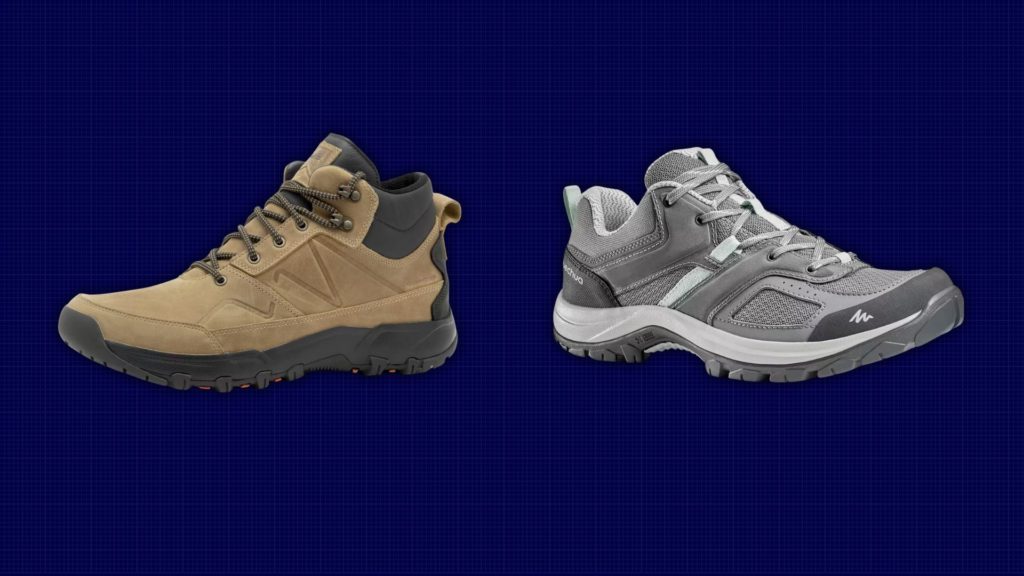
A few kilometres from Thai Binh workshops lies the Pou Chen factory, from which Decathlon ordered 106 million euros’ worth of footwear in 2022 — the company is its six largest global supplier. Some of Quechua’s best sellers are produced in their gigantic factory, including the MH100 style, with 20% split leather, the lower layer of the cow hide.
Decathlon is well aware of the risk that cow hides from illegally deforested areas in Brazil may be used to make its footwear. When approached by Disclose, the company asserted “its commitment to the fight against deforestation throughout its value chain”. As evidence of its efforts, Decathlon provided a copy of the letter of commitment it had Tong Hong sign in February 2024. It states that “Decathlon does not want any supplier to introduce leather from cattle breeding linked to deforestation [and] we wish you to identify the origin of leather used […] and document it on demand”. The French brand’s anti-deforestation policy is therefore contained in this one-page letter. No systematic controls are carried out, even in the Vietnamese tannery so fond of cattle sold by an environmental delinquent. As for the “documentation on request” referred to by Decathlon, it is perplexing: according to an audit by the Leather Working Group, a federation of leather manufacturers, Tong Hong is able to identify with certainty the slaughterhouse that sold it hides in only 14% of cases.
Read the other episodes of our investigation “Decathlon, a champion of exploitation”:
- Decathlon profits from Uyghur forced labour in China
- Decathlon: revelations on a champion of exploitation
- Decathlon, the hard labour textile factory in Bangladesh
Investigation: Pierre Leibovici, Yara van Heugten (Follow the Money)
Additional research: André Campos (Repórter Brasil)
Editing: Mathias Destal
Translation from French: Béatrice Murail
Composite image: Eric Dellfos
This investigation is free of charge, thanks to you
Because information is a public good, Disclose offers you all its investigations free of charge, without subscription or advertising. This model is unique in France for an investigative news outlet.
But it’s only possible on one condition: that readers like you support our not-for-profit newsroom. Donations to Disclose are eligible for a 66% tax reduction in France. So a donation of €100 will only cost you €34. Thank you for your support!



On the same topic
