Decathlon profits from Uyghur forced labour in China
Decathlon profits from Uyghur forced labour in China
A 12-year-old girl, workers from the Uyghur minority forced to make clothes, etc.: one of Decathlon’s main suppliers relies on a network of forced labour in China, as revealed by Disclose in partnership with Cash Investigation. The French brand’s clothing also contains cotton from the Xinjiang region which is under international sanctions.
“I’m here to give a hand.” Smiling coyly, the girl will not be diverted from her task. Her tiny fingers are doing up a Decathlon navy blue polo shirt under the vigilant gaze of her mother, who sits a few metres away at a sewing machine. “I’m 12,” the girl replies when asked how old she is. She looks particularly small as the huge production lines of the factory where she works illegally are almost empty.
We are meeting in the summer of 2024 during a hidden-camera visit to the premises of Yanggu Jifa, the main employer in Sanzhiwang, a village in Shandong province, eastern China. The factory is the property of the Jifa group. Most people have not heard of it, yet it is Decathlon’s second largest textile manufacturer in China. A fact that the French sports multinational kept secret until an internal source at Decathlon shared a sensitive business file with Disclose: the list of its subcontractors around the world. In the document, Jifa is referenced as one of the French brand’s “key account suppliers”: Decathlon bought 43 millions euros’ worth of clothes from Jifa in 2022 alone.
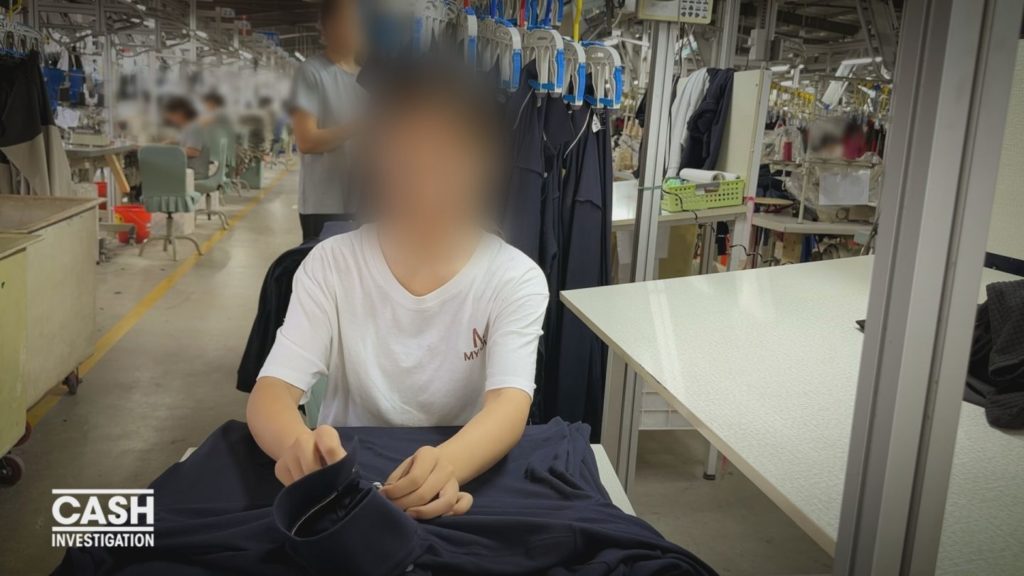
In the document, Decathlon also assesses the risk of child labour at its suppliers. At Jifa, the risk is deemed to be low: B, on a scale of A (very good) to E (very bad). The same scale is used to assess the risk of forced labour.
Decathlon’s supplier is in fact directly involved in a system of modern slavery in China, as revealed by Disclose in partnership with Cash Investigation, after a year-long investigation into the brand’s supply chain. Uyghur women are the main victims of this traffic in human beings. They are members of a predominantly Muslim ethnic group violently suppressed by Beijing. The workers are forcibly enrolled to make t-shirts, shorts and other items of clothing likely to end up in Decathlon’s 1 700 or so shops around the world.
A factory in Xinjiang “certified” by Decathlon
Under the pretext of fighting terrorism, the Chinese authorities have implemented since 2017 a mass detention policy against Muslim ethnic minorities who live mostly in the Xinjiang Uyghur Autonomous Region, in the West of the country. The armed forces have captured and locked up in camps more than a million people, mostly Uyghurs, according to the UN, which speaks of “possible crimes against humanity”. The survivors who managed to escape China tell of torture, rape and forced sterilisation. The camps were replaced in 2020 with government schemes aiming to get Uyghurs to work under coercion in the industrial or agricultural sectors. The aim is to sever cultural and social ties within families and to quell any attempt to rebel. Decathlon’s supplier, Jifa, has been taking an active part in this policy.

In southwest Xinjiang, the Yengisar industrial park was built over a few months. Austere, cube-shaped buildings stand next to factories subsidised by the Chinese authorities, including Xinjiang Xirong Clothing, a Jifa subsidiary until 2023 and specialising in sports items. Its two European customers were Decathlon and Orsay, a German brand that once belonged to the Mulliez family, who owns the French multinational. Decathlon has given the company two “certifications for its human resources policy and the quality of its products,” as reported in 2021 by the Xinjiang Textile Industry Association. Yet Xirong is far from being your average factory.
“Anyone who refuses to work risks imprisonment”
Sheffield Hallam University report, April 2023
As early as 2018, “the Jifa factory in Yengisar heeded the call of the Communist Party Central Committee and took many measures to absorb locals, teach them the language and turn them into workers,” a local media outlet reported.In practical terms, Chinese officials visit the homes of Uyghur farmers and exert pressure to convince them to travel to industrial areas, far away from their families. “For individuals from the Uyghur region, the constant threat of internment makes refusing the state-sponsored work placement impossible […] and thus anyone who refuses to work or attempts to walk away from their job, risks internment or imprisonment,” according to a report published in 2023 by Britain’s Sheffield Hallam University, which specialises in the study of repression of ethnic minorities in China. According to a 2021 report by Chinese national radio, the Xirong site “absorbed surplus rural workers – more than 1,000 of them”. Decathlon’s partner seems to be a role model for Beijing’s policy in the region.
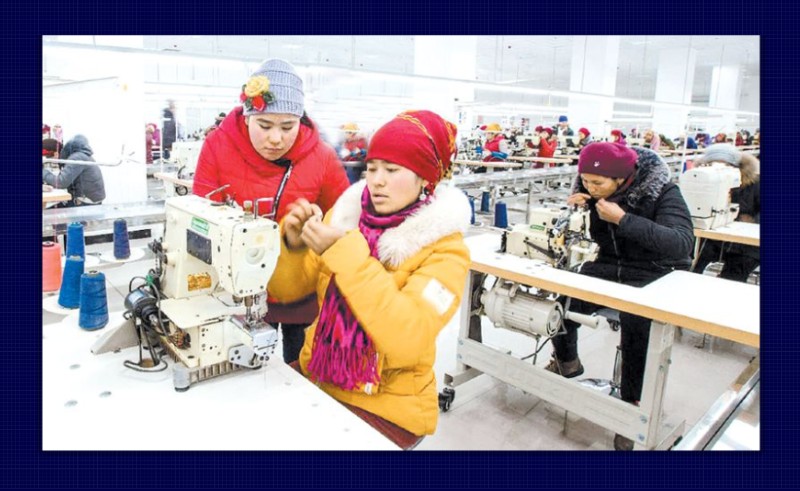
Recruiting Uyghurs has a major advantage for Jifa’s subsidariy. Like all other textile factories in the Yengisar industrial complex, Xirong has received funds from the local government to “train ethnic minorities from Xinjiang”. More than 29 million yuans (3.8 million euros) of public funds were allocated to the company when it was launched, Disclose has worked out from the press in China. The subsidies are welcome by a company for which “cost pressure has always been a worry”. A concern shared by its client, Decathlon, as shown by a confidential document seen by Disclose. It is a partnership agreement template that the former CEO of the company, Matthieu Leclercq, asks major suppliers to sign. It reads that “the continuous cost and price reductions are a must because ‘we make sports accessible to all’ through our low-priced sporting goods”.
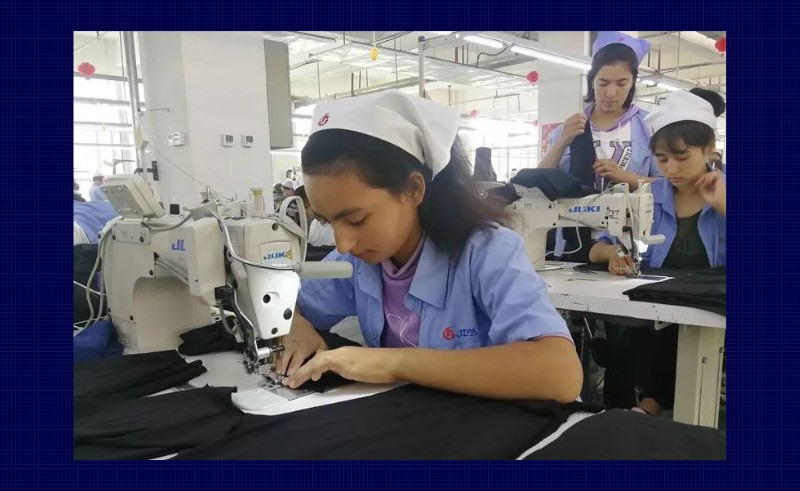
In order to further reduce its manufacturing costs and satisfy its French client, the Jifa factory has also taken advantage of young, cheap workers: Uyghur adolescents who arrive straight from what the Chinese authorities describe as a “vocational training centre” in Yengisar, less than one kilometre from Xirong’s workshops. Patimai Baiheti started working for the company when she was 16. She was profiled in a propaganda article published in 2019. With a “huge grin on her face,” the teenager said that she had “come to the factory for a work placement when [she] was a second-year student at the vocational school in Yengisar”. The article specified that Xirong had recruited “more than 400 employees” like her.
“It is a form of brainwashing”
Adrian Zenz, anthropologist
The reality is that the so-called “vocational school” in Yengisar looks more like a prison than a school. Five of its buildings were in fact used as an internment camp for Uyghurs between 2018 and 2021. The high walls and barbed wire around them have been dismantled and the buildings are now part of the training centre, as shown by satellite images analysed by Disclose.
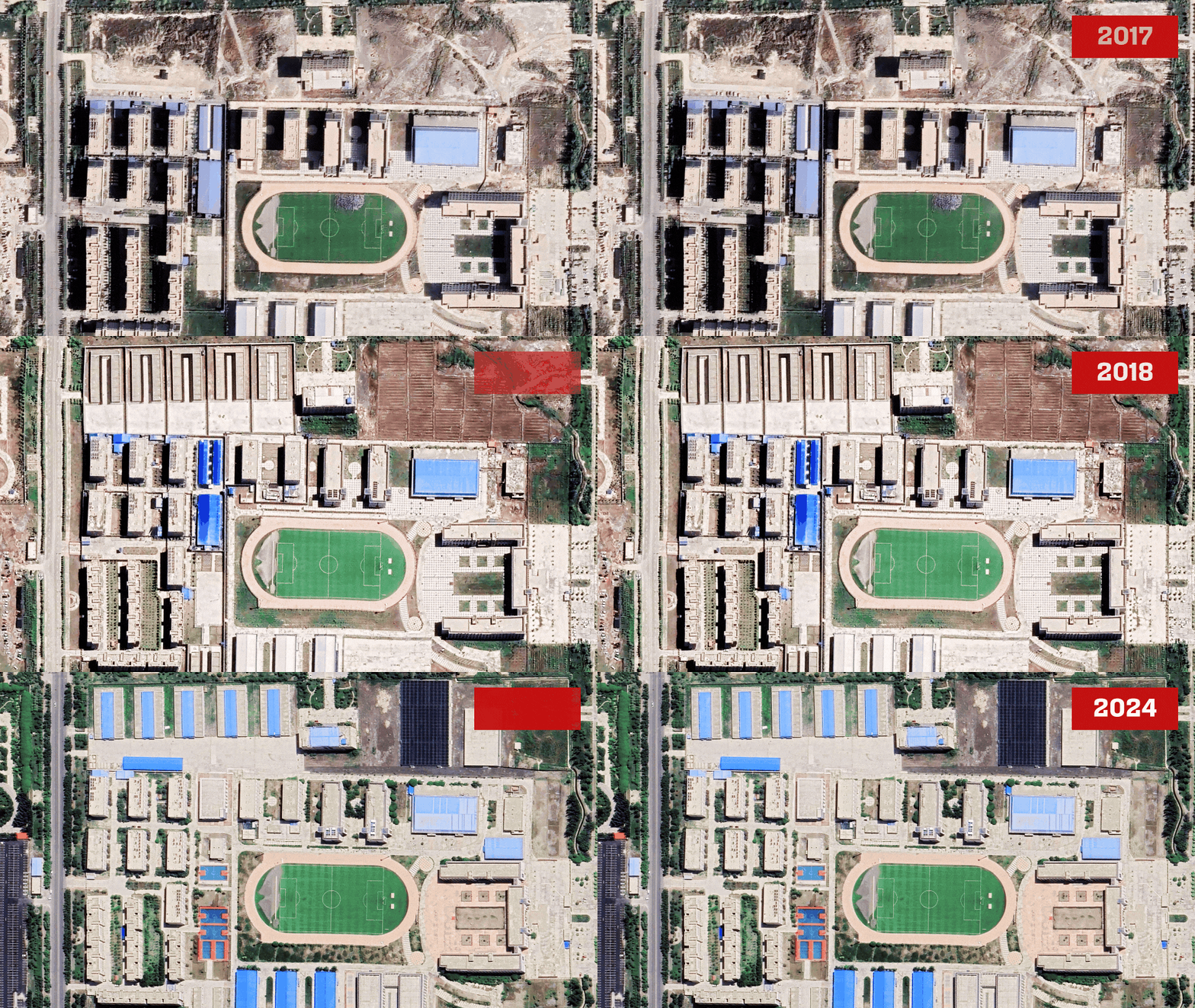
Although the purpose of the centre has changed, it is still synoymous with oppression. In enrolment instructions for the 2023-2024 school year, the vocational school in Yengisar enthused about introducing a “military-style environment”. Videos published on Douyin, TikTok’s Chinese version, show Uyghur students bursting into patriotic songs. They wear uniforms, with their fists tight against their faces. Once they are on a work placement, students take intensive Mandarin and Chinese culture classes “in their free time,” as reported by a local newspaper. “These vocational training schools particularly target young Uyghurs for indoctrination and cultural assimilation,” says German anthropologist Adrian Zenz, an expert on forced labour. “And this is a form of brainwashing.”
Contacted by Disclose, the French brand confirms that “Qingdao Jifa Group is currently listed as a direct supplier to Decathlon”. But the company denies any links with the group’s subsidiary in western China: “Xinjiang Xirong Clothing Company has never been a Decathlon supplier”. No further explanation is given. The same silence applies to the factory’s links with the Yengisar vocational high school. Decathlon refers to its code of conduct and says it “firmly condemns all forms of forced labor”.
Yet its supply chain in China gives rise to more suspicions of modern slavery. Other farmers from Xinjiang are not “absorbed” to get them to work in the local factory but are transfered to Shandong, across the country. Once again, Decathlon’s partner, Jifa, is directly involved.
Transfer of Uyghurs across China
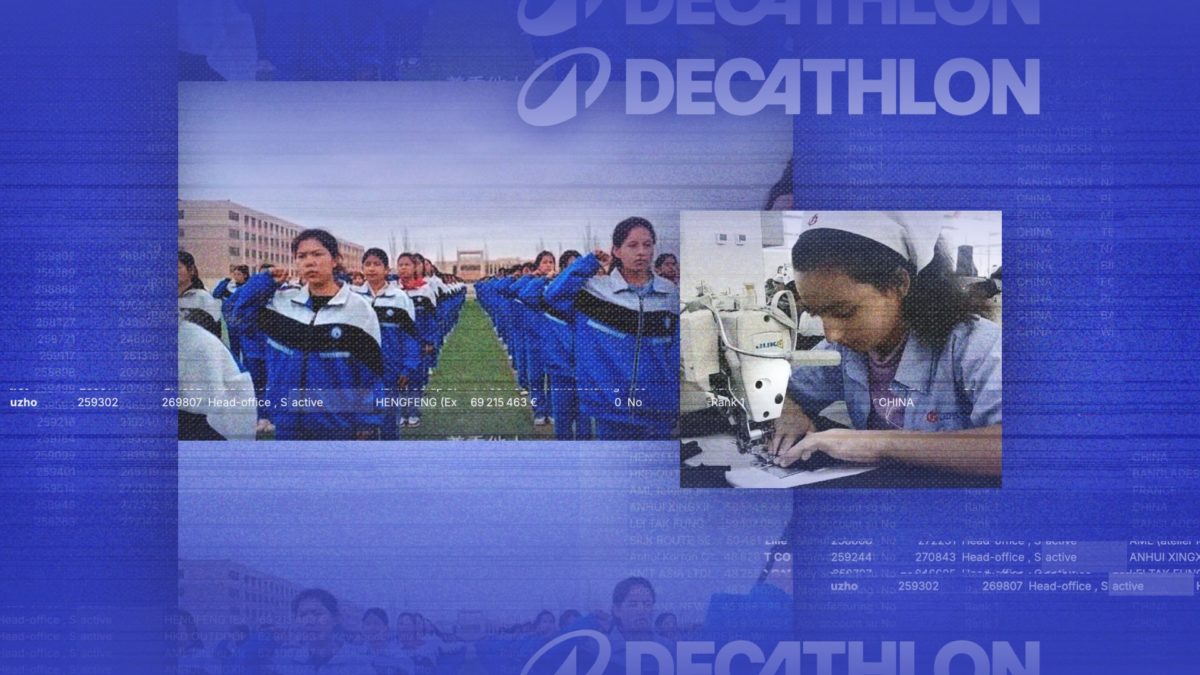
With their heads down and expressionless faces, a dozen Uyghur apprentices are waiting on a red carpet rolled out on the sports ground of the vocational school in Yengisar. Behind them, a fluttering banner can be seen announcing a ceremony to “celebrate their departure”. The local newspaper reported in March 2019 that they were part of a group of 28 young women sent for a “work placement” at the headquarters of the Jifa group in Qingdao, the capital of Shandong, 4,000 kilometres away.
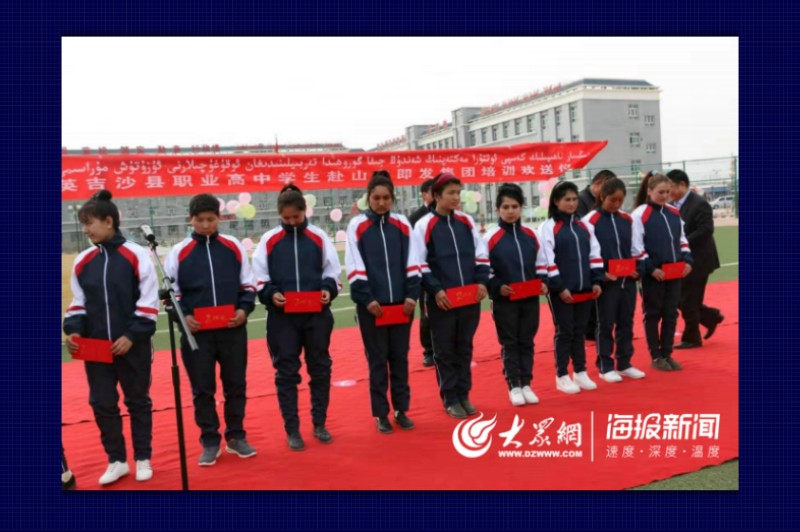
Their journey was funded by the Chinese authorities as part of “industrial aid to Xinjiang”. But rather than “aid,” this was a transfer of Uyghurs in a bid to make up for a shortfall in cheap workforce in Shandong, where Jifa owns some twenty factories. This practice feeds the “Sinicisation” conducted by Beijing in Xinjiang, as confirmed by a report by Chinese researchers inadvertently disseminated in 2019: “Helping them to get rid of poverty is the most basic and important approach, especially through labour transfer. This not only reduces Uyghur population density in Xinjiang but is also an important method to reform, meld and assimilate Uyghurs,” the persecuted minority.
Two Jifa factories working for Decathlon in Shandong are believed to take advantage of the population transfers from Xinjiang, the investigation by Disclose and Cash Investigation reveals. One is situated in the village of Liudi, west of the province. The second is none other than the Sanzhiwang factory, a few kilometres away, where we met a 12-year-old girl fussing over a Decathlon polo shirt, although the minimum working age in China is 16.
Kalenji t-shirts, Domyos trousers, Kipsta jerseys, etc.: videos published by employees of the two factories on the Chinese version of TikTok show workers handling the products of the French manufacturer. Amid comments on “heavy work” and “overtime,” one of the videos stands out. It is a guided tour of the workshops in Sanzhiwang by a Jifa employee. Facing the camera, she calls out to her community: “People from Xinjiang and North Korea, you are welcome to work here… There are all kinds of subsidies from the Chinese government.” A translation confirmed to Disclose and Cash Investigation by three translators.*
In other words, Jifa enjoys financial support from the authorities to bring workers from places where the central governments, Beijing and Pyongyang respectively, repress their people. This is incontrovertible evidence of forced labour, says anthropologist Adrian Zenz. “If a company receives subsidies for employing ethnic minorities from Xinjiang, it means that they’re participating in a form of an official government labour transfer programme. It means that there is a very high systematic risk of state-imposed forced labour if you participate in it.” The same risk lurks in the last link in Decathlon’s production chain in China: cotton farming.
Xinjiang Cotton
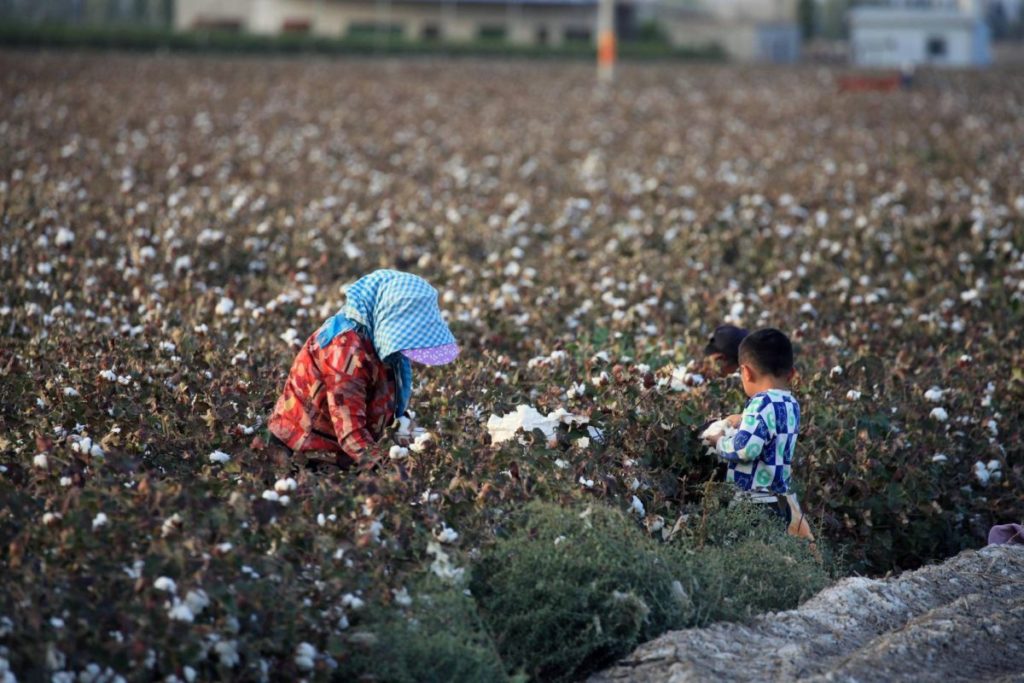
During Cash Investigation’s hidden-camera visit to the factory in Liudi, a Jifa manager revealed some crucial information as she walked past rolls of fabric. She said that the cotton used by Decathlon “may come from Xinjiang”. But cotton growing in the region is marked by serious risks of forced labour. According to several international reports and investigations, more than half a million Uyghurs are believed to have been forced, in 2020, to pick and process cotton, a raw material that is essential to the Chinese textile market. Cotton growing represents 90% of national production. In 2023, the authorities in Xinjiang still called for the “Uyghur surplus labourers” scheme to be “expanded” so as to direct them to cotton fields.
When we telephoned the Jifa manager a few days later, she made a second revelation that is even more embarrassing for the French sports brand. She said that “the cottons are chosen by Decathlon”. She added: “We just assemble the fabrics. The raw material for the clothes is selected by our client”. When contacted by Disclose, Decathlon was adamant that “100% of the cotton used in the manufacture of its products comes from sources committed to more responsible practices”, while acknowledging that it “continues to strengthen the traceability of all [its] raw material supplies.” A more cautious formulation than the one posted until recently on its website, which had suddenly disappeared by the time we finished this investigation: “To avoid buying cotton from Xinjiang, you need to have the means to know where it comes from”.
The French multinational may have to ramp up its “efforts”. Since 2022, importing products made of Xinjiang cotton is banned by the United States and is likely to be rejected by customs in Canada and the United Kingdom. Decathlon sells its clothes in those three countries. In the Spring of 2024, the European Parliament also approved a draft regulation banning products from forced labour that is supposed to come into force by 2027. Decathlon could have questioned its working relationship with Jifa long ago, before it is under a legal obligation to do so. In March 2021, the UN High Commissioner for Human Rights simultaneously wrote to both companies to question them about the potential presence of forced labor in their supply chains. The brand acknowledges this to Disclose, saying that “this letter caught [its] full attention”. We checked and it seems that the French multinational only sent an e-mail with a reminder of its human rights policy and its purpose: “to sustainably make the pleasure and benefits of sports accessible to all”.
Read the other episodes of our investigation “Decathlon, a champion of exploitation”:
- Decathlon’s Quechua shoes manufactured by suppliers linked to deforestation in Brazil
- Decathlon: revelations on a champion of exploitation
- Decathlon, the hard labour textile factory in Bangladesh
Updates
07/02/2025, 2:12 pm: Xinjiang Xirong Clothing is a subsidiary of Jifa until the end of 2023.
21/03/2025, 9:00 am : Addition of a reference to the three Chinese-French translators contacted by Disclose and Cash Investigation prior to publication of this article.
Investigation: Pierre Leibovici, with Gabriel Garcia (Cash Investigation)
Additional research: M. T. (anonymous Uyghur researcher), Daniel Murphy, SOMO (The Counter)
Editing: Mathias Destal
Composite image: Eric Dellfos
Translation from French: Béatrice Murail
This investigation is free of charge, thanks to you
Because information is a public good, Disclose offers you all its investigations free of charge, without subscription or advertising. This model is unique in France for an investigative news outlet.
But it’s only possible on one condition: that readers like you support our not-for-profit newsroom. Donations to Disclose are eligible for a 66% tax reduction in France. So a donation of €100 will only cost you €34. Thank you for your support!


On the same topic
