Decathlon, the hard labour textile factory in Bangladesh
Decathlon, the hard labour textile factory in Bangladesh
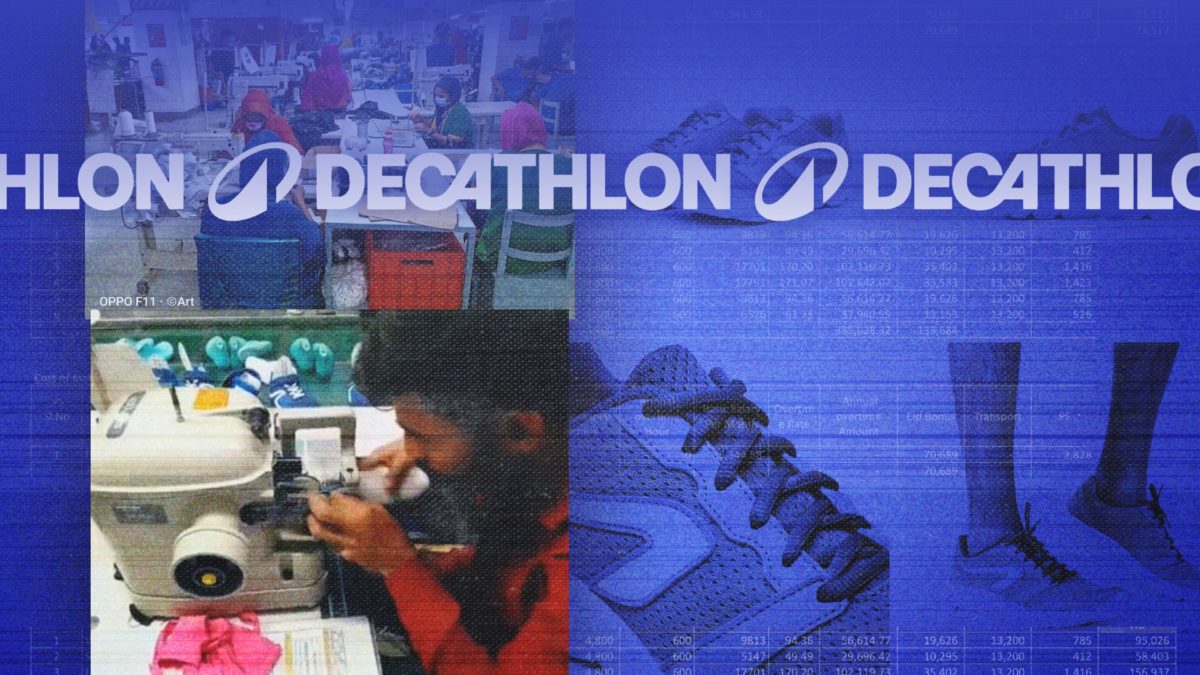
To offer the lowest possible prices, the French giant sports retailer has its garments made in one of the poorest countries in South Asia. There, Decathlon selects the subcontractors who pay the lowest wages, even if that means working with clandestine factories that are dangerous for employees, Disclose can reveal on the basis of confidential documents.
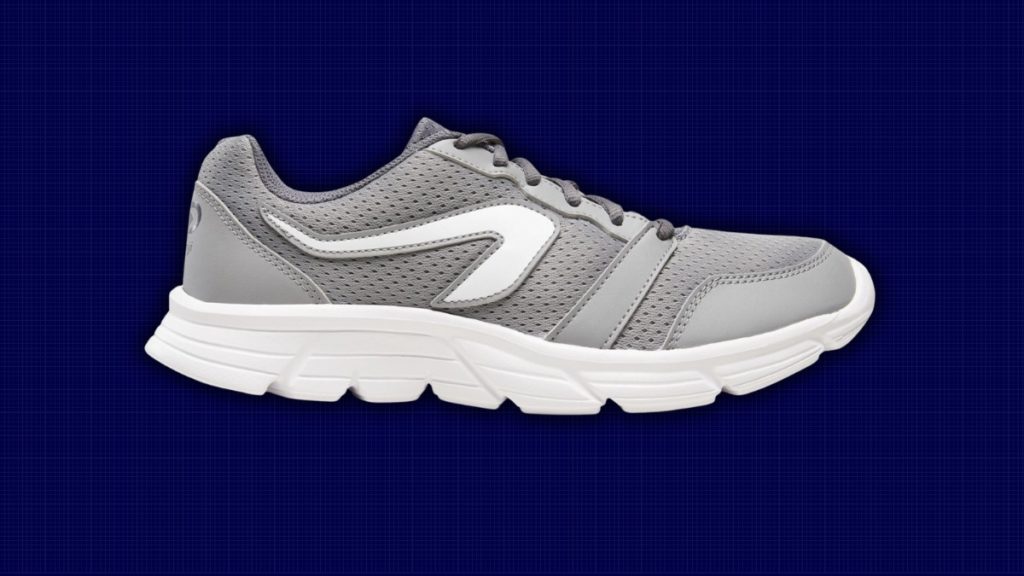
With its slender shape, light weight and affordable price, the Kalenji Run 100 shoe is emblematic of Decathlon’s knowhow. At 13 euros a pair, it embodies the French brand’s slogan since 1976: “to make sports accessible to all”. This is a particularly impressive performance as it has cost Decathlon half as much to make it, across the planet, in Bangladesh. The sports multinational seems to have no qualms exploiting workers in order to be a successful business, even if it means causing fierce and dangerous competition among its suppliers, fostering adolescent labour and clandestine factories in the country.
This is what the Disclose investigation has revealed. It is based on analysis of dozens of Decathlon internal documents and testimonies from former members of staff with experience of the French firm’s uncontrolled trade practices in Bangladesh, where some of the Quechua, Kalenji and Kipsta sub-brand best-sellers are made.
It all starts when local partners are selected in the South Asian country, where the garment industry makes up 85% of exports. Before it chooses its suppliers, Decathlon uses a ruthless approach: it assesses their “desirability” and “performance”. Other factors include “sharing a cost reduction culture with Decathlon” and “a minimum wage below the average wage,” according to a matrix of 64 criteria seen by Disclose.

In other words, Decathlon looks for ‘low-cost’ if not ‘extremely low-cost’ subcontractors, as shown by an internal list of suppliers that a source shared with Disclose. This is a sensitive document for the French brand, which refuses to name its manufacturing partners. In Bangladesh, it has no fewer than 73 subcontractors, including 16 producing only footwear.
“Decathlon fights over every cent”
To make sure that they share a “cost reduction culture,” Decathlon demands from its Bangladeshi subcontractors that they submit details of all their expenses: machinery price, wages, rent, administrative expenses, etc. The hundreds of figures are listed by the manufacturer and added up to determine the “cost per minute” of each factory in order to work out the actual cost of 60 seconds of labour. An in-depth calculating process with the following result: an average of €0.030 per minute for a shoe manufacturer in Bangladesh. “Decathlon fights over every cent,” says a former local Decathlon employee.
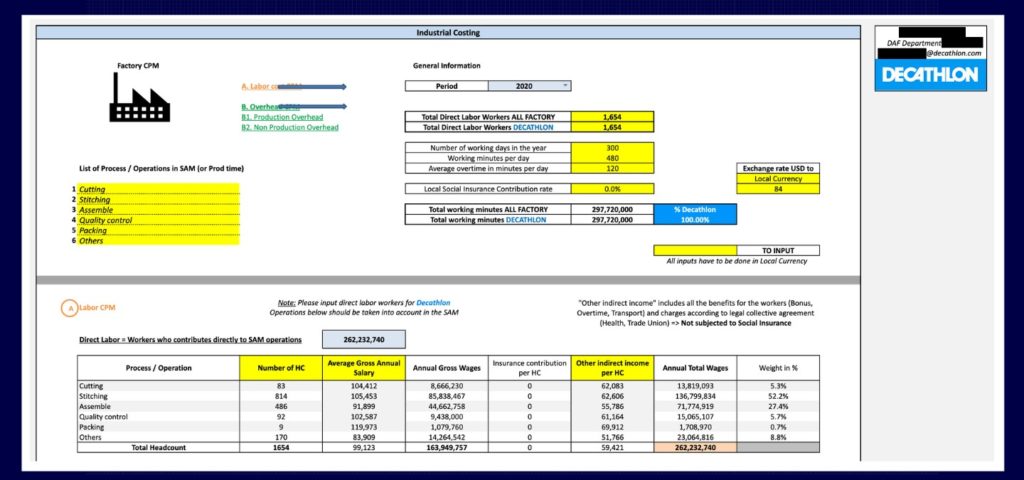
“Everything is broken down and optimised,” says an industrial consultant in Asia who also worked at Decathlon for several years. “The brand knows exactly how much it pays for each gramme of material, for each gesture at a work station.” He says that other Western brands such as Nike and Adidas have introduced a similar system of “full cost control” in Bangladesh. A major difference, however, is that Decathlon’s items are far less expensive than its competitors’. Therefore, “in order to lower manufacturing costs, we only had one lever: labour costs,” says another former member of staff of the group.
Disclose has identified one of Decathlon’s ‘extremely low-cost’ suppliers in Bangladesh. Edison Footwear is one of the French firm’s main partners in the country. Some of its 1,700 employees produce exclusively for Decathlon. In 2021, its production lines in Gazipur, North of Dhaka, the capital, manufactured 1.3 million pairs of Kalenji Run 100 shoes. A pair of running shoes retails for 13 euros in France. To guarantee its client a comfortable margin – Decathlon buys each pair for half the price, 6.17 euros for women’s shoes and 6.41 euros for men’s – Edison Footwear pressurises its workers to the point that it is no exaggeration to talk of textile hard labour.
60 hours per week, 87 euros per month
According to the “cost-per-minute” table worked out by Decathlon and obtained by Disclose, Edison Footwear’s workers earned on average the equivalent of 87 euros per month (8,447 takas) in 2020 for a 10-hour working day, six days a week, and only 13 days of paid annual leave.
“Almost all Edison Footwear employees accept these wages because they want to escape poverty in rural areas,” says Kamrul Hasan, general secretary of the Akota Garments Workers Federation, the textile workers union. In November last year, he stood outside the gate of the Edison Footwear factory to try to convince workers to assert their rights with the management, in vain. The union leader noticed very young people who, he said, “need to work to support their family”.
Photographs published on Google Maps confirm the presence of adolescents in the workshops where Decathlon footwear is made. It is difficult to estimate their age but in Bangladesh it is legal for adolescents as young as 14 to work. According to the code of conduct that the French multinational has devised for the benefit of its suppliers, workers need to be at least 15. These young employees offer a significant economic advantage: they are recruited as apprentices and can therefore be paid less than the minimum wage — 73 euros (7,100 takas) in 2020, i.e. about 99 euros (12,500 takas) in 2025.

Employees’ pay at Edison Footwear, whether they are adults or minors, is deemed to be grossly insufficient by the union leaders and researchers interviewed by Disclose. “This is a legal wage, not a living wage,” says Manirul Islam, the director of the Bangladesh Institute of Labour Studies. He has worked out that a textile employee should earn three times as much, i.e. 21,000 takas (165 euros) per month to be above the poverty line. Quite a contrast with the “ambition” that the sports multinational flaunts in its code of conduct: “Every worker has a right to compensation for a regular work week that is sufficient to meet the worker’s and their family’s basic needs and provide some discretionary income”.
When approached by Disclose about the implementation of this commitment at Edison Footwear, Decathlon acknowledged “non-compliance with [its] standards (working time, pay), which has been rectified”. The multinational says its “audits have revealed no instances of child labour”. It boasts about the 842 checks conducted at its subcontractors’ around the world in 2024. But that is tantamount to less than one audit per year at its 1,300 suppliers. Worse still, this is a significant drop: two years earlier, Decathlon carried out checks at 1,067 partner factories.
Clandestine factories
“Human Resource Planning assessment is a tickbox exercise for the benefit of brands, not workers’ interest,” says Christie Miedema, campaign and outreach coordinator at Dutch NGO Clean Clothes Campaign. Disclose has obtained a video that seems to prove her right. It was shot on the premises of another of Decathlon’s suppliers in Bangladesh called Landmark Footwear. It shows workers applying with their bare hands extra-strong glue to stick together two parts of the sole of the famous Kalenji Run 100 shoe — several subcontractors make the best-seller. Instructions with the Decathlon logo, 11 seconds into the video, specifiy that when the sole leaves the oven it has a temperature of “45 to 55 degrees Celsius”. The women do not wear masks either, although they are handling a very volatile substance that is potentially toxic.
When questioned on this point, Decathlon said that “Landmark Footwear joined [its] supplier network in 2025, once it had complied with [its] standards”. Yet production of Kalenji running shoes seemed to be firmly in place in late 2024, as shown by the instructions dated “12.12.2024” in the video dug up by Disclose.
Despite the shortcomings of its self-monitoring, Decathlon has never joined the International Accord for Health and Safety in the Textile and Garment Industry, set up following the Rana Plaza disaster, in which more than 1,100 people were killed in 2013. The agreement, signed by 190 brands including Uniqlo, Primark and Puma, guarantees that independent monitoring is conducted in the factories, with detailed results made public — just the opposite of practices at Decathlon.
There is one last trade secret that the multinational is careful not to reveal: it resorts to “clandestine factories,” says a former employee, to produce some of the components of shoes that are made in Bangladesh. “They are called rank 3 suppliers, non nominated suppliers,” says the former Decathlon employee. “Rank 3 suppliers supply around 10% of a running shoe”. For instance, they are able to supply Decathlon’s official subcontractors with fabrics, plastics and labels.
The brand does not monitor workers’ rights, building safety, etc. in workshops that do not feature on its list of subcontractors. “At Decathlon, upstream and downstream value chains are very complex,” it argues on page 27 of its vigilance plan, grudgingly acknowledging the existence of “rank 3 suppliers”. Yet these factories are an essential link in a chain that makes it possible to sell running shoes for 13 euros: “When you need to produce 1 million labels and they cost 3 cents per unit at a rank 2 supplier against 1 cent at a rank 3 supplier, you won’t hesitate,” says the former member of staff. “The best price has to be achieved by any means.”
Read the other episodes of our investigation “Decathlon, a champion of exploitation”:
- Decathlon’s Quechua shoes manufactured by suppliers linked to deforestation in Brazil
- Decathlon profits from Uyghur forced labour in China
- Decathlon: revelations on a champion of exploitation
Investigation: Pierre Leibovici
Editor: Mathias Destal
Translation from French: Béatrice Murail
This investigation is free of charge, thanks to you
Because information is a public good, Disclose offers you all its investigations free of charge, without subscription or advertising. This model is unique in France for an investigative news outlet.
But it’s only possible on one condition: that readers like you support our not-for-profit newsroom. Donations to Disclose are eligible for a 66% tax reduction in France. So a donation of €100 will only cost you €34. Thank you for your support!


On the same topic
