PFAS: the manufacturer of sugar brand Daddy fosters forever chemicals
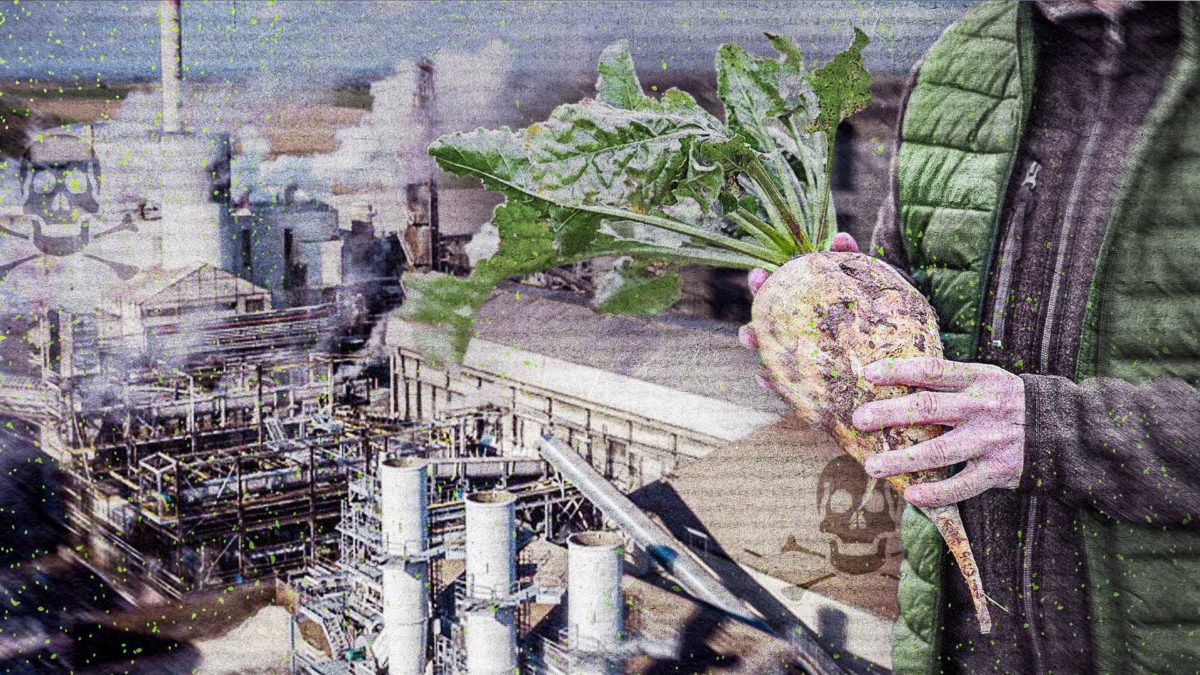
PFAS: the manufacturer of sugar brand Daddy fosters forever chemicals
Cristal Union, France’s second biggest sugar manufacturer, is facing large-scale forever chemical contamination, Disclose can reveal in partnership with France 3. The entire production chain is contaminated, from sugar beet fields to factories. The company has been secretive about the source of pollution, which may be caused by pesticides used in the fields.
Cristal Union makes Daddy sugar, popular with two thirds of French homes, as well as in the four lumps of sugar found in every can of Coca-Cola. It is also very likely that the icing sugar used by corner bakeries and patisseries comes from its factories. Cristal Union may not be a household name but it is a major player. As the top sugar supplier to the French agribusiness industry and with a €2.65bn turnover last year, the cooperative group sits on white gold, the sugar beets grown in northern and eastern France. But the valuable commodity is affected by a scourge whose magnitude is only just beginning to be grasped: PFAS, chemical molecules that remain in the environment for ever and that are toxic for humans.
For the first time, Disclose and France 3 can reveal the scope of forever chemical contamination faced by an agribusiness giant. Cristal Union’s production chain, from agricultural land to sugar beets, is infested by these toxic substances. Worse still, the pollution is spreading in an irrevocable cycle because the company dumps its products packed with PFAS on partner farmers who discharge them into their fields. Our investigation has revealed that the sugar giant has not bothered to warn them about the contamination. State services have also kept mum. They were alerted in 2023 but they have never made any public statements about the pollution. As a result, products sold by Cristal Union, including sugar beet by-products for animals, are also contaminated, endangering the entire food chain.
Forever pollution
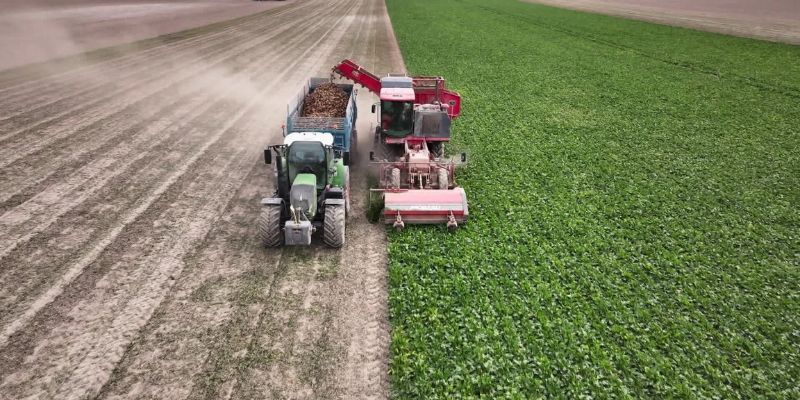
In the Arcis Plain, some 30 km north of Troyes (Aube, east of Paris), sugar beet harvesters have their claws out. Since early September, they have been harvesting up to 25,000 tonnes a day of whiteish roots that lorries take to the Cristal Union site in Villette-sur-Aube. In the sugar refinery and distillery, the sugar beets are washed, chopped and heated to be turned into sugar. However, several years ago, invisible and toxic particles got into the production chain.
Disclose and France 3 collated test results from more than 3,000 factories required since 2023 to declare their PFAS discharges into the water. To gauge the discharges, state services use several indicators, including AOF, which stands for adsorbable organic fluorine. The Cristal Union sugar factory in Villette-sur-Aube emitted close to 125 kg of AOF on 6 November 2023. Because of that single discharge, the factory ranks as the country’s third largest emitter. Further down the list, the group’s distilleries in Bazancourt (Marne) and Buchères (Aube) discharged up to 125 g and 73 g of AOF respectively on a particular day. When approached, the Grand Est region’s environment, development and housing authority (DREAL) answered that “the AOF values at Cristal Union are highly variable, which makes them difficult to interpret”. The prefect took a decree “as a matter of urgency” in May 2024 and ordered additional tests.
A particular molecule of the PFAS group called PFBA has been discovered at the Villette-sur-Aube site. Nearly 3 grammes of PFBA were discharged by Cristal Union within a single day in late 2023. “The available evidence indicates that developmental, thyroid, and liver effects in humans are likely caused by PFBA exposure in utero or during adulthood,” according to a toxicological review published in 2022 by the US Environmental Protection Agency (EPA).
PFAS contamination at Cristal Union is of particular concern because it is circular. The company’s polluted water is not discharged into pipes or rivers but is spread over about 22,000 hectares of fields owned by farmers in some 30 municipalities in the area, including Laurent, a sugar beet grower. “We have no choice. If no one unblocks the factory, it will no longer be able to operate,” he says. However, Cristal Union failed to inform him and several other farmers interviewed by Disclose and France 3 about the presence of forever chemicals.
Some 550 undisclosed tests
The large quantities of PFAS in the water provided to sugar beet growers in the region permeate the ground. As a result, pollutants build up in the soil that stays on the vegetables that are then dispatched to the company’s sugar factory in Villette-sur-Aube. This is revealed in a DREAL report dated June 2025. Civil servants wrote that PFAS have been detected “in incoming flows of agricultural origin”.
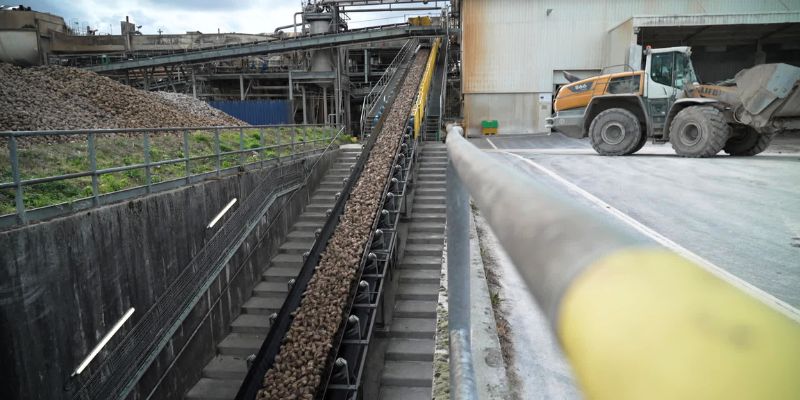
The report also reveals that Cristal Union launched a major survey on the quiet about the pollution in spring 2024. It was commissioned from Reims Champagne-Ardenne University, which has entered into partnership agreements with Cristal Union’s local sugar flagships over the past few years. A total of no fewer than “550 tests” have been conducted in the group’s 13 French factories. Although the results of the tests are in the public interest, they have not been released. Cristal Union would not share them with Disclose and France 3, saying only that “a study will be made public at the end of the year”. The Grand Est DREAL and the university also declined. According to the latter, the results will be published “in a peer-reviewed scientific journal”. The university’s public relations department stated that it “reserves the right to end a partnership should a partner’s behaviour jeopardize the independence or transparency of scientific work”. Meanwhile, the sugar group continues to sell products contaminated by PFAS.
PFAS in the food chain
Have forever pollutants, ubiquitous at the Villette-sur-Aube sugar factory, spread to Daddy sugar, which is made on site? When approached, the Grand Est DREAL answered that “it is not within its remit to test products meant for human consumption”. It relies on “preliminary tests” conducted by the company which showed that “PFAS/AOF were absent from the finished product (sugar)”. These are confidential tests, which we are supposed to take on trust, yet the presence of PFAS has been established beyond doubt in beet by-products sold by Cristal Union.
Sugar is just one of the commodities made from sugar beets. “Nothing goes to waste,“ says a local farmer in Aube. Beet pulp is derived from the residual mash that results from the distillation of the vegetables, and the Villette-sur-Aube factory produces up to 55,000 tonnes of pulp per year. Local farmers use it as a natural fertiliser — “It boosts beet plants,“ says sugar beet grower Laurent. Molasses, a syrup from sugar refining, is sold on to animal food manufacturers, and pellets, pieces of dehydrated beet pulp, are used as cattle fodder.
However, according to the June 2025 DREAL report, “beet pulp and molasses concentrate PFAS, and traces of PFAS have been detected in pellets.” This means that Cristal Union spreads forever pollutants not just through the waste water used to water fields but also through cattle fodder, and this on an industrial scale. Some “500,000 tonnes of beet pulp, spent wheat grains and molasses” were expected to be sold by the company in 2023. Disclose and France 3 got in touch with several local cattle breeders who buy products from Cristal Union. All say they have never been informed about the forever pollutant in the fodder they give their cattle. When approached, the sugar group explained that “the progress reports [of its PFAS tests] are not meant to be made public” and that “customers, partners and farmers who use [its] water waste will be the first to be informed of the results”. In the meantime, the substances “bioaccumulate in the liver, blood and kidneys” of land animals, according to a report from the French Industrial Environment and Risks Institute (INERIS) last April, leading to the “possible bioaccumulation of PFAS in the food chain”.
The pesticides hypothesis
One issue remains to be addressed about the source of the PFAS detected in Cristal Union’s factories. To answer the questions of Disclose and France 3, the group sent a spokesperson, a former lobbyist with influencer marketing agency Thomas Marko & Associés, whose clients have included 3M and Solvay, two companies involved in concealed forever pollutant contamination scandals. “Cristal Union does not use any PFAS in its processes,” she says. The PFAS detected in the soils may “result from some agricultural practices” and “from the use of urban waste water from water treatment plants,” she says. She adds that “80% of toilet paper rolls still contain PFAS”. This rhetoric has been taken up by another member of the cooperative group: “PFAS are present in the soil that stays on the beets brought to the factory but they can also be found in nail polish, toilet paper, etc. They are all over your body.”
But the authorities do not think that toilet paper is the source of pollution. When approached, the Grand Est DREAL says it believes that “PFAS and AOF originate in agricultural activity”. A beet grower who supplies Cristal Union hints that “they may come from the active substances spread on crops,” a euphemism for pesticides.
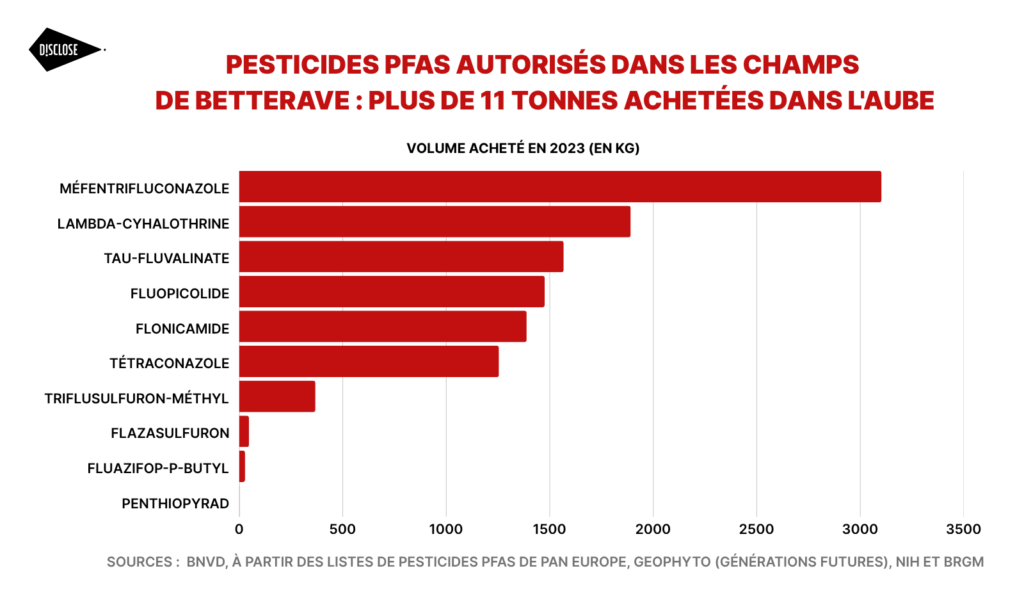
Some substances spread on beet crops belong to the PFAS group. There are ten of them, based on our analysis of the EU classification of agrochemicals. When we cross-checked the list with the national pesticide register, it turned out that 11 tonnes of these products were sold in Aube in 2023.
“It’s possible that pesticides have been used so extensively and for such a long time that the water — circulating in a closed loop — ends up concentrating residues that cannot be further degraded,” suggests Helmut Burtscher-Schaden, an environmental biochemist at Austrian NGO Global 2000 and a member of the European Pesticides Action Network. The Austrian scientist adds that some pesticides degrade into PFAS, including into TFA, the smallest molecule of the large group of chemicals, which is toxic for the liver and reproduction. “It would be highly relevant to test for TFA in these industrial discharges,” he adds.
But Cristal Union has other ideas. It confirmed to Disclose and France 3 that TFA does not feature among the substances its products are tested for. “It is too costly and too complicated,” says a source at Reims Champagne-Ardenne University. “When you know that PFAS pesticides are used in a particular place and that tests for TFA are not conducted, it means that there is no willingness to find them,” laments François Veillerette, a spokesperson for NGO Générations Futures. In the meantime, in the Aube plains, Cristal Union has welcomed “favourable weather conditions” boosting prospects for a fine harvest of sugar beets. And PFAS.
Investigation: Nicolas Cossic (Enketo collective), with Émilie Rosso (France 3)
Editor-in-chief: Pierre Leibovici
Editing: Mathias Destal
Fact checking and data analysis: Rémi Labed
Composite image: Caroline Varon
Translation: Béatrice Murail
This investigation is free of charge, thanks to you
Because information is a public good, Disclose offers you all its investigations free of charge, without subscription or advertising. This model is unique in France for an investigative news outlet.
But it’s only possible on one condition: that readers like you support our not-for-profit newsroom. Donations to Disclose are eligible for a 66% tax reduction in France. So a donation of €100 will only cost you €34. Thank you for your support!