PFAS: our exclusive tests reveal rampant contamination in Ardennes and Meuse
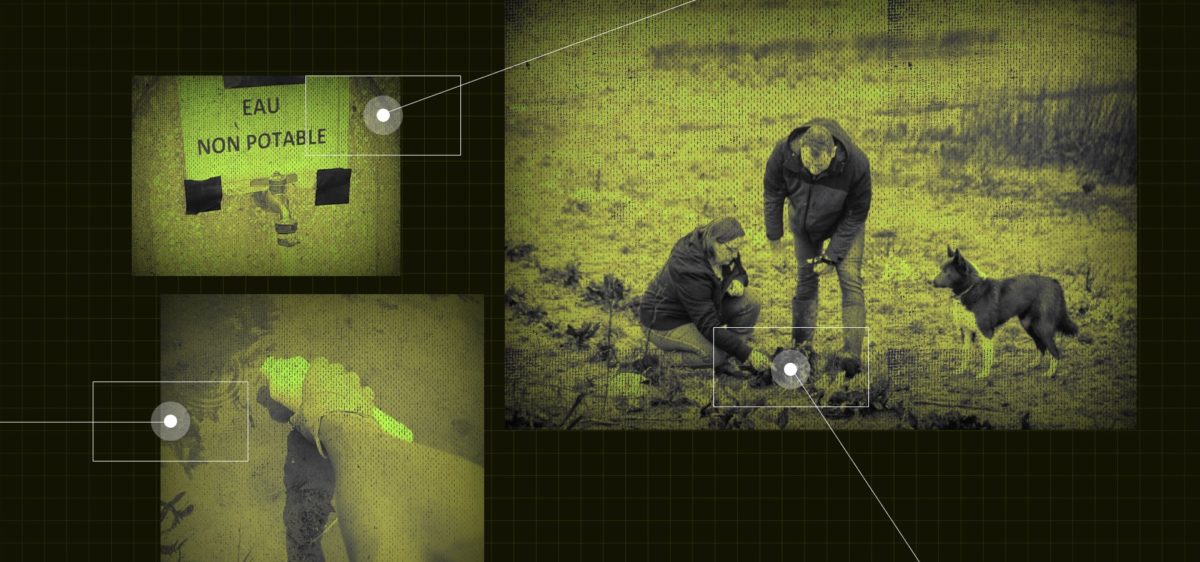
PFAS have contaminated everything in 17 municipalities in the Ardennes and Meuse departments in northeast France, from soil to vegetables, rivers, fish and even people’s bloodstream, Disclose and France 3 can reveal. Tests conducted with a Montreal University laboratory show record levels of ‘forever chemicals’ in agricultural land. The pollution poses a “direct threat to health” according to a “restricted” memo.
The Jardin d’Ardennes was aptly named. Until last autumn, the vegetable farm stood out like a Garden of Eden among flat, dull grain-growing plains. Proud tomato plants, buxom gourds and aromatic herbs contributed to the reputation of Anne and Sébastien Abraham, in their forties, who farmed on the edges of the village of Haraucourt (Ardennes) for three years.
The withered ground is testament to the Abrahams’ misery. The couple’s life was turned upside down in October 2025 when several engineers from a laboratory mandated by government authorities turned up on their plots. The food contaminant testing experts took away salads, carrots, pears and sorrel. Their verdict: of the 48 fruit and vegetables tested, half had worrying levels of PFAS, toxic substances called ‘forever chemicals’ because of their persistence in the environment. The level of PFOA, a molecule identified as carcinogenic, in beetroot was even 240 times higher than the alert threshold set by the European Union.
Based on these results, the Ardennes Prefecture made an unprecedented decision. In a letter dated 20 November 2025, they informed the Abrahams that their Swiss chard was “considered dangerous and could not be sold”. The couple decided to stop selling all their produce. “We could not continue to sell our vegetables with a smile on our face,” Anne says as she walks among the wilted cabbages. “We have not harvested anything this winter.” With their back to the wall, Anne and her husband have been waiting in vain for compensation from government authorities.
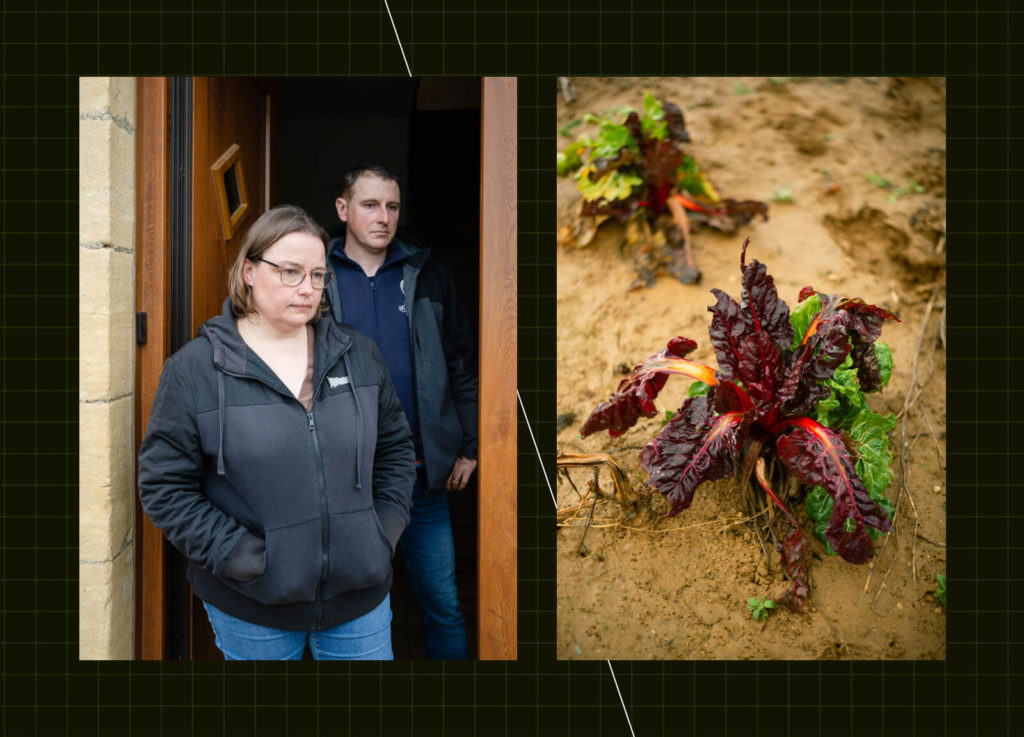
By way of a response, the civil servant handling their case asked them to “remain discreet”. “He confirmed to me that they do not tell others about our situation. They keep it to themselves,” Anne adds. “But we want to be honest with people. In fact, the lab official was farsighted. He told us: ‘Your land isn’t worth anything any more.’” In late January 2026, the couple decided to close down their farm for good.
The tragedy that the Abrahams have endured is yet another instalment in the PFAS contamination affair that everyone has been talking about in Meuse and Ardennes since last July, when an investigation by Disclose and France 3 Champagne-Ardenne revealed record tap water pollution in 17 municipalities straddling the two departments. The situation is so dire that the authorities have banned some 3,500 locals from drinking tap water and urged them to buy bottled water. Locals have received no word since then, says Annick Dufils, the mayor of Malandry (Ardennes), a village of 80: “Matters came to a head eight months ago but we have not heard from the Prefecture about the scale of the pollution.”
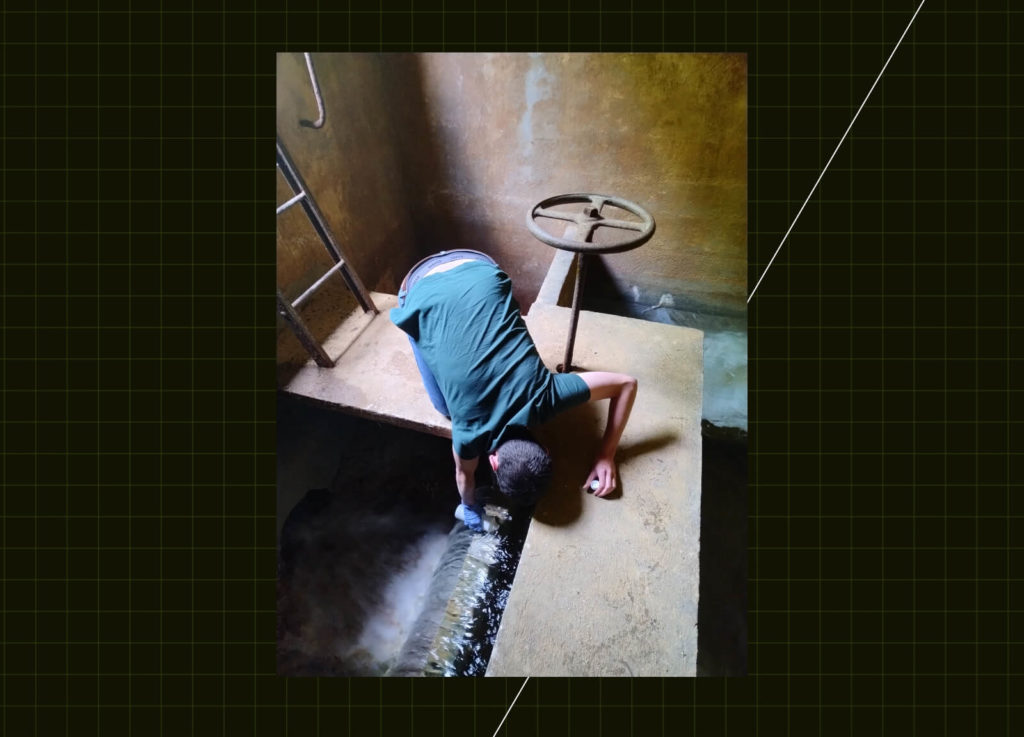
To make up for this lack of transparency from government authorities, Disclose and France 3 crisscrossed the area with test tubes in July 2025. We carried out sampling from 44 plots of agricultural land, waterways and wells owned by private individuals. We asked Dr Sébastien Sauvé, an environmental chemistry professor at Montreal University, to analyse them. Results show that PFAS have got into everything, from rivers to agricultural plots like the Abrahams’. The ‘drinking’ water issue is just the tip of the iceberg. The pollution has spread to everything in the area.
The results of additional tests conducted on behalf of private individuals and authorities, and seen exclusively by Disclose and France 3, show that fresh water fish is also contaminated, as is the bloodstream of locals.
More PFAS in the soil than in ‘Chemistry Valley’
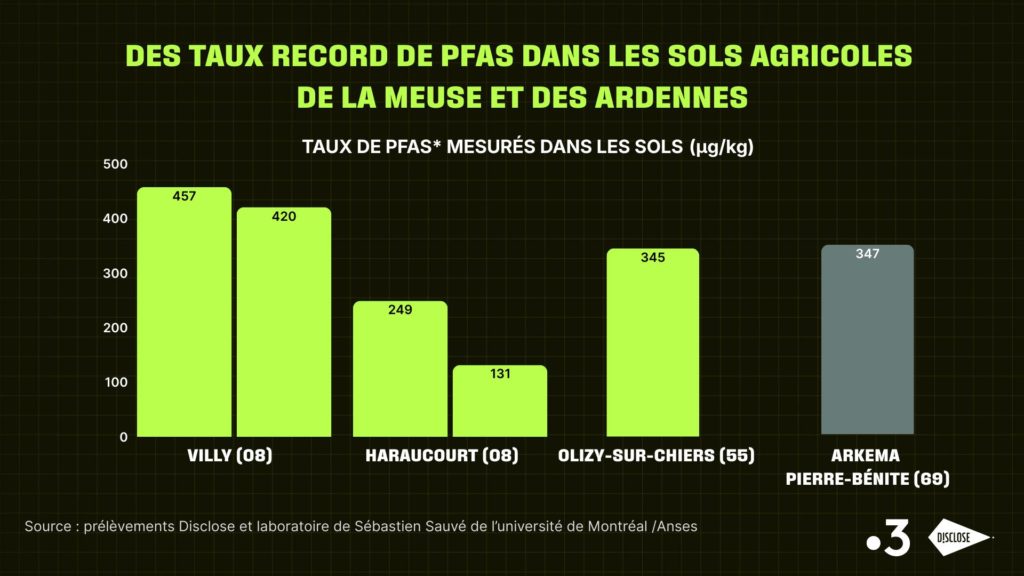
Three farmers agreed to take part in our sampling on condition of anonymity. PFAS levels on their farms are much higher than those ever recorded on agricultural land in France. Our tests show that they range between 131 microgrammes per kilogramme (131µg/kg) in Haraucourt and 457 µg/kg in Villy (Ardennes). “We have never seen anything like it,” says Dr Sauvé, who has authored many scientific papers on PFAS pollution and who coordinated the tests. “Above 10 µg/kg, soil contamination is confirmed.” Aurélia Michaud, an engineer at France’s Research Institute for Agriculture, Food and Environment (INRAE), says the results show “levels that are 20-200 times higher than those observed so far in agricultural land in France”.
Even in the so-called ‘Chemistry Valley’, south of Lyon, where the PFAS scandal broke in 2022, the highest soil reading was 347 µg/kg. It had been made just 200 metres from the Arkema factory, which makes these molecules. A whole different ball game from arable land in Ardennes.
More worrying still: among the 79 PFAS substances we tested for in our samples, the share of PFOS, a potentially carcinogenic molecule, turns out to be particularly high. The reading for the soil sample from Villy was 254 µg/kg.
Comparatively, in Belgium’s Flanders region, just 300 km to the north, a PFOS threshold has been set for agricultural land, beyond which decontamination is prescribed to protect human health and the environment. The Villy sample is 66 times higher. Why this comparison with Belgium? Because no framework regulates forever chemicals in the soil in France.
Another question arises. How can such massive contamination be explained in an area with no large chemical factories? The answer lies in the past use of the farms where we took our samples. For years, all three used a special kind of fertiliser, sludge waste from a local factory, the former Ahlstrom papermill in Stenay (Meuse).
This is what happened. Instead of tonnes of sludge from the factory’s waste water treatment being incinerated, it was supplied to local farmers to fertilise their land. In the jargon, the sludge was ‘recycled’. But it was a poisoned chalice. To manufacture greaseproof packaging, the Finnish group used products containing PFAS. Since the factory’s water treatment plant was not able to eliminate forever chemicals, they ended up in the sludge feeding the agricultural industry.
From soil to water, widespread contamination
Some of the PFAS molecules applied on the soil permeated the water, as revealed by sampling carried out by Disclose and France 3 in eight local rivers and ponds. The samples were tested and results show PFAS levels in three waterways higher than 0.1 microgrammes per litre (0.1 µg/l), the current drinking water standard. They are the Bar and the Ennemane (Ardennes) and the Loison (Meuse). This is confirmed by a “restricted memo” sent by the Meuse Prefecture on 4 December 2025 to the ministries of the interior, health, agriculture and ecological transition. In the document, seen by Disclose and France 3 following an appeal to the Committee on Access to Administrative Documents (CADA), the civil servants wrote that “the Loison and the Bar are the two waterways with the highest PFAS contamination levels in the Rhine-Meuse Basin”.
Still according to the document, which has never been made public, the fish and shellfish found in large numbers in these rivers is also highly contaminated. The fish caught in the Bar “does not meet” European standards. However, eating it is not prohibited, although a ban was recently introduced on eating crayfish from a section of the Loison. The Ardennes and Meuse prefectures did not return our requests for comment.
The dissemination of forever chemicals does not stop there. Samples collected by Disclose and France 3 from wells on five farms in the area show that PFAS also spread to groundwater. The levels of two samples tested by Dr Sauvé are higher than the tap water standard. The sample from Jardin d’Ardennes, Anne and Sébastien Abraham’s farm, even measured 2.4 µg/l. That’s 24 times the drinking water standard.
Government authorities won’t fund an epidemiological study
“We are bearing the brunt of the pollution,” says Anne, the Haraucourt vegetable grower. “We ate the produce of our farm for years and our children were also exposed to the pollution. How healthy will they be in 20 years’ time?”
In search of answers, she and her husband paid 300 euros to have their blood tested by a private laboratory. The results are bad: 150 µg of PFAS per litre of blood for Sébastien Abraham and nearly twice that level for his wife, Anne. That’s 18 and 33 times respectively the average set in 2019 by Santé publique France, the French national public health agency.
The Abrahams are just two of the locals with PFAS levels of contamination that are much higher than national averages. This is revealed by blood tests results that eight other people shared with Disclose and France 3. Jérémy, 15, has a PFOA blood concentration that is five times higher than that of the average French 15 year old. Michel, 63, has a level 59 times higher than average for his age. With such high levels of PFAS in their bodies, all the adults who shared their results have levels above the 20 µg/l threshold beyond which medical care is required, according to a baseline survey by the US Academies of Sciences, Engineering and Medicine (NASEM). “Generally speaking, blood concentrations above [this threshold] are considered to be associated with significantly increased risks of the health effects associated with PFAS,” says Dr Tony Fletcher, an environmental epidemiologist at the London School of Hygiene and Tropical Medicine. The PFAS levels of Sébastien and Anne Abraham are 8 and 15 times respectively above that risk threshold.
“This crisis poses a direct risk to health.”
“Restricted” memo from the Meuse Prefecture, August 2025
Government departments are aware of the dangers locals are facing. As early as August 2025, the Meuse Prefect alerted the Ecological Transition Ministry, as shown by another “restricted” memo seen by Disclose and France 3: “This crisis is a major health and environmental issue,” the senior official wrote. The pollution, he added, “poses a direct threat to the health of the people exposed daily […] to these toxic substances, the effects of which are likely to lead to cancers as well as endocrine and immune disorders”.
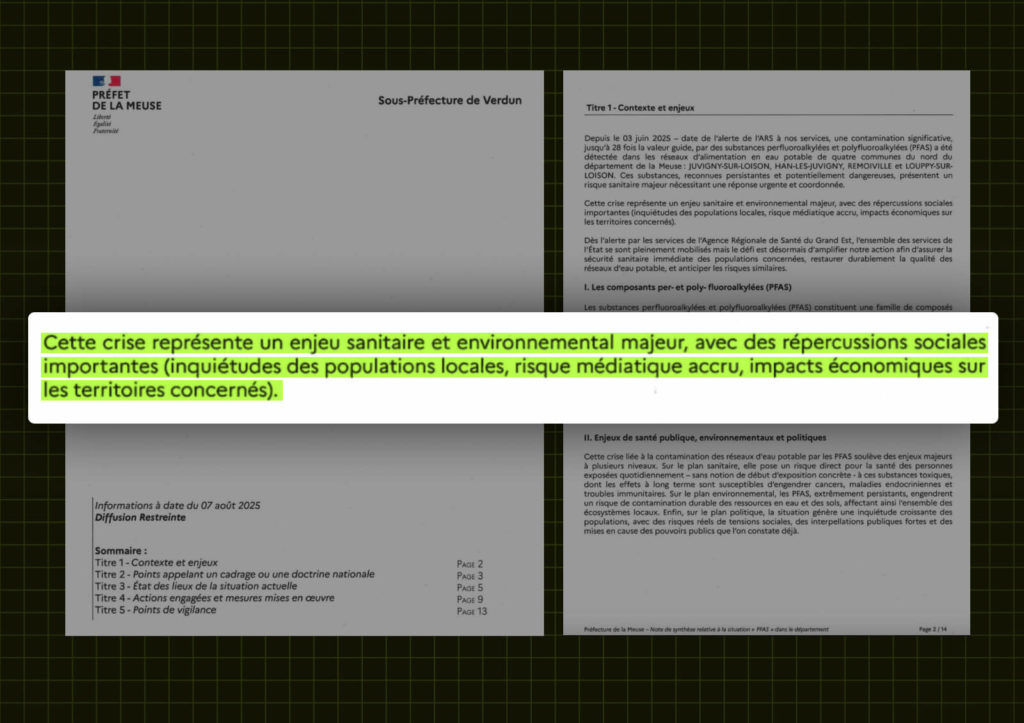
Yet to this day no local epidemiological survey has been scheduled as such a study “on a local scale is complex because it requires a large number of people to be tested for us to be able to draw robust conclusions,” the Health Ministry told Disclose and France 3. They added that concentrations in the bloodstream of locals “do not constitute a medical diagnosis”.
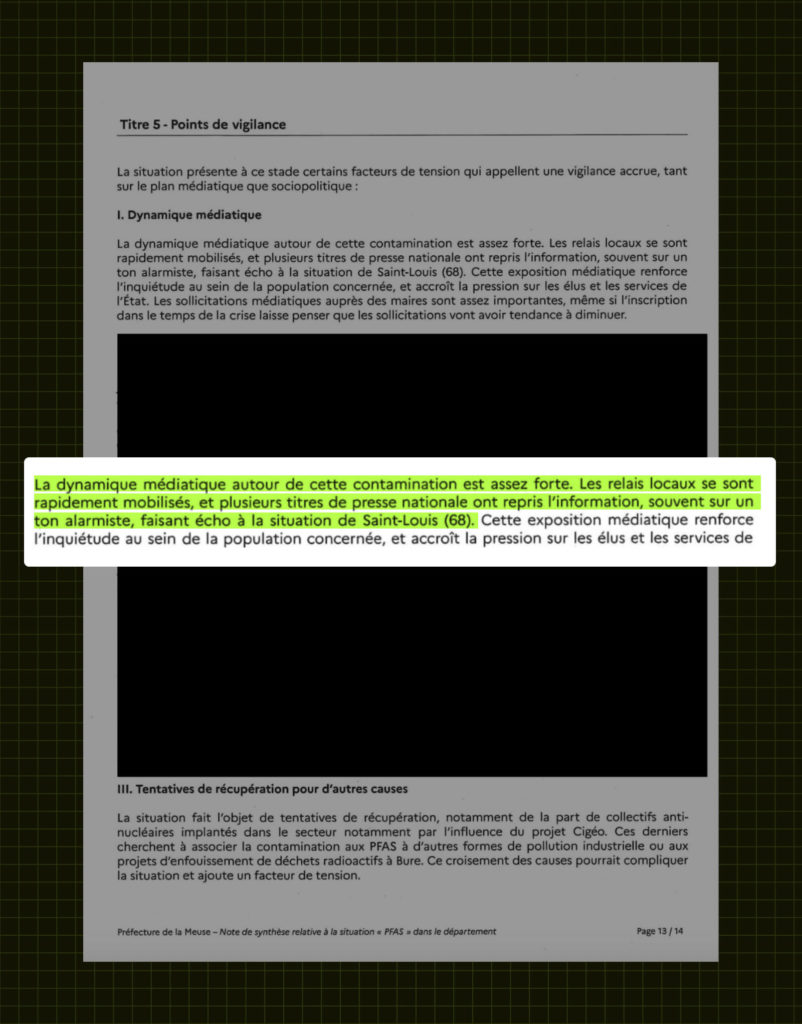
Health surveillance does not seem to be a priority but potential local protests are being closely monitored. In a partially redacted section of the August 2025 memo, the Meuse Prefect writes that he has observed several “sources of tension calling for a closer watch,” in a “context where the emergence of more organised claims cannot be ruled out in the medium term”. He mentions, in no particular order, “social media groups” as well as “initial contacts with legal assistance entities” and “anti-nuclear collectives looking to associate PFAS contamination with other forms of industrial pollution”. One last thing on the civil servant’s mind: “the media dynamic” which, he writes, is believed to increase “the pressure on elected representatives and government departments”.
*The name has been changed
Investigation: Nicolas Cossic (Enketo collective), Émilie Rosso (France 3)
Fact checking: Rémi Labed
Editorial coordination: Pierre Leibovici
Editing: Mathias Destal and Pierre Leibovici
Translation from French: Béatrice Murail
Photos: Nicolas Leblanc
Map and infographics : Nicolas Cossic, Pierre Leibovici
Composite: Éric Delfosse, with Nicolas Leblanc
This investigation is free of charge, thanks to you
Because information is a public good, Disclose offers you all its investigations free of charge, without subscription or advertising. This model is unique in France for an investigative news outlet.
But it’s only possible on one condition: that readers like you support our not-for-profit newsroom. Donations to Disclose are eligible for a 66% tax reduction in France. So a donation of €100 will only cost you €34. Thank you for your support!



Read also
PFAS in agriculture: the factories spreading their toxic waste in fields
A quarter of the 100 industrial sites discharging the largest quantities of forever chemicals in France have been supplying the agricultural sector with “sewage sludge” meant to fertilise fields. The toxic fertiliser has been spread over several thousand hectares, Disclose can reveal in partnership with France 3. The French authorities have struggled to take the measure of this health and environmental time bomb.
PFAS: the manufacturer of sugar brand Daddy fosters forever chemicals
Cristal Union, France’s second biggest sugar manufacturer, is facing large-scale forever chemical contamination, Disclose can reveal in partnership with France 3. The entire production chain is contaminated, from sugar beet fields to factories. The company has been secretive about the source of pollution, which may be caused by pesticides used in the fields.