Shale gas: France hides massive imports from the US
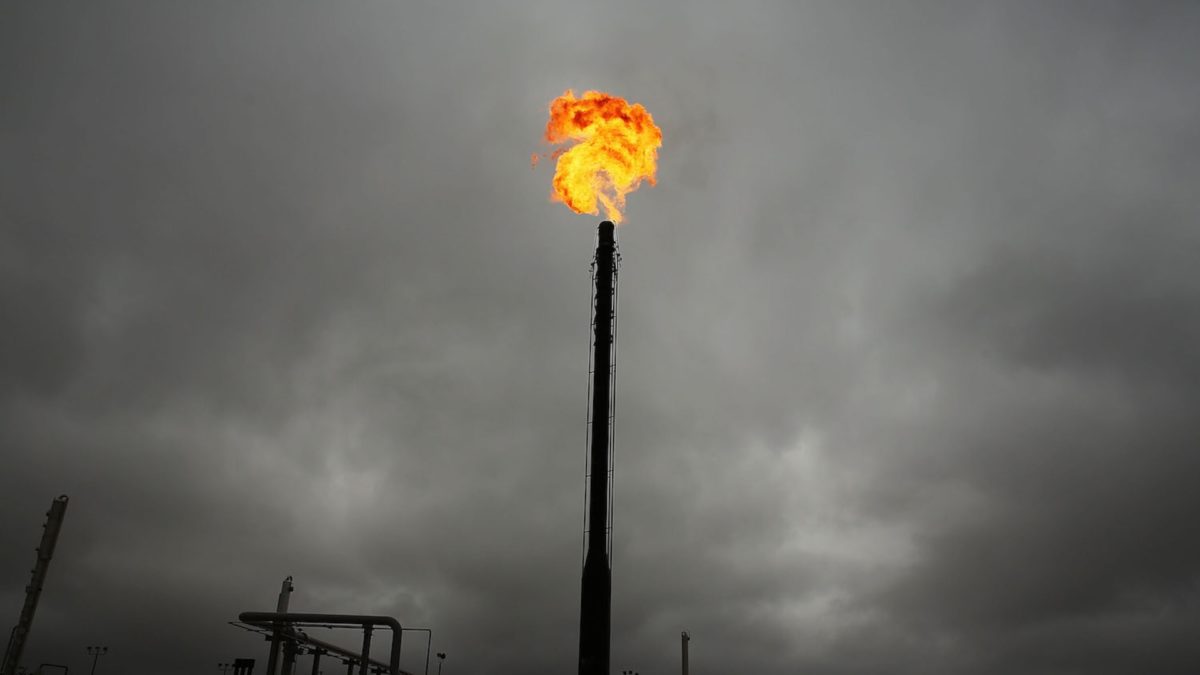
Shale gas: France hides massive imports from the US
Since the end of 2021, France has imported more than 4.5 billion cubic metres of liquefied natural gas (LNG), almost exclusively from shale gas. This ultra-polluting gas has been purchased by Engie, the company in which the French state is the reference shareholder.
There was no blackout after all. Massive power cuts had been expected last winter due to the energy crisis but the national grid was saved by unusually warm weather. And that is not the only reason. In 2022, France imported more liquefied natural gas (LNG) than any other European country. Thanks to LNG, millions of households were able to heat their home and use their stove. Yet for months the French government has sidestepped the issue and sought to conceal the origin of the imported gas.
Our investigation has revealed that billions of cubic metres of US liquefied natural gas brought to France since November 2021 were derived from shale gas. And this, while the government tries to put the quantities imported into perspective. This gas, purchased by the French group Engie in particular, can be found in sedimentary rock, or shale. Extracting gas from shale through hydraulic fracturing – “fracking” – has been banned in France since 2011 because of disastrous consequences for the environment and the climate. The technique entails serious pollution risks for groundwater, requires colossal water consumption and causes large emissions of methane, which has a carbon footprint at least 20% higher than that of coal.
From Texan subsoil to French ports
French Minister for Energy Transition Agnès Pannier-Runacher admitted in an address to French senators in July 2022 that the country had “already” been stocking up on “shale gas” before the Ukraine war and the attendant drastic reductions in Russian gas imports. But the minister was eager to downplay the issue. “It is difficult to ascertain the proportion of shale gas obtained through fracking for every gas source, every deposit and every molecule,” she said. It is indeed difficult to trace US gas given that it is brought to the coasts of the United States via pipelines before it is cooled so it can be turned into LNG. It is hard but not impossible.
Disclose began by analysing US government data on gas production and crosschecked it with data about sea trade on the MarineTraffic site. We discovered that 60% of US liquefied natural gas exported to France is produced by Cheniere Energy, the leading US gas producer.
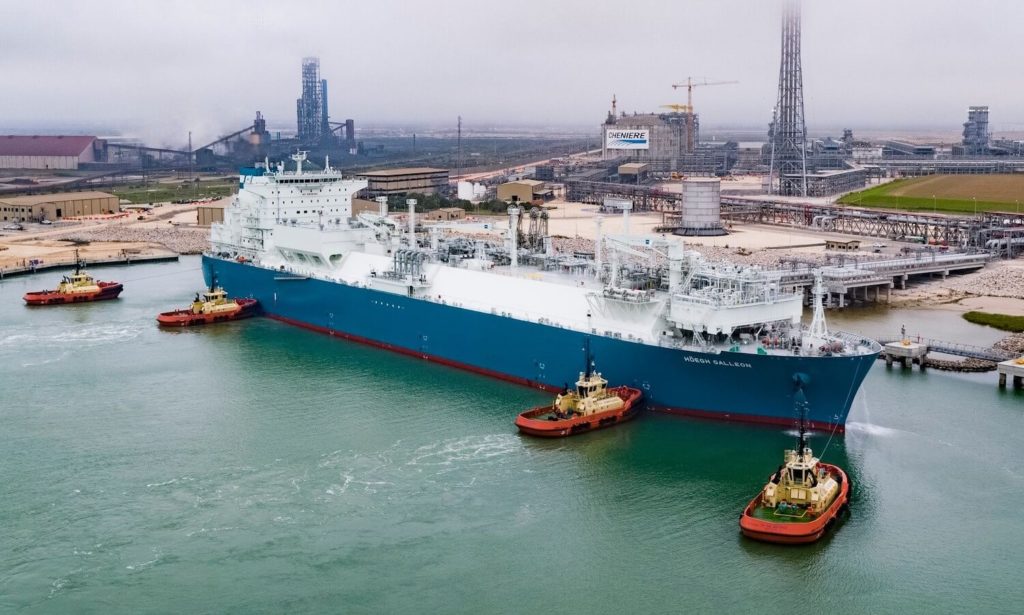
The group owns two terminals where gas is turned into LNG that is intended to be transported by ship: Sabine Pass and Corpus Christi, in the Gulf of Mexico, Texas. The Corpus Christi site exports more than 20 billion m3 of liquefied natural gas each year, with its dozens of stacks and tanks spread over several hundred hectares. Its storage and production capabilities are even expected to grow by more than 60% by 2025.

Between November 2021 and February 2023, we identified no fewer than 45 tanker deliveries of LNG between Corpus Christi and the French ports of Dunkirk (Nord), Fos-sur-Mer (Bouches-du-Rhône) and Montoir-de-Bretagne (Loire-Atlantique). According to our estimates, 4,5 billion cubic metres of gas in total were delivered. For instance, between December 2021 and September 2022, the Nohschu Maru, which operates under the Bahamian flag, had its hold filled in Corpus Christi on four occasions before it unloaded in the port of Dunkirk.
Cheniere’s finance director admitted in late 2021 that the gas processed in Corpus Christi comes almost exclusively from the Permian Basin, one of the largest known shale gas and oil deposits in the world. According to data from Standard and Poor’s seen by Disclose, the large oil and gas wells site located between Texas and New Mexico produces more than 90% of its gas through fracking. The French state cannot not know this since even Engie – the French multinational in which the state holds a third of voting rights on the board of directors, and which handles imports of gas sold by Cheniere – has expressed concern about this.
Internal whistleblowing at Engie
In an internal document from April 2021 obtained by Friends of the Earth-France and passed on to Disclose, Engie’s Global Energy Management unit warned about the lack of transparency surrounding the origin of the gas brought to mainland France. “To this day, [Cheniere] is not prepared to distinguish between its customers and to earmark gas that is produced in accordance with the most stringent social and environmental standards.” In other words, if Engie wants to buy gas from the US supplier, it needs to overlook its origin, whether it is shale gas or not. A year after the internal report was written, Engie has extended its partnership with Cheniere until 2040 and increased the quantities of gas it imports. When Disclose asked Engie about the traceability of the LNG it buys from Cheniere, the French company sidestepped the issue. It even made a case for its US supplier, arguing that Cheniere allegedly has an “ongoing process relating to the transparency and traceability of the carbon content of its supply chain” and that it makes sure that “the way it manages its methane and carbon dioxide emissions improves continuously”. But a Reuters investigation revealed in June 2022 that the air pollution limits at the Corpus Christi site were exceeded hundreds of times between 2018 and 2022 alone with the complacency of the Texan authorities who elected to raise the group’s emission thresholds rather than penalize it.
“Water management is a major issue”
Engie internal report
Engie’s confidential note also points to another concern: water management. Although “water management is a major issue associated with shale gas in the United States,” the document highlights the fact that Cheniere “does not mention any specific water management system or any performance objective”. In its response to Disclose’s questions, Engie says that its supplier “does not operate in a high water stress zone” and it is adamant that “thanks to robust spillage and dumping management programmes, impact is limited to water resources”.
The Texas water authority does not share this view. In its latest report on the coastal region where the Corpus Christi terminal, called the Coastal Bend, is located, it explains that “the regional water supply system is prone to serious water shortages” and that it is planning infrastructure work to the tune of $3bn including five desalination plants just to meet water needs by 2070. An environmental organisation quoted in the report calls for “other industries with great water needs” to be discouraged from moving to the region.
France’s High Council on Climate warned in its annual report on 29 June 2022 against France becoming dependent on liquefied natural gas and against LNG’s contribution to “France’s increased carbon footprint”. But this seems to be of little concern to the government: A floating methane terminal is expected to berth in Le Havre after the summer so that even more can be imported. That is a good reason to cast doubt on Prime Minister Elisabeth Borne’s determination. In her major policy speech on 6 July 2022 she said: “We will be the first great green nation to leave fossil fuels behind”.