To produce even more shale gas, TotalEnergies takes advantage of the laxity of Texan authorities

In the city of Arlington, Texas, residents are rallying against TotalEnergies, whose shale gas production has skyrocketed in recent years. In response to their growing influence, the French multinational is organizing itself, using offensive lobbying.
To establish itself as the leading exporter of American natural gas to France and Europe, TotalEnergies is investing in Texas. This is far from coincidental: the region produces a quarter of the country’s natural gas resources. Moreover, Texan authorities are very lenient with the oil and gas industry. The multinational company is well aware of this and has taken advantage of it, as revealed by Disclose’s investigation in Arlington, a city with 400,000 inhabitants where the company owns 181 active shale gas wells.
On Tuesday, June 13th, a dozen of residents gathered at the city council of Arlington, a suburb of Dallas. On the agenda was TotalEnergies’ request to drill two new wells in the heart of the urban area, south of the city. Just minutes after passionate pleas from residents concerned about their health, citing scientific studies and imploring the elected officials to listen to them, the city council approved the project. The company will be able to add these drills to the over 1,700 it already owns throughout Texas, according to data from Earthworks et FracTracker Alliance.
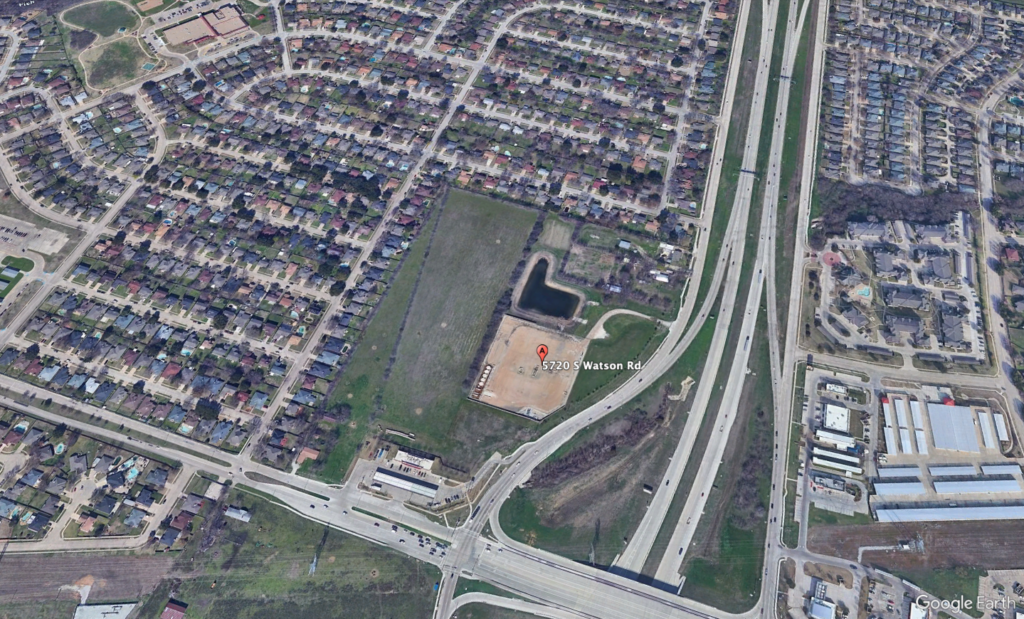
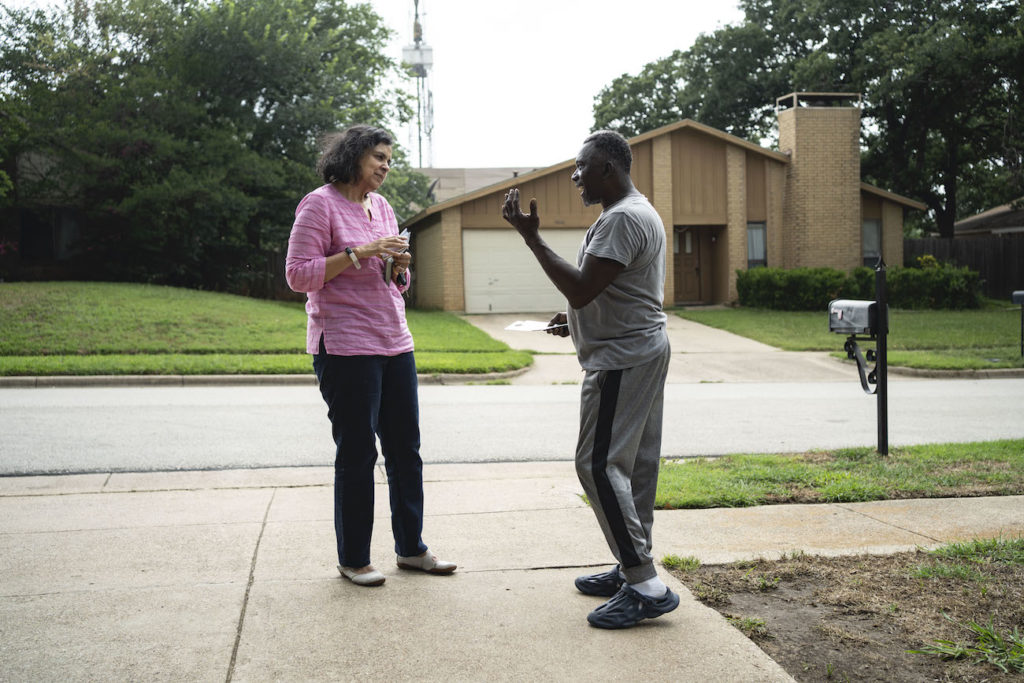
The approval of these new permits was a foregone conclusion: since a 2015 law, Texas municipalities can only oppose new drilling if their refusal is based on “commercially reasonable” arguments. These guarantees for the oil and gas industry are largely due to the financial windfall it generates. In 2022, the Texas Oil and Gas Association (TXOGA) lobby claimed over 25 billion dollars in taxes and royalties paid by sector companies and over 400,000 direct jobs. Local taxes have allowed the Texan municipality to create the “Arlington Tomorrow Foundation,” a cash machine that supports sector associations and has a reserve of 93 million dollars, according to the latest municipal figures. As a result, drilling sites are multiplying. “There are 100 gas wells within 1.6 kilometers of my house,” notes Ranjana Bhandari, the founder of a citizen anti-shale gas collective called Liveable Arlington, established in 2015.
Despite extremely favorable rules for TotalEnergies and its competitors, citizen mobilization is underway. Leading this protest is Liveable Arlington. To counter the growing influence of the local political class, the French multinational is organizing itself, with the help of greenbacks.
To ensure the support of elected officials, TotalEnergies has enlisted the services of a man who likes to present himself as a “consultant.” His name is Bryan Shaw. This consultant was, in fact, present at the city council on June 13th to advocate for granting new permits to the company. However, this well-informed figure is none other than the former head of the Texas Commission on Environmental Quality (TCEQ), the Texan authority for environmental protection.
One of the missions of the TCEQ is to oversee compliance with regulations regarding drilling and well operation, as well as investigate complaints. Bryan Shaw is not the only one to have crossed over from the TCEQ offices to support the industry. Rachel Jackson, formerly an environmental investigator for the Texas authority, has also made the switch. On June 13th, during the Arlington city council meeting, she was also present to support the French company and its request for permits for new wells. Disclose identified at least two other former TCEQ inspectors who have joined TotalEnergies, Marissa Hill and Ebun Broomes. When contacted, Bryan Shaw and the three former inspectors did not respond to our interview requests.
Troubling neglect
The permeability between TotalEnergies and the Texan agency raises doubts about its ability to impartially investigate the shortcomings and violations committed by the company. Nine former agents have also been recruited by Exxon Mobil, BP, Chevron, and the LNG giant Kinder Morgan. The blurring of lines is all the more embarrassing as 16 inspection reports following complaints against TotalEnergies, which Disclose has obtained, reveal numerous negligence issues. The TCEQ, presented as the fourth largest environmental agency in the United States, has only 555 agents to cover the entire state of Texas and its 700,000 facilities subject to inspection. In other words, each inspection is timed. According to our calculations, during inspections of TotalEnergies drilling sites, TCEQ officials spent an average of 89 minutes on site. Sometimes it’s even worse. In May 2021, when a complaint reported headaches evidently caused by black smoke emanating from a TotalEnergies gas well in Arlington, the inspector was only sent to the site 48 hours later. After just 15 minutes of inspection, she wrote her report. Verdict: no violation.
Inspectors sometimes cannot even enter the site to assess potential violations. This was the case in January 2020. While a TCEQ employee noted “a constant, moderate, and pungent chemical odor” at a site subject to a complaint, he could not enter because “personnel stated that they did not have someone to accompany the investigator at that time.” Nevertheless, he concluded that there was no violation. The same thing happened at the end of 2021 when the inspector was blocked at the gate of the drilling site where he was supposed to make his assessments. Again, no violation was found. According to the Texan official, the site “appeared to be operating normally.”
Even when inspectors discover anomalies, their reports rarely lead to anything. For example, in February 2022, when black smoke from a TotalEnergies site in Fort Worth was accused by residents of causing nausea and headaches, the inspector simply asked the industrial company to “avoid using bad smoking engines during fracking process.” Another example is in January 2022, when an inspector responded to reports of gas odors from residents. She discovered a well being drilled by TotalEnergies without the company having notified the TCEQ, as it was obligated to do. The company eventually rectified the situation afterward. This was considered “resolved” by the environmental agency.
Documents obtained by Disclose also show a certain laxity in the exchanges between the Texan authority and TotalEnergies. In November 2018, when the company was summoned, by email, to explain following a complaint from a resident who had experienced severe headaches passing by a well, the site manager brushed it off: “There was no activity that could cause odors and chemical release from the site,” she wrote. No evidence was requested, according to the documents in our possession. The contact appointed by TotalEnergies that day was none other than Rachel Jackson, the former TCEQ inspector encountered at the Arlington city council.
While the oversight authority appears to be reluctant to investigate, the governor of Texas signed a law in August, which came into effect on September 1st, allowing the TCEQ to ignore certain complaints. This includes those filed “by an individual when there is not a reasonable probability that the commission can substantiate the complaint.” It also covers those from individuals who have filed at least five complaints that have not resulted in any sanctions in the past seven years. Behind this industry-friendly law are the Republican officials Drew Springer and Cody Harris. According to financial data from the Dutch NGO Follow the Money, these two politicians received $337,439 in donations from the oil and gas industry lobby over their political careers.
Alexander Abdelilah
Your donation helps us to remain independent
Support usOn the same topic
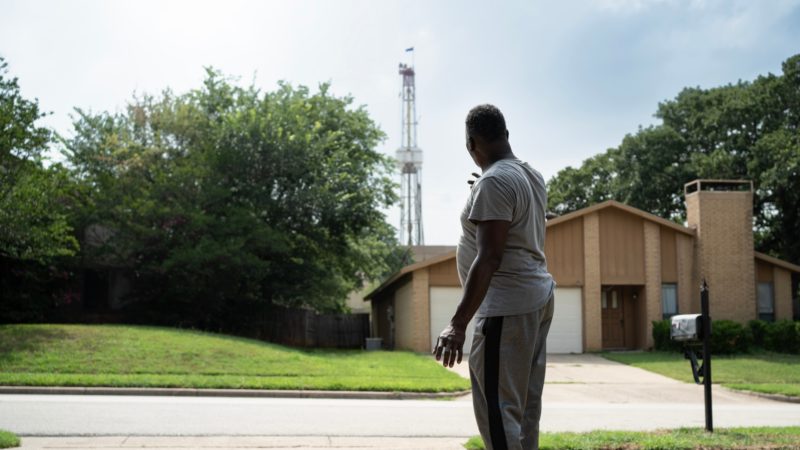
Shale gas imported into Europe: TotalEnergies' health and environmental scandal in the United States
Read the collectionRead also
Decathlon’s Quechua shoes manufactured by suppliers linked to deforestation in Brazil
Decathlon’s top two footwear manufacturers source leather that may have come from illegally deforested areas in Brazil. Disclose and Follow the Money have traced back the production chain of the famous Quechua hiking shoes after seeing confidential documents.
French banks make a profit from the polluting oil and gas industry in the Amazon basin
In disregard of their ecological commitment, banking groups Credit Agricole, BNP Paribas and BPCE have been investing very discreetly in fossil fuel multinationals accused of polluting the Amazon Basin, an investigation by Disclose, with France 24, RFI and the Pulitzer center can reveal. The French banks make more than €45 million from these investments each year.