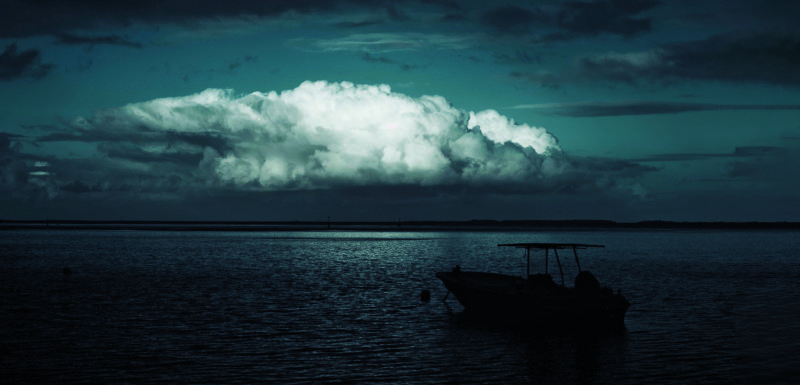
Toxic: members of parliament condemn silence on nuclear testing in Pacific

Toxic: members of parliament condemn silence on nuclear testing in Pacific
“A denial of reality”, “a stubborn silence”… Four years after Disclose’s revelations, the parliamentary commission of inquiry on nuclear testing in French Polynesia has confirmed the extent of the state’s cover-up since the 1960s. The members of parliament are calling for the compensation scheme for civilian and military victims to be overhauled.
“Contrary to what President Emmanuel Macron said (…), there have been lies.” Following six months of hearings, the parliamentary commission of inquiry on nuclear testing in French Polynesia released a damning report on 10 June. The members of parliament condemned the state’s lack of transparency since the 1960s about contamination of civilians and military personnel by the radioactive fallout of “the bomb”, as well as the authorities’ scheming to cut compension for the victims of the atmospheric tests.
Over 30 years, France detonated 193 nuclear warheads over Mururoa and Fangataufa, two atolls in the Pacific more than 15,000 km from Paris. The tests had a devastating impact on the health of Polynesians and on the environment, as Disclose revealed in Toxic in March 2021. Our investigation, conducted in partnership with Princeton University and NGO Interprt, affiliated with The Research Council of Norway funded project Climate Rights at Norwegian University of Science and Technology, is mentioned 84 times in the report approved by the members of parliament. The investigation, Toxic, “was clearly fundamental for our work,” confirmed the chair of the parliamentary commission of inquiry, Didier Le Gac (Ensemble pour la république, “Together for the Republic”).
State lie
“A denial of reality”, “a stubborn silence”… The members of parliament first condemned the state’s concealment strategy about the French nuclear testing campaign in the Pacific. “The culture of secrecy meant that radiological risks and their impact were played down,” the rapporteur of the commission of inquiry, Mereana Reid Arbelot (Gauche démocrate et républicaine, “Democratic and Republican Left”), told Disclose. This “culture of secrecy” has crept in at every level, starting with the military staff responsible for conducting atmospheric detonations. Most have never had access to information about the dose uptake of radiation measured by their dosimeters between 1966 and 1996. “Army doctors looking after veterans proved to be more loyal to the military than to their medical profession,” a former civil servant said at a hearing.
But Polynesians have borne the brunt of the authorities’ silence, including on 17 July 1974, when military officers detonated a bomb named Centaur. Its radioactive fallout may have contaminated 110,000 people in Tahiti and neighbouring Leeward Islands, as revealed by Disclose. People were not ordred to stay indoors.
“Regarding the impact on people, you can say [that the detonation] was unsuccessful,” an official with the French Atomic Energy Commission (CEA) acknowledged, for the first time, answering questions from members of parliament. The hint is in stark contrast to decades of lies. The CEA, as recently as the early 2000s, deleted data showing the extent of radioactive deposits on the island of Tahiti.
Overhaul the rules on compensation for victims
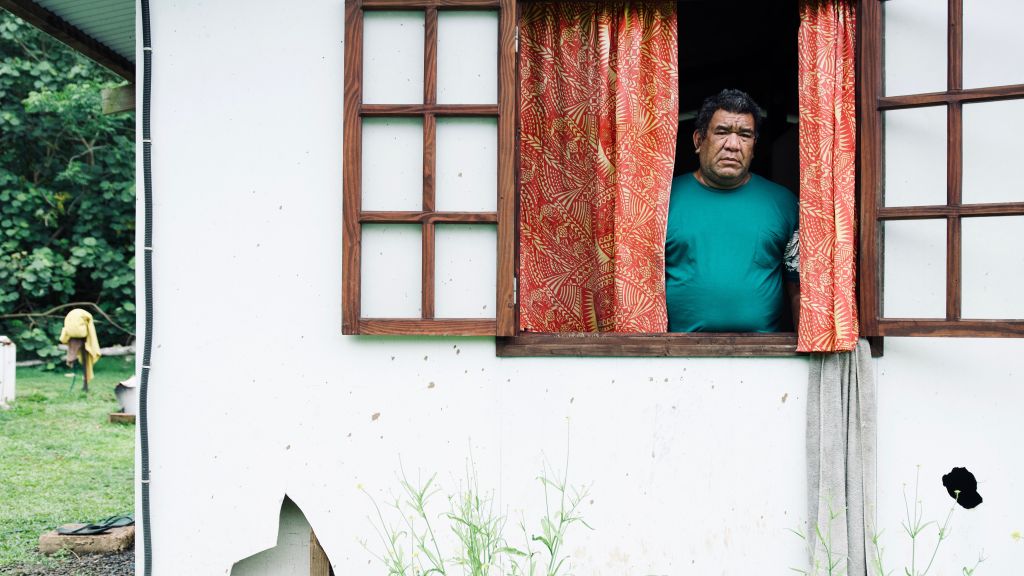
Leukaemia, lymphoma, cancer… Nuclear testing by the French armed forces is still impacting the health of Polynesians yet very few have obtained compensation from the French state: 97% of compensation claims submitted between 2010 and 2017 were rejected, 70% in 2024. To be eligible for compensation, victims need to prove that over one year they received a radioactive dose higher than 1 millisievert (mSv).
But this threshold “has absolutely no scientific value,” say the members of parliament, who want it replaced with a “presumption of exposure” to nuclear radiation. Victims would only need to prove that they were on an island exposed to fallout when an atmospheric test was conducted in order to be eligible for compensation.
To increase the number of compensations, the members of parliament are also calling for the conditions recognised as radio-induced to be expanded. “This is a top priority,” Overseas France Minister Manuel Valls acknowledged, although he refers to the view of the United Nations on the matter, expected in 2026. “Is there a genuine desire to pay compensation for the harm caused to Polynesians?” asks Tomas Statius, a co-author of the Toxic investigation. “If that is the case, this is not a scientific but a political matter.”
Will the determination of the commission of inquiry, whose report was approved by all 11 political groups in the National Assembly, be reflected in legislation? Before debates potentially take place, some groups are already dodging the issue. “The data produced by Disclose’s investigation, the basis for the book, Toxic, which guided the work of this commission, is not too different from the CEA data,” the Rassemblement national (“National Rally”) group said, despite the evidence to the contrary.
Writing: Pénélope Blanchetête, with Pierre Leibovici
Editing: Mathias Destal
Translation from French: Béatrice Murail
Top image: Mathieu Asselin, for Disclose
This investigation is free of charge, thanks to you
Because information is a public good, Disclose offers you all its investigations free of charge, without subscription or advertising. This model is unique in France for an investigative news outlet.
But it’s only possible on one condition: that readers like you support our not-for-profit newsroom. Donations to Disclose are eligible for a 66% tax reduction in France. So a donation of €100 will only cost you €34. Thank you for your support!



On the same topic