WAR IN UKRAINE : How France delivered weapons to Russia until 2020
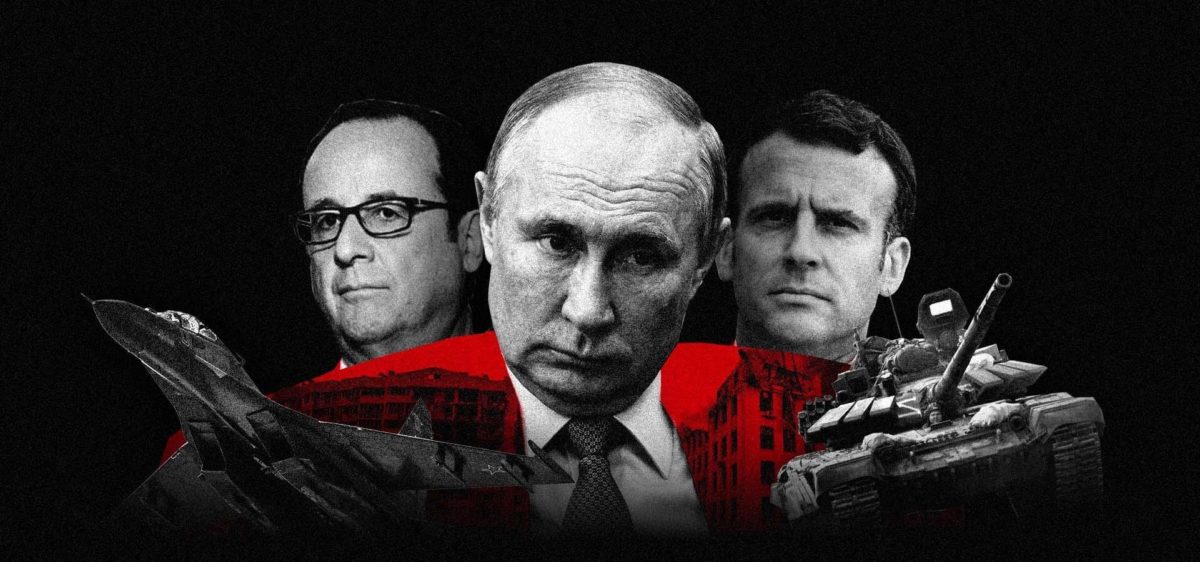
WAR IN UKRAINE : How France delivered weapons to Russia until 2020
Between 2015 and 2020, France delivered state-of-the-art military equipment to Russia.This equipment has enabled Vladimir Putin to modernise 1,000 tanks, fighter planes and combat helicopters, and could be used in the Ukrainian conflict.
His face was expressionless, the tone serious. On March 2nd 2022, ten days after the start of Russia’s invasion of Ukraine, President Emmanuel Macron addressed the French nation. “Putin chose war,” he declared to the 21 million viewers watching his speech live. “Russian forces have been shelling Kyiv and besieging major cities. Hundreds of Ukrainian civilians have been killed.” In a similarly sombre tone he added: “We stand with Ukraine.” France had chosen its side.
That evening Emmanuel Macron omitted to mention an important detail: the fact that between 2015 and 2020 France had secretly armed Russia. This is a paradox given that for years the French president has been busy on the international scene seeking to find a diplomatic outcome over Ukraine rather than a military one.
Classified documents obtained by Disclose, which have been corroborated by data in the public domain, reveal that since 2015 France has issued 76 export licences to Russia for military equipment worth a total of 152 million euros. This figure appears in the latest French Parliamentary report on arms exports, though the types of weapon are not detailed there. According to our investigation the French aerospace and defence companies Thales and Safran, in which the French state has major stakes, were the main beneficiaries of these contracts. The deals mostly involve thermal image cameras for tanks, and navigation systems and infrared detectors for Russian fighters and attack helicopters.
Yet on August 1st 2014 the European Union imposed an embargo on arms exports to Russia. This move followed months of tension in Ukraine. In February 2014 Russia had annexed the Crimean peninsula, just two months after its army had gone into the Donbass region of east Ukraine in support of pro-Russian separatists. In July that year a Boeing 777 jet airliner with 298 civilians on board was shot down by a missile over the region. Russia was singled out for criticism, accused of having fuelled the armed conflict.
Under pressure from European partners and the United States, French president François Hollande cancelled the planned sale in 2015 of two Mistral-class amphibious assault ships to Russia. But successive French governments under first President Hollande and then President Macron were to take advantage of a loophole in the European embargo: it was not retroactive. So any contracts signed before the decision to impose an embargo could continue.
On top of that, the equipment was being exported under guarantee, in other words the French manufacturers were committed to carrying out any repairs for several years after delivery, as long as France did not suspend their export licence.
This French-made military equipment helped Russian leader Vladimir Putin to modernise his armed forces over the years; and it could already be in use in the war in Ukraine.
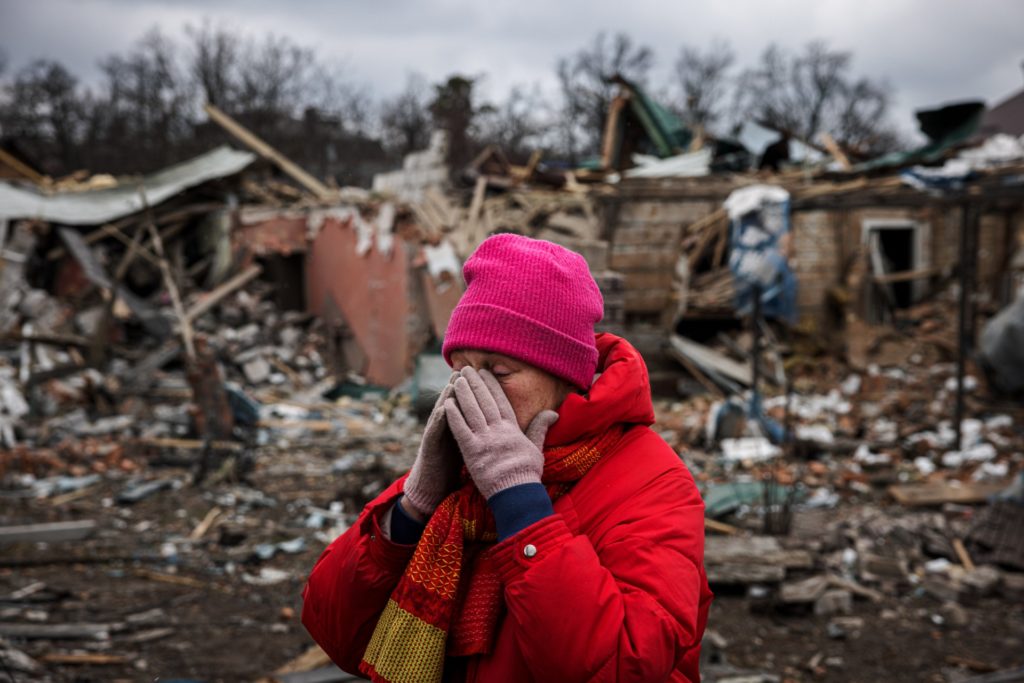
That might have been the case on March 4th, for example, in the city of Zaporizhzhia. On that day there was fighting near the biggest nuclear power station in Europe. Fire broke out in one of the buildings on the site. No reactor was hit but the next day the Ukrainian president Volodymyr Zelensky accused the Kremlin of resorting to “nuclear terror”. The tanks in the front line of the fighting “knew what they were targeting” as they were “equipped with thermal cameras”, he said in a video. It is possible that these thermal cameras bear the names of the defence companies Thales and Safran.
According to a classified report from the French inter-ministerial body the Secrétariat Général de la Défense et de la Sécurité Nationale (SGDSN) – which coordinates national defence and security policy – dated May 2016 and obtained by Disclose, some 121 Catherine XP thermal imaging cameras were due to go to the “Russian army”. These deliveries were never stopped. According to our information, by 2020 these two heavyweights of the French arms industry had sold a total of 800 cameras of this type to Russia.
In 2012 Thales signed a contract with Russia for ‘Catherine FC’ and ‘Catherine XP’ cameras. According to the company’s website, these cameras enable human targets to be detected at night thanks to the heat that they give off, and to detect a tank several miles away. Thales says the benefit of this is that the enemy vehicle can be engaged at “sufficiently long range to ensure ‘first hit’ advantage”.
These cameras have already been used by the Russian army, during the invasion of the Donbass region in 2014. This is shown in photos taken by Ukrainians of the interior of a Russian T72 tank. According to our information a further 55 cameras were delivered in 2019, with the blessing of the French state.

Safran were not to be outdone. Through their subsidiary Sagem the group also picked up a contract with the Russian army in November 2013 for the sale of ‘MATIS STD‘ thermal cameras. Despite the invasion of the Donbass in 2014 and Vladimir Putin’s evident desire to bring Ukraine into line, the French government did not prevent these deliveries from continuing. According to a classified report in May 2016 from the French inter-ministerial committee that examines the exports of war equipment, the CIEEMG, Safran was still due to deliver 211 more MATIS thermal cameras to Russia. This document, obtained by Disclose, states that the contract was worth 12.8 million euros. Disclose approached the prime minister’s office to find out what had happened to these deliveries.
These cameras were used to modernise three different types of Russian tanks: the T-72, the T-90 and the T-80BVM. These are the tanks that are currently being used on the Ukrainian front; images broadcast on social media show several T-72 and T-80BVM destroyed by the Ukrainian army.
Meanwhile T-90 tanks have been filmed firing rounds below the windows of residential apartment blocks in Borodyanka, about 50 kilometres – around 30 miles – from the Ukrainian capital Kyiv.
Fighter jets
The Russian armed forces can rely on the latest up-to-date French technology in the air as well as on the land. It is the same technology used in France’s own Rafale jet fighters.
Russian SU-30 fighters, which are able to carry eight tonnes of missiles and which have already been used in indiscriminate attacks in Syria, have been bombarding Ukraine night and day since the invasion began on February 24th. They were spotted flying over the region of Sumy in north-east Ukraine in a video posted on Twitter. Other SU-30s have been identified after being shot down by Ukrainian forces, at Mykolaiv and Chernihiv on March 5th 2022.
These fighter planes, which are sowing terror in the civilian population, could well be among the 60 SU-30s that Thales has equipped with navigation systems (TACAN), and the latest cockpit display screens and viewfinders (SMD55S and Head up Display or HUD). A contract to supply these was signed in 2014 with deliveries staggered until 2018.
From 2015 navigation systems from Thales were also delivered to equip MiG-29 fighters. On top of this, some 20 or so helmets “Topowl” equipped with infrared screens and vision have apparently been supplied to the Russians. We have not so far been able to document the presence of Russian MiG-29s in Ukraine but these fighters are one of the main aircraft used by the Russian air force.

Meanwhile in 2012 Safran began supplying Sigma 95N navigation systems – these allow plots to know their location without having to use American or European satellites.
According to our information, the delivery of all this equipment was spread over a period up to 2018. At no point did the French government raise any doubts over the potential use that could be made of them.
Attack helicopters
On February 24th Ka-52 attack helicopters were among the first aircraft to fly over Ukrainian territory, as is shown by many images posted on social networks. Some quickly came down and could be seen photographed from up close. The Russian government’s own news agency RIA Novosti itself showed footage of some of these helicopters firing missiles in the middle of the Ukraine campaign.
To track targets at night these military helicopters can also use what is called an electro-optical infrared system, produced by Safran, as the independent news site EUobserver revealed in 2015.
A company owned by Thales and Safran also took advantage of Vladimir Putin’s appetite for military hardware to sell him infrared cameras. Sofradir signed a contract worth 5.2 million euros with Russia in October 2012. According to the 2016 classified SGDSN note cited earlier, Sofradir – a joint subsidiary of the two French defence groups – were still due to deliver “258 infrared detectors” to its Russian client.
By deciding to continue its arms deliveries until 2019, it is possible France handed one further military advantage to Putin, the same man whom France’s foreign minister Jean-Yves Le Drian described as a “dictator” at the start of the war in Ukraine.
When questioned by Disclose, the European Commission confirmed that France was “in theory” able to continue deliveries of military equipment to Russia in relation to existing licences. But at the same time it pointed out that these exports still had to respect the “common position of 2008”. Under this EU document member states are supposed to refuse the export of arms if this would “provoke or prolong” an armed conflict.