ArcelorMittal: environment offender is 2024 Olympics partner
ArcelorMittal: environment offender is 2024 Olympics partner
Illegal pollution, drinking water piracy and deforestation: steel giant ArcelorMittal, a 2024 Olympics partner, behaves in France and other countries like a repeat environment offender, according to documents obtained by Disclose and a recent report by an NGO coalition.
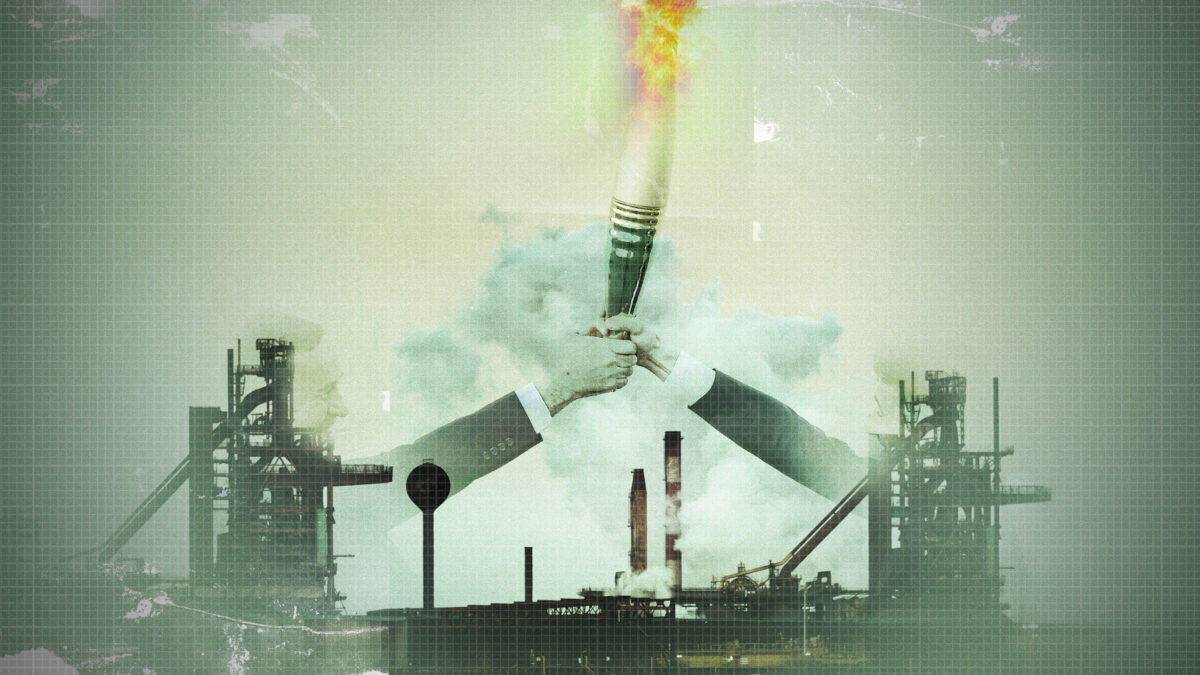
How symbolic. One year ago, ArcelorMittal was selected as an official partner of the Paris Olympic Games. The multinational was given the privilege of making the Olympic torch, which is scheduled to arrive in Marseille on 8 May, to be then taken across France and end up in Paris on 26 July for the opening ceremony.
The communications operation seemed unthinkable for France’s most polluting industrialist and its chief executive, Aditya Mittal, who boasted about the company’s selection. He said it was a new step for the multinational to “meet [its] target: make steel products that are better for the planet and its inhabitants”. A few days earlier, on 10 March 2023, Disclose and Marseille news outlet Marsactu had revealed that its steel plants in Dunkirk and Fos-sur-Mer had caused serious illegal pollution in 2022. Our investigation also showed that ArcelorMittal was one of the worst CO2 emitters in Europe. Since then, the situation does not seem to have improved.
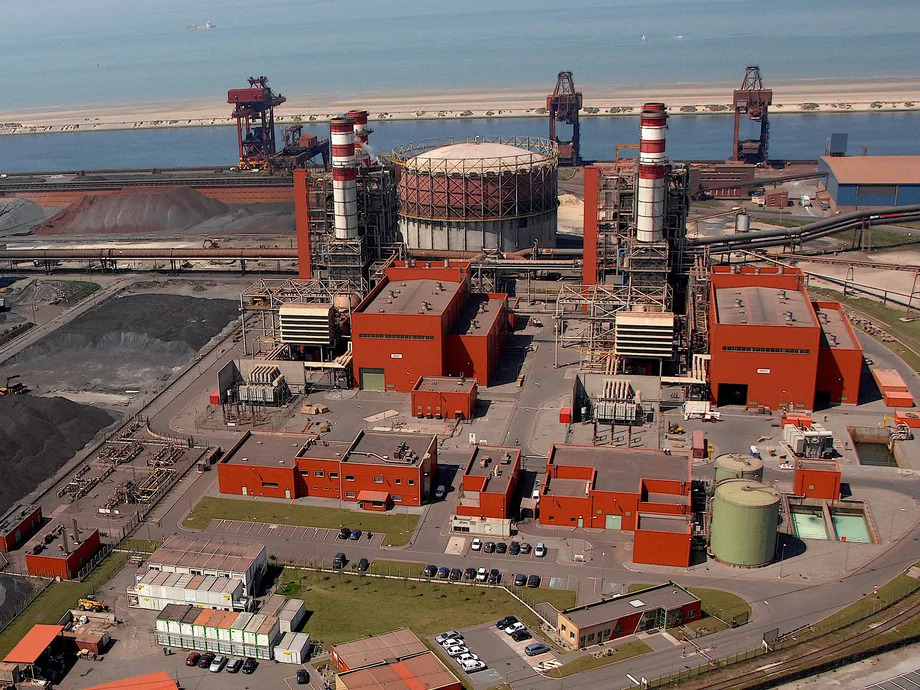
In 2023, its Dunkirk plant was still operating outside the law, emitting “too much dust,” and its sintering unit was “non-compliant”, although it is a highly strategic facility, where minerals are prepared before they are processed into pig iron. According to a report by the environment authority seen by Disclose, ArcelorMittal emitted a surplus of 17.4 tonnes of fine particles for at least four months between December 2022 and April 2023.
Pillaging drinking water resources
In Dunkirk, in addition to repeated air pollution episodes, ArcelorMittal has been pillaging drinking water resources. According to the environment authority, the company helped itself over two years, in 2021 and 2022, from the public water network serving some 200,000 people who live near the site. The steel giant, who is allowed to use a maximum of 850,000 cubic metres of water per year for its staff, its fire-fighting system and to clean its production tools, siphoned off an extra 228,113 cubic metres of water over those two years. That’s the equivalent of 91 Olympic-size swimming pools filled illegally.
ArcelorMittal explained to the authorities that it had had to help itself to extra water because of “leaks” on its North Sea water and fresh water canal network. However, the environmental authority says that instead of repairing its leaking pipes that are believed to waste 1.4 million cubic metres of water each year, the plant management used the public water network.
This is particularly harmful given that companies with facilities listed for health and safety reasons such as ArcelorMittal were ordered by the local authority in 2022 to reduce their water consumption by 10% in spring and summer because of the severe drought. That same year, the hottest since 1900, the multinational helped itself to 15% more water. It was fined a mere €15,000 for the offence. A paltry sum, according to the Nord departement’s deputy head, in charge of defence and security. In his 11 August 2023 decree, Louis-Xavier Thirode wrote that “the damage to the environment is estimated to have a higher cost”. Disclose has worked it out. If we take into account the average price per cubic metre of water, set by the local authority at “€4.73 in the Artois-Picardie basin,”there is a shortfall of at least €600,000. That’s 40 times the official fine.
Despite this warning, the management of the ArcelorMittal site in Dunkirk has been in no rush to solve the problem. According to a decree dated 20 November 2023 calling for “additional requirements,” the firm has submitted an action plan that still falls short of including “a specific section on research and leak repairs”. The company was given until April to review its plan. When contacted, ArcelorMittal told Disclose that it had “reduced water consumption at the Dunkirk site in 2023 by repairing leaking pipes”. The company added that it had “boosted its monitoring system to prevent new leaks”.
Toxic dust still pollutes the air
More than 1,000 kilometres from Dunkirk, in the middle of a huge industrial area near Marseille (Bouches-du-Rhone departement), lies the Fos-sur-Mer plant. Disclose has revealed on the basis of an internal report that ArcelorMittal’s fine particle emissions exceeded legal limits during two thirds of 2022, for which it was fined €400,000. Three months after the investigation was released, the labour inspectorate made a surprise visit to the site and, as a result, threatened on 19 June 2023 to close down the plant for endangering the health of staff. ArcelorMittal ordered hundreds of new masks and pledged on 6 July to put in place “an action plan” to protect employees. The group announced, among other things, that it would restore dusting systems and instal airlocks between the foundry and the other areas of the plant.
However, nearly a year later, no airlocks and no compliant dusting system have been put in place, as revealed by a letter dated 22 April obtained by Disclose. The letter to ArcelorMittal’s local management was from the labour inspectorate. Toxic dust, it says, still pollutes the air. Inspectors stressed that there were “thick layers of dust” in areas that were supposed to be protected such as “meeting rooms, offices and restaurants”. The dust consists of a “variety of chemical agents” and substances “toxic for [human] reproduction,” they added.

They urged the site management to instal within eight months a suitable ventilation system and an upstream capture device for dangerous substances. Will this umpteenth warning have more impact than last summer’s threat to close down the site? “The action plan is progressing according to the schedule,” ArcelorMittal’s communications officer Isabelle Chopin assures Disclose, adding that the “plan to clean the structures is progressing.”
Fined €11m across the world
The steel multinational has committed environmental crimes around the world, endangering the health of locals. Since 2020, ArcelorMittal has been fined a total of more than €11m for environmental crimes, Disclose has worked out.
In South Africa, the group has been fined €205,000 for excessive hydrogen sulfide emissions, a toxic gas that smells like rotten egg and which, even in small concentrations, may cause headaches, nerve lesions and even death. A complaint was filed in August 2023, accusing the South African government of being complicit as it still allows ArcelorMittal to pollute 3 to 7 times more than the country’s official standards, according to local NGOs and members of the Fair Steel Coalition, whose report, The Real Cost of Steel, was released in April 2024.
In Mexico, ArcelorMittal has been ordered by a prosecutor in charge of environmental protection to pay $30,000 after the firm deforested a plot in a UNESCO-listed area in order to be able to expand an iron ore mine. Ecosystems are being destroyed and violent Mexican criminal gangs are also reported to have sided with ArcelorMittal and its local partner, a company called Ternium. “Cartel members have told us to stop interfering with mines,” a resident of Ayotitlán, West of Mexico City, told a coalition of sustainable steel activists. Two environmental activists who had been fighting the devastation caused by ArcelorMittal’s mines have been killed in murky circumstances. The multinational told the NGO coalition that it denies any involvement in the killings.
“Our lands have become dumping grounds”
Dadah Konka, a farmer from Liberia
In Liberia, the company and its local partner have destroyed 883 farms and almost 400 hectares of cocoa, plantain and rubber crops since 2021 to expand an iron ore mine in a bid to trebble production. Following a two-year struggle, only 200 farmers have been compensated. Also, “thousands of people have been impacted, have nowhere to go and have nothing left to eat,” Dadah Konka, a farmer, told Disclose. A quarter of his crops have been destroyed. ”ArcelorMittal gives bottled water to its staff while storing its waste over 50 hectares of our arable lands, which have become dumping grounds.” So far, negotiations between local communities, who are defended by the Green Advocates International NGO, and the management of ArcelorMittal have failed.
There is one country that has managed to reverse the balance of power with the multinational with profits close to €860m in 2023: Canada. On 14 December 2023, the polluter-pays principle was applied to ArcelorMittal. The Montreal Court of Appeal ordered the group to pay a record €10.2m fine for crimes such as emissions “of harmful substances” into rivers in the vicinity of its Mont-Wright iron ore mine, in northern Quebec, and its “false and misleading statements” concealing the scale of its toxic emissions between 2011 and 2013. The group has been prosecuted for a total of 93 charges.
ArcelorMittal is suspected of reoffending in 2022 by emitting dangerous pollutants illegally. The firm may be fined an extra $1m or so according to Canadian news outlet La Presse. “If companies do not heed environmental regulations on mines, they may end up losing their operating licence,” Quebec’s Court of Appeal has warned.
The Paris 2024 partner has yet to show true “respect for others and the environment,” a tenet of the Olympic Movement. Meanwhile, a dozen environmental activists from Liberia, Mexico and South Africa are travelling to Marseille to welcome the Olympic torch. They represent communities suffocated by ArcelorMittal’s pollution and hope to put an end to a communications operation that they deem to be less than honest.
Investigation: Nina Hubinet and Ariane Lavrilleux
Editing: Mathias Destal
Translation into English: Béatrice Murail
This investigation is free of charge, thanks to you
Because information is a public good, Disclose offers you all its investigations free of charge, without subscription or advertising. This model is unique in France for an investigative news outlet.
But it’s only possible on one condition: that readers like you support our not-for-profit newsroom. Donations to Disclose are eligible for a 66% tax reduction in France. So a donation of €100 will only cost you €34. Thank you for your support!