Ikea’s main supplier in Brazil accused of environmental damage

Ikea’s main supplier in Brazil accused of environmental damage
Chemical pollution, illegal deforestation… The Artemobili group, Ikea’s main furniture manufacturer in Brazil, has committed multiple environmental crimes in recent years. The Brazilian judiciary is now pointing a finger at the Swedish giant.
Pieces of furniture that are identical to the last millimeter, sold under the same Scandinavian names simultaneously around the world: Ikea is a daily feat. Some 860m customers visited the global brand’s stores in 2023. That’s one in nine human beings. To keep pace with demand, the Swedish giant has mobilised a vast network of suppliers who make 90% of its products. “We choose suppliers who share our values and our ambition to have a positive impact on the planet and its inhabitants,” the brand boasts in its code of conduct.
And yet, an investigation by Disclose based on our documentary ‘Ikea, Lord of the Forests’, broadcast on Arte on 27 February, reveals that the firm’s main partner in Brazil has all the makings of an environmental criminal. Artemobili, the company that makes its furniture for the U.S. and European markets, was sued in 2018 and again in 2022 for multiple environmental crimes. The Brazilian company confidently threatened to take Disclose to court should its business links with Ikea, its main export customer, be mentioned publicly. This is the story that the Swedish firm and its Brazilian supplier would rather forget.
Back to the origins of the Billy bookcase
Tracing the Swedish giant’s supply chain is proving to be more complicated than following its instructions for assembling a piece of furniture. This is also true of its famous bookcase, Billy – one is sold every five seconds worldwide. The brand’s iconic product is manufactured in four countries including Slovakia, on their Malacky site. Using open source customs and maritime data, Disclose managed to identify 40 containers on their way to the factory, packed with pine and wood fibre planks, which transited through the Port of Hamburg on 30 September 2023. They had come from the city of Porto Alegre in southern Brazil.
Like Ikea’s 1,200 suppliers around the world, the sender of the wood shipment is not known to the general public. Yet Artemobili is one of the Swedish group’s leading partners: it bought $34,4m (€31,6m) worth of goods from them in 2023, according to Brazilian customs. That’s 66 % of its orders in the country.
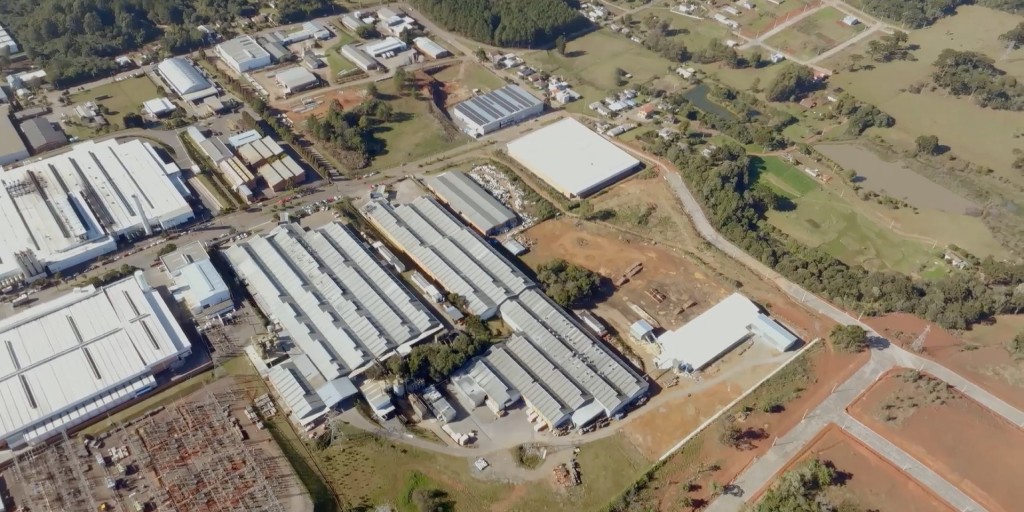
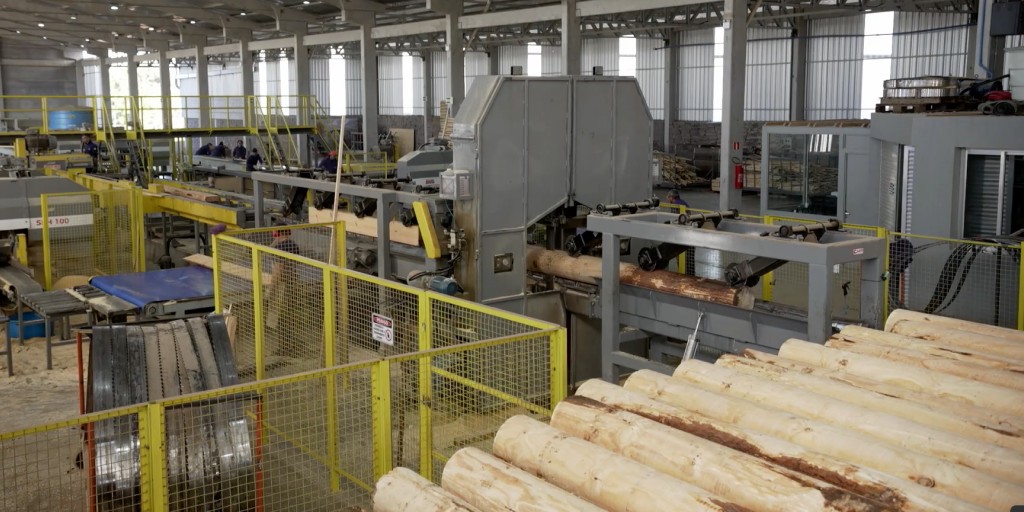
Kura beds for children, Trofast toy storage units, Hemnes bookcases: all these Ikea products roll off Artemobili’s production lines, bound mainly for its stores in the United States. But this partner may well become problematic: Disclose has discovered that its flagship factory, on the outskirts of the town of Nova Prata, in the state of Rio Grande do Sul, has been involved in multiple acts of pollution over the past few years.
Unauthorised landfill
On its 120,000-square-metre site, where gigantic hangars stand next to pine and eucalyptus trunks, Artemobili has buried large quantities of toxic waste, according to the state environment police force, who inspected the premises in November 2018. In an “area of soft soil,” inspectors noted, “residues were observed on the surface such as plastics, paint cans, sawdust and wood sanding dust”. An access path to the unauthorised dump has even been paved by the company, a sign of “regular traffic in the area,” Brazilian authorities say. Further on, solidified paint sludge and ashes from the factory’s boiler were found.
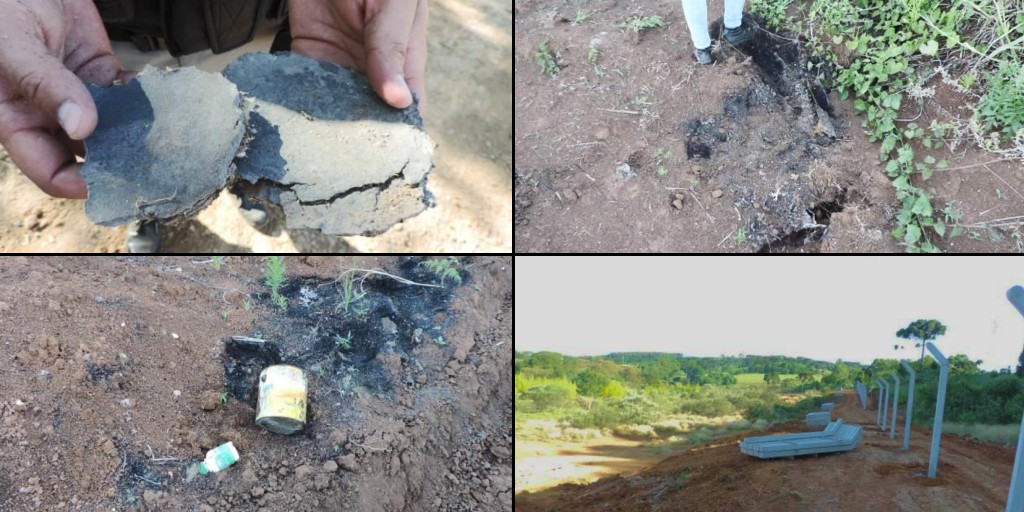
Artemobili has also cut down trees around its factory over at least 8,000 square metres, Brazilian environmental inspectors noted: “In addition to digging work, there has been unauthorised removal of native vegetation, with some areas considered as wetlands”.
The warnings did not stop Ikea’s partner from destroying the environment. In November 2022, Rio Grande do Sul authorities discovered that the company had set up without any authorisation a “full-fledged sawmill and a storage silo” in the vicinity of its factory. Artemobili was fined 28,886,35 reals (€5,700 euros), which it has challenged in the courts. An amount that is not a good deterrent, while the company operates in an ecosystem that is particularly fragile: its factory is located right in the middle of the Atlantic Forest, home to unique species.
Ikea passes the buck to its suppliers
Could the Swedish furniture giant have been unaware of these multiple instances of environmental damage by its main supplier in the country? “We take any violation of our code of conduct seriously,” the brand said when contacted by Disclose. “We expect compliance with local laws and regulations at all times from all suppliers”.
Once again, Ikea has passed the buck to its subcontractors. In November 2022, Disclose revealed that 10 of the brand’s suppliers in Belarus had had furniture made by political prisoners. “To date, we have no direct partnerships with the companies mentioned,” the brand said at the time, dodging the question. It has since ceased its activities in the country, officially because of the Belarusian regime’s support for Vladimir Putin’s armed forces in Ukraine.
It is precisely in Ukraine, in the Carpathian Mountains, that Ikea is involved in another environmental scandal. Its Ingolf and Ekedalen chairs, which sell by the thousands each year, were made of beechwood from trees illegally felled in primary forests, as revealed by NGO Earthsight in 2020. Again, the Swedish company said it was “working proactively to make sure that its suppliers operate in compliance with the law”.
Brazil’s new Eldorado
These days, Ikea may have to answer to the Brazilian judiciary for the environmental damage caused by its leading local partner. “I fully understand Ikea’s responsibility in this economic chain,” said Annelise Steigleder, the Rio Grande do Sul prosecutor in charge of the environment. In an interview with Disclose for its documentary about Artemobili’s repeated offences, she added that since the activities of Ikea’s service provider “benefit from damage to the environment, this would mean that the company profiting from this is to be held responsible”.
While Artemobili’s management would not answer our questions about its pollution observed by Brazilian environmental police, their lawyer took the time to send us a threatening letter. He claims, without any legal basis, that the company “does not authorise the use of its customers’ names in articles published on the web”. Through an adviser, Ikea’s subcontractor also stated that it has “adopted responsible forest management practices, promoting the conservation of natural resources and respect for local ecosystems”.
Pending possible legal action, Artemobili’s huge saws are running to full capacity on behalf of its valuable Swedish partner. No less than 1,500 tonnes of wood furniture packed in Ikea cartons came off its assembly lines in December 2022 and November 2023, according to the latest customs data seen by Disclose. And this is just the start of the furniture giant’s South American Eldorado: after opening a first store in Chile in 2022 and another in Colombia in 2023, Ikea is now planning to build a dozen blue and yellow stores on the continent in the coming years.
Writing: Pierre Leibovici
Investigation: Marianne Kerfriden, Xavier Deleu and Pierre Leibovici, with Sílvia Lisboa and Maurício Brum in Brazil
Editing: Mathias Destal
Translation: Béatrice Murail
This investigation is free of charge, thanks to you
Because information is a public good, Disclose offers you all its investigations free of charge, without subscription or advertising. This model is unique in France for an investigative news outlet.
But it’s only possible on one condition: that readers like you support our not-for-profit newsroom. Donations to Disclose are eligible for a 66% tax reduction in France. So a donation of €100 will only cost you €34. Thank you for your support!



On the same topic
