In New Zealand, Ikea hogs land, jeopardising native ecosystems
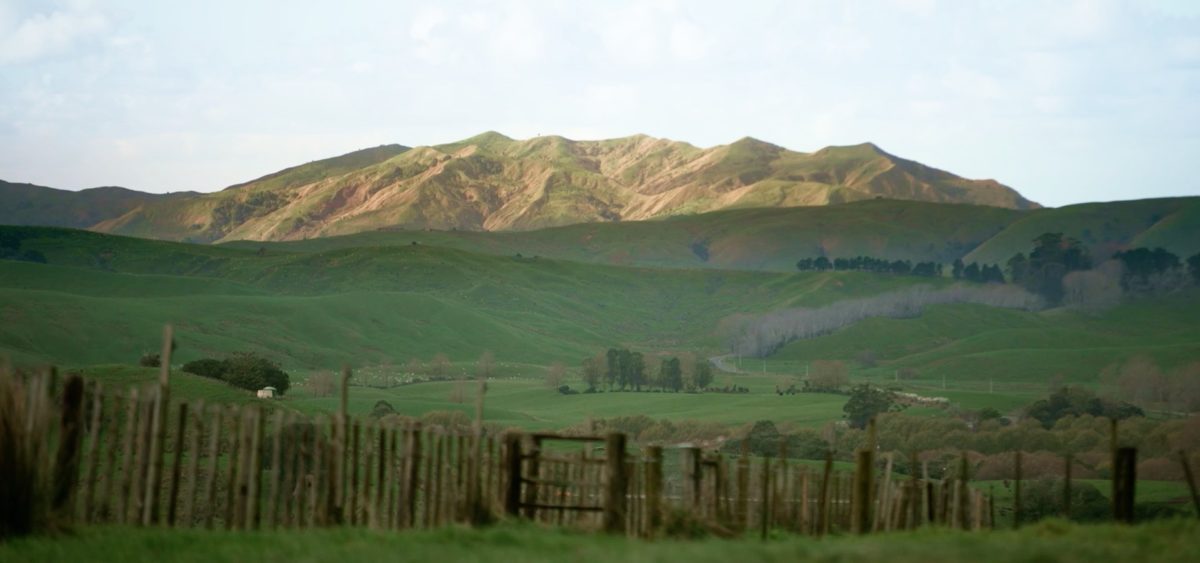
Since 2021, the Swedish multinational has bought more than 23,000 hectares of land in New Zealand to plant pine trees. It aims to increase its furniture production while pledging to offset its CO2 emissions. But Maori communities Disclose has spoken to say this is greenwashing.
Ikea has set its sights on New Zealand. Since 2021, the Swedish brand with the blue and yellow logo has bought thousands of hectares of land in the island nation in the Pacific Ocean. Within three years, the firm has quietly become the owner of 23,100 hectares of meadows and farmland where it intends to plant trees. Its aim is to increase its wood reserves and to green up its image.
Ikea’s communication strategy revolves in large part around “sustainable forest management” and fighting global warming. Its slogan: to become “people and planet positive”. Despite the fact that it emitted 24m tonnes of CO2 in 2023, the firm has pledged to have “a positive climate footprint in 2030” and become carbon neutral by 2050. It intends to do this, in part, thanks to carbon credits, a system that offsets the polluting emissions of large companies by suggesting they invest in forests that naturally absorb CO2. By planting radiata pine trees, which grow rapidly, the multinational expects New Zealand to become its main carbon credit reserve within the next few years. But Ikea is careful not to mention that this is taking place with disregard for local people and ecosystems.
Greenwashing and fictitious carbon neutrality
For its documentary investigation on Ikea, Disclose travelled to Gisborne, a region in the northeast of New Zealand, where the Swedish retail giant has bought 6,000 hectares through its investment fund, Ingka. At least 550 hectares are to be set aside for radiata pines to be planted in order to offset the firm’s carbon footprint, according to a document from the government’s Overseas Investment Office obtained by Disclose. In order to grow trees, the multinational is planning to raze farmland to the ground in Huiarua and Matanui. But several families live on these farms, says Kerry Worsnop, who works near the farm in Huiarua: “We have a shepherds school down there that has young men who come here early in their careers to learn how to farm. We’ve got tractor drivers. There are people who control the weeds and vermin here. All of that will leave and no one will live here ever again,” adds Worsnop, the manager of a farming business who, in 2022, signed a petition against Ikea’s project.
“If Ikea genuinely want wood, they are more than welcome to partner with pre-existing forest loggers and they can even buy pre-existing forests, but they’re not interested in wood,” says Kerry Worsnop. “They’re interested in the investment profile of planting farmland and pine trees because it provides a net climate positive picture that they can sell to the consumers.” A misleading image, built with the complicity of the farm’s former owners who belong to one of the country’s wealthiest families: thanks to Ikea, they have doubled their stake. Traditional farmland is worth NZ$7,000 (US$4,300) per hectare on average but Ikea bought the land for NZ$14,000 (US$8,600) per hectare for a total of NZ$88m (US$54m).
Eleven farms razed to the ground by Ikea
Since 2021, at least 11 farms have been selected to be wiped off the map, out of the score of plots of land that have fallen into Ingka’s hands, according to New Zealand’s Land Registry Office. Villages are to be razed to the ground and meadows will be replaced with identical rows of pines.
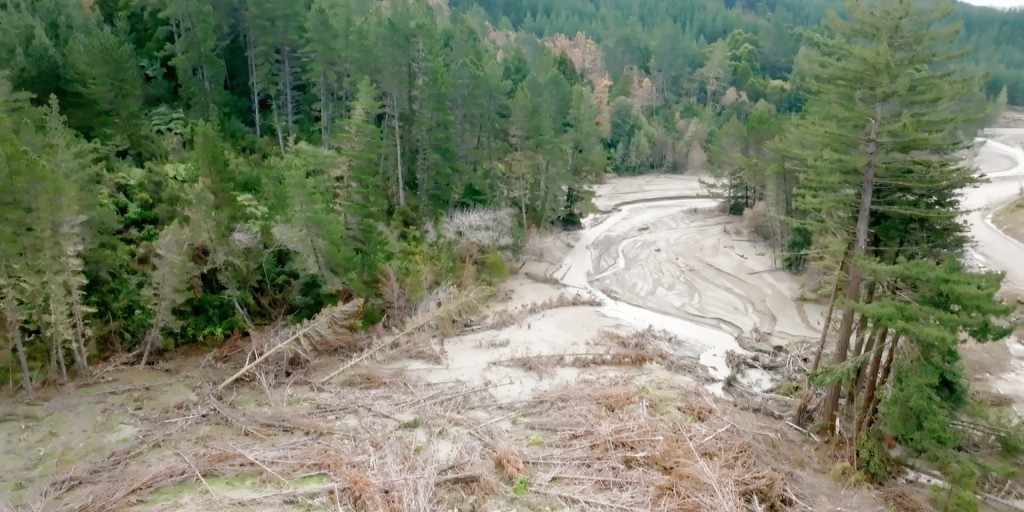
The Swedish giant’s insatiable appetite — it gobbles up a tree every two seconds — even makes it grab forests that are a thousand years old and destroy native vegetation. Some 500 kilometres South of Auckland, the Ingka investment fund is planning to clear 8.5 hectares of kanuka shrub, commonly known as white tea tree, that is highly resistant to drought and strong winds, unlike radiata pines, which are vulnerable to increasingly extreme climate events such as Cyclone Gabrielle that hit New Zealand in February 2023. Three months after the storm, forest debris and uprooted trees still littered the ground and beaches, a hazard for boats and hikers.
“Buying farms for the purpose of making your company look as though it is more environmentally sustainable… It’s only sustainable for your balance sheet. It’s not sustainable for our communities. It’s not sustainable for our society. And it’s also not sustainable for the planet,” says Kerry Worsnop. “As long as these massive companies that are as big as they are and have the power that they have are not being called out on this, they will keep buying farmland and they will keep destroying communities and hoping that you don’t look close enough to notice. It’s corporate bullshit in my view.”
In an email to Disclose, Ikea writes that it is working “together with New Zealand’s Department of Conservation” and that it is monitoring “the environment effect of [its] work, including on biodiversity and waterways”. The Swedish firm adds that it does not plant trees “on the most productive land” it has bought.
“When large corporations are making decisions on our behalf for our lands, it’s like another kind of colonisation. It’s colonisation of our forests.”
Renee Raroa, a member of the Ngati Porou community
On the rolling green hills that Renee Raroa’s forebears criss-crossed, the native forest once stretched from the mountains to the ocean. “It’s birds and insects and an ecosystem of indigenous species that we once lived in harmony with,” says the young Maori woman. In the 1980s, the state of New Zealand sold the forests it managed to large national and foreign companies which then harvested and exported wood on a massive scale. Clear cutting destroyed the soil, although the pines had originally been planted to prevent erosion. Once the trees were felled, debris that could not be sold was left on the spot.
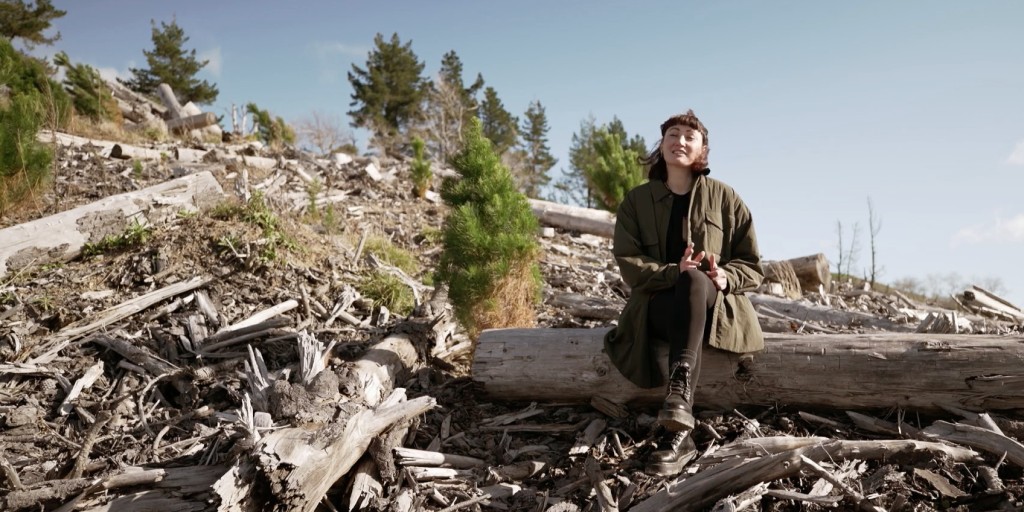
By continuing to plant and harvest exotic pines rather than native species, Ikea may well make this industrial mess worse. “When large corporations are making decisions on our behalf for our lands, it’s like another kind of colonisation. It’s colonisation of our forests,” says Renee Raroa. She went all the way to New York to address the UN where she called for the restoration of biodiverse plant cover and an end to clear cutting.
The greenwashing strategy embraced by most firms is proving untenable on a global scale: it would mean using all arable land on the planet to offset current carbon emissions, says Oxfam. For the NGO, the top priority is to reduce emissions. “We need big players like Ikea to rise to the occasion and take responsibility,” says Lina Burnelius, a coordinator at Swedish NGO Protect the Forest. “We live as if we had four Planet Earth. If no one can magically create more planets for us to live on, we need to start taking care of the one we have.” It seems that the matter is settled as far as Ikea is concerned. Better to bank on the magic of communication than curb one’s appetite.
Writing: Ariane Lavrilleux
Investigation: Marianne Kerfriden, Xavier Deleu and Ariane Lavrilleux with Manu Caddie in New Zealand
Editing: Mathias Destal and Pierre Leibovici
Photos: Aurélie Piel
Translation: Béatrice Murail
This investigation is free of charge, thanks to you
Because information is a public good, Disclose offers you all its investigations free of charge, without subscription or advertising. This model is unique in France for an investigative news outlet.
But it’s only possible on one condition: that readers like you support our not-for-profit newsroom. Donations to Disclose are eligible for a 66% tax reduction in France. So a donation of €100 will only cost you €34. Thank you for your support!



On the same topic

Ikea, the tree hunter
Read the collectionRead also
ArcelorMittal: coal arriving in Dunkirk causes environmental and health disaster in Mozambique
The factory that produces the most pollution in France is using more coal than ever. In August 2025, ArcelorMittal Dunkirk took delivery of several thousand tonnes of coal from an extremely toxic mine in Mozambique. Some residents of the town of Moatize have been exposed to serious air pollution and seen their homes destroyed by blasts, an investigation by Disclose and Socialter can reveal.
PFAS in agriculture: the factories spreading their toxic waste in fields
A quarter of the 100 industrial sites discharging the largest quantities of forever chemicals in France have been supplying the agricultural sector with “sewage sludge” meant to fertilise fields. The toxic fertiliser has been spread over several thousand hectares, Disclose can reveal in partnership with France 3. The French authorities have struggled to take the measure of this health and environmental time bomb.