Ships delivering Russian gas around the world make discreet stops for repairs in Brest
Ships delivering Russian gas around the world make discreet stops for repairs in Brest
The Port of Brest, in Brittany, is being used as a repair yard for tankers delivering Russian gas around the world, Disclose can reveal. These stops make it possible to keep afloat vessels that carry gas from the Yamal LNG site, helping to finance Vladimir Putin’s war in Ukraine.
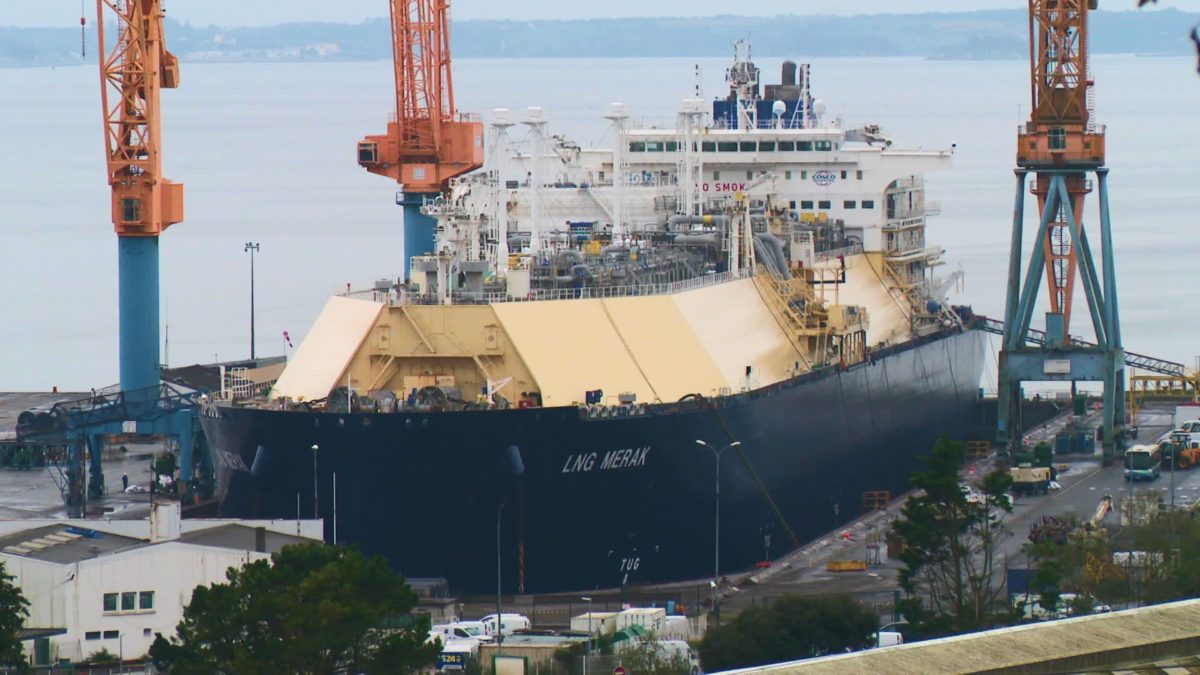
On 21 October 2024, the massive blue hull of the 295-metre gas tanker LNG Merak left Brest. Three weeks earlier, it had been put in dry dock in a huge basin of the port. Over 21 days, the Hong Kong-registered vessel was to have its plumbing maintained and its gas tanks and cargo pumps checked, according to an article in Breton daily Le Télégramme. But the newspaper failed to point out that each year, between July and October, the huge ship weighing several thousand tonnes has just one purpose: load up liquefied natural gas (LNG) at Russian gas terminal Yamal LNG and deliver its precious cargo in the EU and around the world.
Yet this piece of information is far from insignificant. The Yamal site, in the Arctic Ocean, is owned by Novatek, a company owned by Russian oligarchs close to Vladimir Putin, including Guennady Timchenko, who is under EU sanctions. Novatek appears to be part of the windfall the Russian president has been using to finance his war in Ukraine, as reported by Disclose in an earlier investigation. In taxes alone, the Russian government netted €3.74bn from the Yamal LNG platform in 2023 according to the calculations of Belgian NGO Bond Beter Leefmilieu.
The LNG Merak is just one of several gas tankers serving mainly Yamal LNG that have docked in Brest since the invasion of Ukraine in February 2022. According to maritime data analysed by Disclose with help from the Institute for Energy Economics and Financial Analysis (IEEFA), nine other super tankers have used the Breton repair yard over under two years. Of the ten vessels that have undergone repairs in Brest, eight are ice-breaking ships built especially to serve Sabetta, the port of Yamal LNG terminal: they can break through the thick layers of ice that surround it between November and June.
In other words, if it was not for ice-breaking ships, the gas would remain stuck in Siberia in winter. It could not either be delivered in Asia, across the Arctic Cicle. And Vladimir Putin would have to sit on a booty worth several billion euros. One of these ice-breaking ships, the Nikolay Urvantsev, preceded the LNG Merak in the Port of Brest, where it stayed for three weeks between late July and early August. Before it resumed its voyage to Yamal, the Nikolay Urvantsev, named after a 20th Century Russian explorer, underwent repairs, including fixes to its propulsion system.
Brest, a highly strategic site
The fact that a French port is accommodating the sea giants has significant repercussions, says Ana Maria Jaller-Makarewicz, an IEEFA analyst: “At a time when the European Union is trying to be less dependent on Russian fossil fuels, the French repair yard is facilitating consignments of Russian LNG by providing maintenance for gas tankers carrying fuel from Yamal.”
It is of highly strategic importance for gas tankers from Russia to be able to undergo repairs in the French port, Hervé Baudu, a lecturer at the National Maritime High School in Le Havre, told Disclose. “If they did not have access to a port like the Port of Brest in the EU, these gas tankers would have to make huge detours, all the way to Asia sometimes, to find other repair yards capable of carrying out repairs on gas tankers of this size,” he said. Malaysia and Singapore, for instance, have suitable repair yards. He says it takes about six days for a tanker to reach Brest from Yamal for repairs, but the voyage between Yamal and Singapore takes 25 days in summer and up to 50 days in winter. Since running an ice-breaking ship costs about US$100,000 per day, the extra cost for repairs in Singapore rather than Brest is therefore believed to be between 1.9 and 4.4 million US dollars per vessel.
“The biggest impact would be in case of an emergency,” says Denis O’Donnell, a former captain of the Eduard Toll, one of the tankers that carry gas from Yamal LNG. This is particularly true during winter months, he told Disclose: “Let’s say they have damaged their Azipods [underwater propulsion systems] in February or March. The ship can’t go through the northern sea route to Asia.”
From March 2025, tankers such as the Nikolay Urvantsev, the Vladimir Voronin, the Eduard Toll and the Nikolay Yevgenov will be banned from using EU ports to store Russian LNG and re-export it around the world. However, they will be allowed to continue to undergo repairs and maintenance lawfully in Brest but also in Denmark, in the Port of Odense, where ice-breaking ships are also put in dry dock in the repair yard owned by the Fayard company. The vessels, flying the Greek, Japanese, Chinese or Bahamian flag, are currently not under EU sanctions.
The manoeuvring of Dutch group Damen
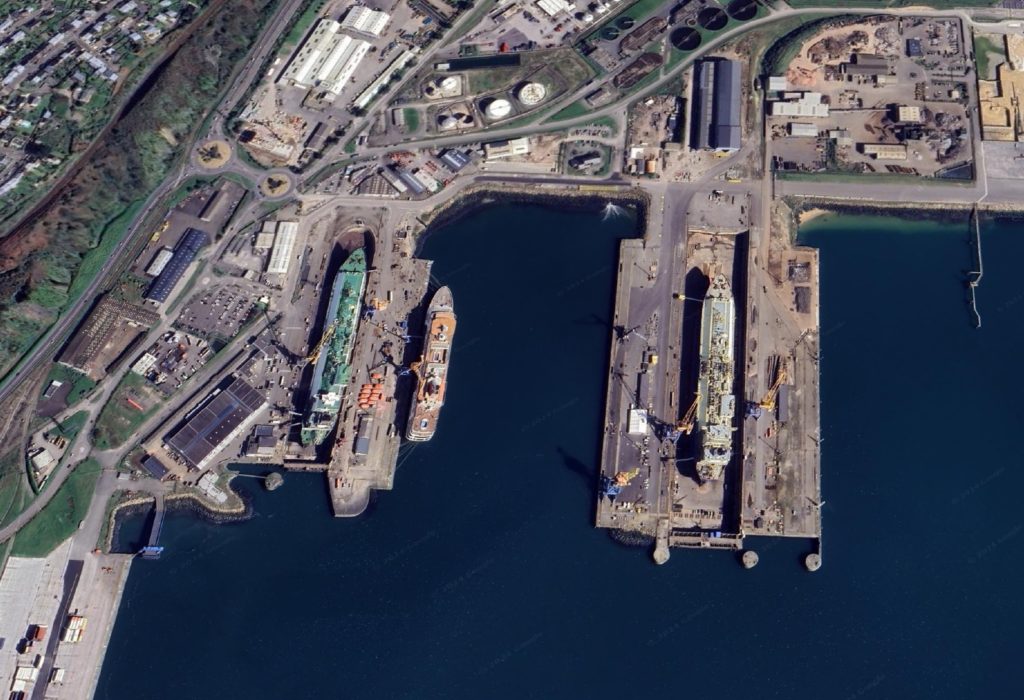
The maintenance of the Yamal fleet in Brest is provided by the Damen group. The Dutch company, known for its expertise in naval shipbuilding, has three dry docks in Brest that “allow the yard to accommodate almost any ship in the world,” the company boasts on its website. “Each time, you can expect about two weeks of maintenance,” a former Damen employee of the Brest subsidiary, which employs nearly 180 people, told Disclose. “This includes mechanical work on the engine, the possible replacement of parts damaged by shocks and tank inspection.”
Damen has developed close ties with Russia. The group, which reported a turnover of €3.1bn in 2023, has received many contracts from Russian ports to build towing vessels. Before the war, it also had many wealthy Russian businessmen among its clients such as Oleg Tinkov, the founder of a Russian bank under EU sanctions. In 2020, he bought a 77-metre luxury yacht called La Datcha from the Dutch group. Two years later, in 2022, the Netherlands decided to suspend yacht deliveries to Russian customers. Damen’s response was not long in coming: the company sued the Dutch government for damages at the end of 2023.
By accommodating these vessels, the Dutch company’s Brest subsidiary is facilitating Russian LNG exports, which are crucial to finance Vladimir Putin’s war. “ This a vivid example of how, in the absence of both an EU-wide ban on imports of Russian gas and national-level actions by member states, European companies continue to play in favour of Novatek and help Putin’s friends to stay afloat with their dirty and bloody fossil gas trade,” says Oleh Savytskyi of Razom We Stand, a Ukrainian NGO advocating for an embargo on Russian gas deliveries. Contacted by Disclose, the Damen group did not respond to our questions. Nor did the French Ministry of the Economy.
At a time when the EU is toughening sanctions in a bid to curb Russian gas exports around the world, France risks undermining the union’s message. And so does Denmark. For NGO Razom We Stand, “ France and Denmark must take action to stop any services that contribute to this, including bans on ice-class LNG tanker repairs.” The passivity of France and Denmark is in sharp contrast to the United Kingdom’s clearly stated political will. As early as March 2022, the country banned from its ports gas tankers held by Russian companies as well as ships “owned, controlled, chartered or operated by persons connected with Russia.” This decision makes it impossible in principle for gas tankers with links to Yamal LNG to dock in UK ports, including for a makeover.
Investigation: Alexander Abdelilah
Editing: Mathias Destal and Ariane Lavrilleux
Translation into English: Béatrice Murail
Photographs: Régis Massini – France Télévisions
This investigation is free of charge, thanks to you
Because information is a public good, Disclose offers you all its investigations free of charge, without subscription or advertising. This model is unique in France for an investigative news outlet.
But it’s only possible on one condition: that readers like you support our not-for-profit newsroom. Donations to Disclose are eligible for a 66% tax reduction in France. So a donation of €100 will only cost you €34. Thank you for your support!