How an oligarch with links to the Russian weapons industry is shielded from EU sanctions

How an oligarch with links to the Russian weapons industry is shielded from EU sanctions
Oligarch Vladimir Lisin’s business empire has supplied steel to several Russian weapons manufacturers whose activities include the development of ballistic missiles and stealth drones. This investigation by Disclose details how, despite his links with such companies, Lisin faces no sanctions in Europe nor in the United States.
Speaking on rolling news channel LCI on March 14th this year, a fortnight after Russia launched its invasion of Ukraine, French economy and finance minister Bruno Le Maire insisted: “We are dealing blows to the Russian economy […] Strong blows.” He added that France was preparing to “transmit to the European Commission several dozens of names of Russian individuals so that they be placed under sanctions”. In all, there are more than 1,000 Russians, including oligarchs, who are today the subject of sanctions by the West, and close to 30 billion euros of their assets, including luxury yachts, private jets, properties, bank accounts and artworks, are today reportedly frozen across Europe.
But one Russian oligarch has escaped the sanctions. He is Vladimir Lisin, 66, chairman and majority shareholder of Novolipetsk Steel (NLMK), a group which owns mines and steelworks across Russia, and industrial plants in Europe, notably in France and Belgium. Lisin is able to travel the world in his private jet at will – except to Australia, where sanctions were slapped on him in April.

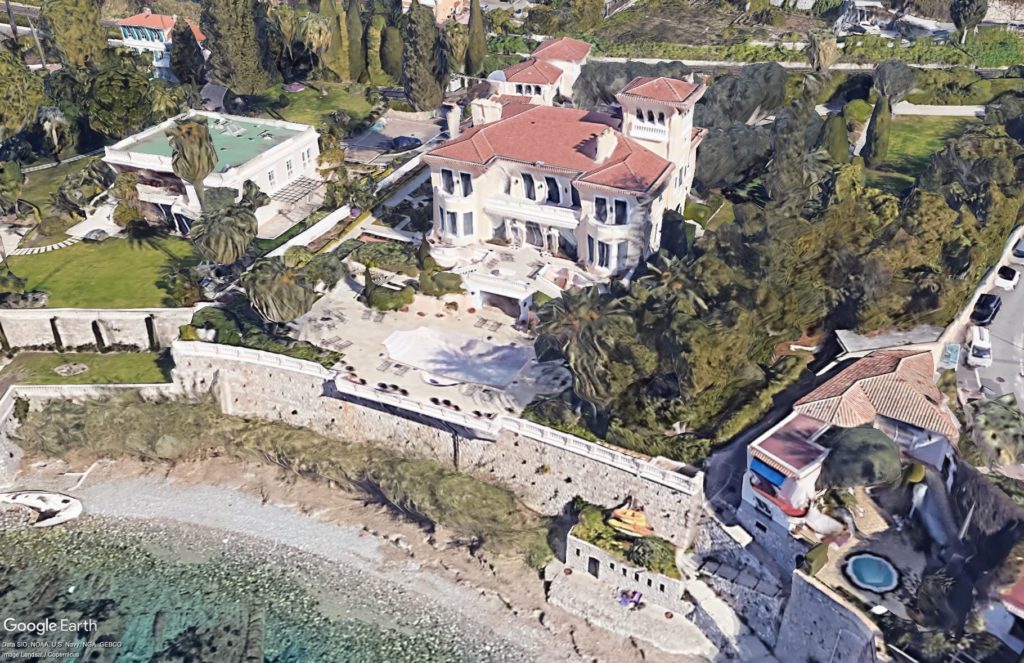
One of the wealthiest individuals in Russia, with a fortune estimated at 18 billion US dollars, Lisin can freely enjoy the use of his 3,000-acre castle and estate in Scotland, and his two Belle Époque properties on the French Riviera, at Villefranche-sur-Mer, beside the peninsular of Saint-Jean-Cap-Ferrat. One of his neighbours in Villefranche-sur-Mer, his compatriot and fellow metal industry oligarch Viktor Rashnikov, the owner of several plush villas in the same street as Lisin’s, does not enjoy the same privilege: Rashnikov’s properties, estimated to be worth a total of 100 million euros, along with all his known assets in European Union member countries, and in the United Kingdom and the United States, are frozen.
However, according to documents from a group of Ukrainian and Russian anti-corruption organisations and obtained by Disclose, in a joint investigation with Swiss francophone daily Le Temps and British daily The Times, Vladimir Lisin has overseen deals between his industrial group and the Russian armaments industry, including dealings with companies involved in the manufacturing of nuclear weaponry and stealth drones. The same Ukrainian and Russian anti-corruption organisations submitted the documents in question for scrutiny by the US and British authorities on November 28th.
Links with the Russian arms industry
The joint investigation by Disclose and its partners has identified 18 contracts agreed between Lisin’s NLMK group and eight Russian defence companies, which appear buried in a Russian government website detailing procurement contracts, and which were all signed after Russia’s illegal invasion of Crimea in 2014. According to the official website, the deals between NLKM and Russian armaments companies involve the supply of rolled steel sheeting, structural stainless steel, lowly magnetised alloys, electrical steel tapes, Armco galvanised steel and also plated, cold-rolled steel.
The deals detailed on the website, which in 2019 ceased publishing further information, include contracts made out directly to companies specialised in the manufacturing of surface-to-air missile systems, intercontinental ballistic missile systems and nuclear warhead systems. It is unclear whether NLMK continues today to supply its wares to the companies cited.
In 2017, NLKM supplied steel to two Russian weapons-making factories run by companies both now under sanctions ordered by the US Treasury Department. One of them, the Mariyskiy plant in the city of Yoshkar-Ola, about 700 kilometres east of Moscow, manufactures air defence systems. According to the documents obtained by Disclose, these include the S-300V, “which has been repurposed by Russian troops in Ukraine and used extensively to attack ground targets, striking civilian buildings and power and heating infrastructure”.
The other is a plant in the city of Izhevsk, around 1,000 kilometres east of the Russian capital, belonging to a company called Kupol which has been targeted by US sanctions since March 25th. It produces various surface-to-air defence systems, including mobile units like the Tor-M1, mounted on a tracked vehicle (and which was seen deployed earlier this year in Chernihiv oblast in northern Ukraine).
In 2016 and 2017, NLMK also supplied steel to Elektromashina, a company which manufactured a remotely controlled combat turret, equipped with a 12.7 mm machine gun, to be attached to armoured vehicles, as well as also producing electronic systems for Russia’s T-90 battle tanks – a number of which have been used in Ukraine. Meanwhile, in 2018, Lisin’s group supplied steel to the Space Monitoring Systems corporation, which previously developed the world’s first intercontinental ballistic missile, the R-7.
Nuclear missiles
Documents obtained by Disclose and its media partners also reveal that Vladimir Lisin’s NLMK group supplied companies involved in manufacturing Russian atomic weapons. In 2017 and 2018, NLMK signed deals with the Russian Federal Nuclear Center, which is involved in developing Russia’s nuclear arsenal, and also with the Zababakhin Institute of Applied Physics, which works on nuclear warhead technology. An information revealed last September, by the Ukrainian media Schemy.
Finally, according to a 2019 contract, NLMK was also a supplier for PO Sever, a Russian company that develops advanced technologies for the aviation and nuclear industries. No further information was published on Russian government website after 2019.
Contacted by Disclose and Le Temps, the NLMK group, via a spokeswoman, confirmed the above details of the contracts but insisted that only a “negligible” amount of “civilian steel grades” was sold to the cited companies over the past decade, adding that this represented a total value of “1.6 million dollars in ten years”, and “0.002% of total sales” over the same period. “NLMK has never produced nor supplied military related products to the Russian military-industrial complex,” she said.
Importantly however, whatever the quantity of supplies of steel involved in the sales to Russian defence companies, they were made after the Russian annexation of Crimea in 2014 which triggered a series of sanctions measures by the US and EU.
Violation of EU sanctions
The accusations levelled against Vladimir Lisin do not only concern his activities in the steel industry. The documents obtained by Disclose allege that his maritime transport company, Volga Shipping, which has a fleet of around 250 ships, played an active role in circumventing EU sanctions which ban Russian merchant vessels from landing cargo in ports around the bloc.
According to the documents, Volga Shipping was involved in the transfer of cargo, notably oil, from Russian-flagged ships to others registered within the EU, and which could then enter EU ports and deliver the cargo.
Using data from the website MarineTraffic, which tracks the movement of ships around the globe, the documents obtained by Disclose and its media partners identified several operations of what is called ship-to-ship loading organised over recent months by vessels belonging to Vladimir Lisin’s company.
One of these occurred on July 27th this year when the Mekhanik Antonov, one of Volga Shipping’s 45 tankers, remained for six hours in the middle of the Black Sea alongside the Maltese-flagged tanker Georgia, to which it transferred its cargo. The following day, the Georgia met with another of the Volga Shipping fleet, the VF Tanker 8, when the two vessels remained alongside each other for more than ten hours. Subsequently, the Georgia sailed to the Greek port of Agioi Theodoroi where it delivered its load of Russian oil.

Contacted by Disclose, the Greek owner of the Georgia, Eastern Mediterranean Maritime Ltd, confirmed by email the vessel’s ship-to-ship load transfer in July, but said that “Volga Shipping was not a sanctioned entity and the operation was carried out in international waters”. It insisted that “the voyages of M/T Georgia have always been in compliance with EU and USA regulations”.
“We deem that this voyage, apart from being totally legitimate, helped Greece and Greek consumer [sic] to face oil and energy shortages and thus to control oil prices,” it added.
In a statement sent by email to our partner The Times, Volga Shipping said: “Ship-to-ship loading (STS) is a standard logistical practice, which is commonly used by sellers and buyers of cargo not only in the Azov and Black Sea areas but throughout the world. The company categorically disagrees with the incorrect characterization of STS practices as aimed at circumventing sanctions.”
“After February 2022, in light of increased safety risks for ship crews, majority of cargo owners decided to move STS loading to other parts of the Black Sea close to the EU,” the statement added. “The change of location of STS loading was therefore driven by the buyers and sellers of oil products and is not in any way related to the limitations on access of Russian vessels to EU ports.”
The threat of job losses from sanctions
In the light of Vladimir Lisin’s business relations with the Russian arms industry, and his shipping company’s practice of ship-to-ship transfers of Russian oil destined for EU ports, the apparent leniency he benefits from in Europe and the US raises questions.
In 2014, when NKLM came under threat of sanctions following the Russian annexation of Crimea, the group addressed a document to the EU and the governments of European countries where it had industrial activities, in which it warned of the consequences of such a move. In the NKLM document, revealed by Belgian francophone public broadcaster RTBF, the group wrote (translated here from RTBF’s report in French): “The financial aid provided by the parent company in support of the [group’s] European activities was more than 271 million euros for the year 2013 alone. The forced halting of the financial support of the parent company could lead to the insolvency and closure of NLMK’s European factories. That would inevitably be followed by the redundancy of thousands of workers […] whose wage bill, in 2013, represented 161 million euros.”
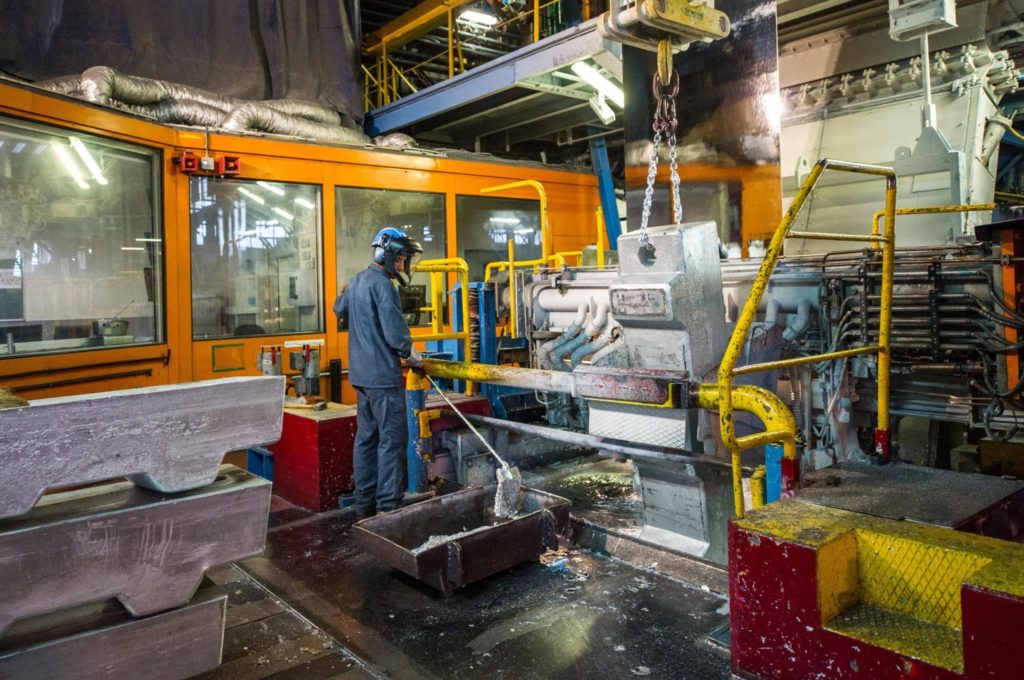
In France, the NLMK plant in the eastern city of Strasbourg employs 144 staff and yearly transforms 400,000 tonnes of steel destined for the car-making industry and building trade.
Asked by Disclose whether Vladimir Lisin featured among a sanctions blacklist of Russian oligarchs, neither the French prime minister’s office, nor the office of economy and finance minister Bruno Le Maire, nor the foreign affairs ministry responded to the question. However, the French treasury did confirm that “Mr Lisin is not the subject of an assets freezing measure”, adding that “in the framework of sanctions against Russia, the measures for freezing assets are decided unanimously by the European Union Council”.
Because of the secrecy surrounding the procedure, it is not known which countries may have proposed or opposed sanctions against Vladimir Lisin, nor even if the issue was raised.
Belgian interests tied to those of Lisin
Within the EU, it is above all in Belgium where Lisin has established influential partnerships. The SOGEPA, the powerful investment fund for the country’s Walloon region, holds a 49% stake in the capital of NLMK Belgium Holdings, a steel business which has 1,200 employees. In 2019, the SOGEPA announced it was to provide half of a 200-million-euro, three-year investment plan (the remaining half was funded by NLMK) in the Russian group’s three Belgian plants. Contacted on several occasions by Disclose, the SOGEPA failed to respond.
In October this year, SOGEPA’s spokesman David Le Clercq told Politico that sanctions against Russian steel would threaten job losses in the EU. “We hope that they [sanctions] will not have an impact on NLMK which, let’s remember, is not a Russian company in the strict sense of the term, since NLMK Europe is based in Belgium,” he said.
Also in October, when EU member countries met to decide a new round of sanctions against Moscow, Belgium abstained from a vote on the banning of Russian semi-finished steel products. After negotiations, Belgium – and as a consequence Vladimir Lisin – was granted a two-year delay before introducing the ban.