Moldovan affair: revelations about a far-reaching corruption system within Interpol
A vast corruption network made it possible to exploit Interpol’s shortcomings in order to remove red notices against at least 28 alleged criminals. The former chairperson of Interpol’s oversight body – the Commission for the Control of Files (CCF) – and the organisation’s bureau in Moldova were at the heart of the system. Despite warnings, it has taken years for Interpol to respond, Disclose can reveal on the basis of exclusive documents.
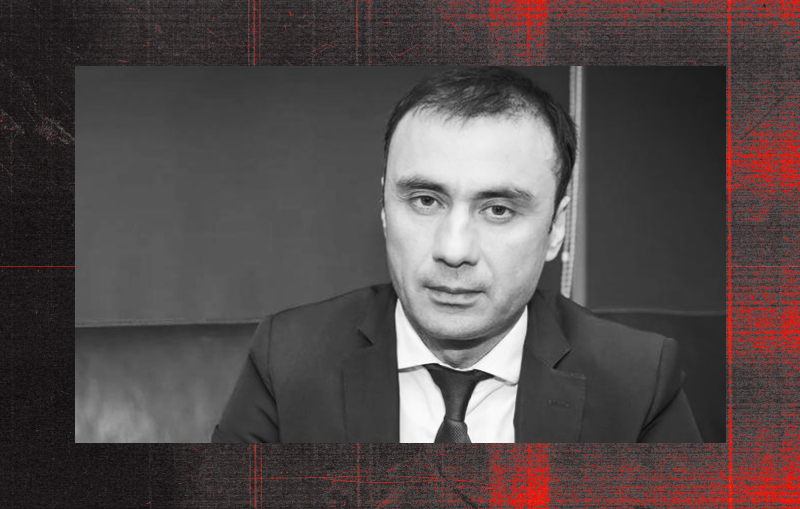
Autocrats are not the only ones benefiting from Interpol’s shortcomings. International dealers, corrupt business people and crooks on the run do too, as revealed by the sprawling ‘Moldovan affair’. The corruption system has made it possible for people under red notices to go off the organisation’s radar overnight. To pull this off, they have been able to count not only on a well-established network within the Moldovan administration, including officers of Interpol’s bureau in Chisinau, but also on a former leader of the international organisation at the heart of the scandal, Vitalie Pirlog, none other than the former chairman of the Commission for the Control of Files (CCF), Interpol’s complaints department.
Pirlog is being prosecuted under the French justice system for “helping a criminal evade arrest or investigation,” for “conspiracy to defraud” and for “active bribery by an organised group of a foreign public official”. Approached by Disclose through his French lawyer, Vitalie Pirlog, who is presumed innocent, has not responded.
The wolf among the sheep
Vitalie Pirlog is a household name in Moldova as a former justice minister (2006-2009), former interim prime minister and former director of the intelligence service. Pirlog, who had political and industrial connections in the country, was elected to head the strategic commission in March 2017. Lawyers and human rights defenders as well as journalists and NGOs raised the alarm about Vitalie Pirlog’s nefarious background and his connections in the political and financial circles of a former socialist republic riddled with corruption.
Six months after Vitalie Pirlog’s election, Moldovan lawyer and activist Ana Ursachi condemned his selection at a human rights conference in Warsaw: “Vitalie Pirlog took part in prosecuting the 7 April 2009 anti-regime uprising,” she said. “Many arbitrary decisions were drafted and edited by Pirlog himself, and now he is the one deciding which cases [processed by Interpol] are politically motivated and which are not”.
In early 2018, an investigation by Der Spiegel focused on Moldova. The German weekly reported allegations about a “scandal” involving the transfer of sensitive Interpol information to local business people.
In February 2019, a Ukrainian entrepreneur accused Vitalie Pirlog of taking part in an extortion system organised by a businessman close to the then prime minister, Pavel Filip. According to the complaint lodged by Mykola Sambozhuk in Kyiv and seen by Disclose, the two men extorted four million dollars from him in return for legal proceedings against him in Moldova to be dropped and for his name to be removed from Interpol’s wanted persons file, with support from the “head of the Commission for the Control of Files,” Vitalie Pirlog. Was the complaint, dimissed by the Ukrainian justice system in March 2019, investigated by the police organisation? Interpol declined Disclose’s request for comment.
The alarm has been raised time and time again, including about a man called Vladimir Plahotniuc, long portrayed as Moldova’s most influential businessman. Described by political opponents as the “puppeteer” of the local political and economic scene, he was close to Vitalie Pirlog, whose candidacy to head the CCF he is believed to have supported. The oligarch was at the heart of a $1bn bank fraud, Moldova’s “theft of the century”. Prosecuted by the justice system, he fled the country in June 2019. His escape could have been stopped by a red notice requested by the Moldovan authorities but Interpol refused to issue one, according to the Moldovan justice system. The police organisation eventually changed its mind in 2025. The fugitive, placed under a red notice, was arrested by Greek police in the summer and extradited to Moldova.
France opens Interpol’s eyes
A French anti-narcotics operation raised Interpol’s awareness at the highest level.
On 27 February 2020, three tonnes of cocaine concealed in a container of banana puree were unloaded in the port of Marseille. The French anti-narcotics police unit (Ofast), acting on a tip from the US Drug Enforcement Administration, followed the cargo to a villa near the Etang de Berre lake, 40 km from Marseille. Investigators soon traced the case back to its presumed mastermind, a man called Tarik Kerbouci, aka Bison, who became one of Ofast’s most wanted men.
Two years later, the French-Algerian national was enjoying life in Dubai when French police issued a red notice against him. However, the wanted notice was mysteriously blocked on 3 January 2023 by the CCF. On 9 January, French police officers asked Interpol: “Why [was that red notice] blocked?” but received no answer. They asked the question again on 27 January, and again on 3 February, as shown by internal exchanges seen by Disclose. The CCF eventually answered: “Unfortunately, we are not in a position to give more information to your NCB [National Central Bureau]about this issue”.
Corruption pattern
It turns out that the CCF had spotted an anomaly in Kerbouci’s file a few weeks earlier. In late December 2022, they noted that the drug trafficker had applied for asylum in Moldova in a bid to have his red notice removed. His lawyer in Spain had lodged the initial complaint with the CCF but officers noticed that a more informal entity was also involved, a consulting firm called MCE Advisory which they described as Tarik Kerbouci’s “hidden lawyer”.
As more complaints were being lodged with the CCF, officers discovered other files linked to the company set up in 2019 in the United Arab Emirates. They involved Chinese nationals, including a former cadre of the Chinese army’s anticorruption unit, as well as Russian oligarchs, Ukrainian nationals and even the son of a former prime minister of Kyrgyzstan. MCE claimed to be the official representative of twenty claimants. In six other cases, the CCF suspected the Emirati company of being involved in the sham.
Do you have information about Interpol?
Contact the Disclose editorial team securely on Signal by entering our username: disclose.123
Several months after these initial suspicions were raised, Interpol sent a report to France’s financial prosecution service (PNF). A criminal investigation was launched on 25 August 2023. Nearly a year later, on 4 June 2024, searches coordinated by the French and Moldovan judiciaries were conducted at Interpol’s Chisinau bureau.
“Systems worked as planned”
At 16:04 that day, Interpol’s Secretary General Jürgen Stock sent a message to all his teams. In his email, which we have seen, he played down the affair, saying that only “a small number of red notices” were involved. He welcomed the fact that “systems worked as planned” and that “measures were taken immediately for an investigation to be conducted internally and for a report to be sent to departments responsible for implenting the law”. The police organisation did not respond to Disclose’s request for comment, citing the ongoing criminal investigation.
In actual fact, no fewer than 28 red notices have been blocked in the context of the affair, according to the Moldovan justice system.
It seems to be a well-oiled machine. Secretive entities manage the asylum application process in Moldova for their client under a red notice, build a case and send the file to Interpol together with valid papers provided by corrupt officers at Interpol’s Chisinau bureau and by the Moldovan immigration service, PNF investigators say. No matter if applicants have never set foot in the country. The ruse takes advantage of a flaw in the police agency’s system, namely Interpol’s Refugee Resolution that allows asylum seekers to apply for their red notice to be blocked or removed while their claim is being examined to prevent wanted notices from being issued on political grounds, which still happens too often, as demonstrated in the Interpol Files.
Someone needed to be aware of this shortcoming for it to be exploited. And for that person to know about it, they needed to analyse its mechanisms. As the chairman of Interpol’s Commission for the Control of Files, Vitalie Pirlog could not have been better placed. The proceeds from corruption are believed to have been transferred some time between late 2022 and early 2023 to a company he set up in… the United Arab Emirates. The Moldovan politician was arrested in the UAE on 15 June 2025 and extradited to France in July. The former head of Interpol’s CCF had been under a red notice for five months. He is now behind bars.
Investigation: Mathieu Martinière, Robert Schmidt
Editorial coordination: Mathias Destal, with Ariane Lavrilleux
Fact-checking: Rémi Labed
Editing: Mathias Destal
Photos: Nicolas Serve
Cover image: Éric Delfosse, with Nicolas Serve
Translation from French: Béatrice Murail
This investigation is free of charge, thanks to you
Because information is a public good, Disclose offers you all its investigations free of charge, without subscription or advertising. This model is unique in France for an investigative news outlet.
But it’s only possible on one condition: that readers like you support our not-for-profit newsroom. Donations to Disclose are eligible for a 66% tax reduction in France. So a donation of €100 will only cost you €34. Thank you for your support!


On the same topic
Interpol Files
Read the collectionRead also
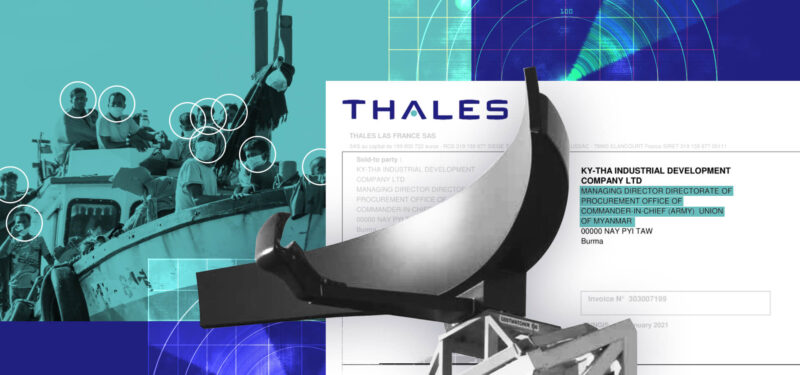
Thales supplied surveillance radars to the Burmese army as Rohingya were being slaughtered
Arms giant Thales, in which the French state is a shareholder, has sold to the Burmese forces six radars used for monitoring its coast, Disclose and Info Birmanie can reveal. The surveillance systems, which were delivered between 2017 and 2020 in spite of an EU embargo, may be used to crack down on civilians, including the Muslim Rohingya minority who have been persecuted by the ruling junta.
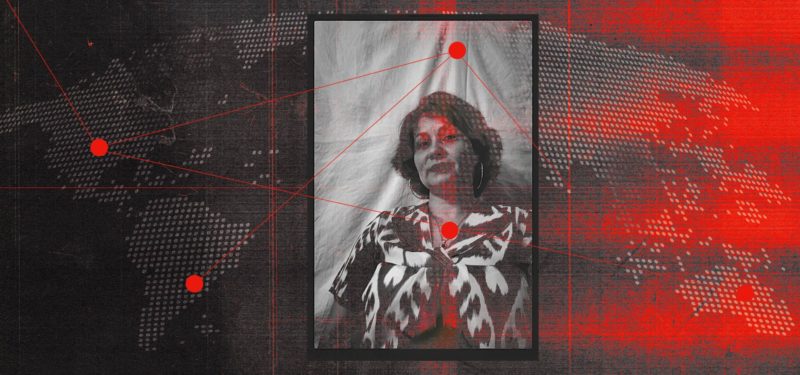
Interpol turning blind eye to persecution by Tajik dictatorship
With close to 3,500 red notices in circulation, Tajikistan is among the three countries sending the highest number of wanted requests to Interpol. Under the pretext of fighting terrorism, the Tajik dictatorship has been using the police organisation to hunt down political opponents and Muslim citizens with no links to armed organisations. Although its rules have been repeatedly violated, Interpol has not taken action.