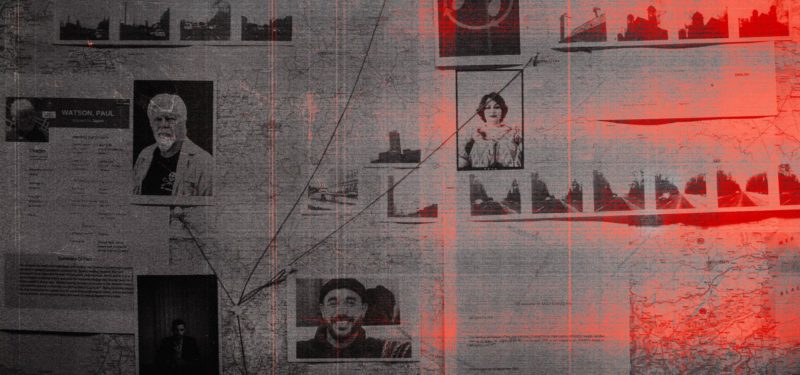
Interpol turning blind eye to persecution by Tajik dictatorship
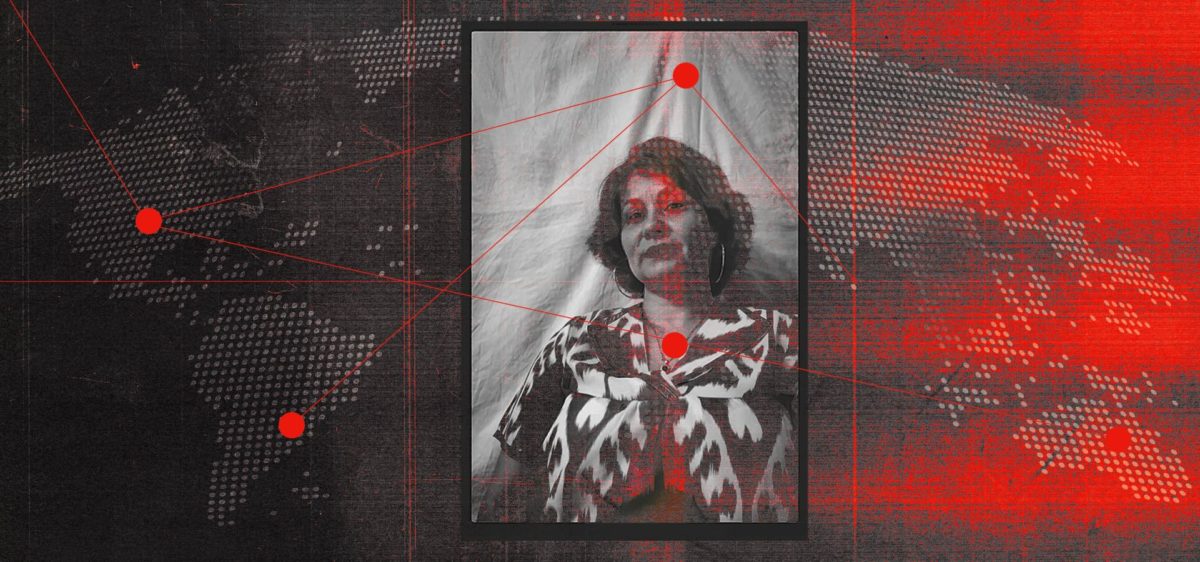
Interpol turning blind eye to persecution by Tajik dictatorship
With close to 3,500 red notices in circulation, Tajikistan is among the three countries sending the highest number of wanted requests to Interpol. Under the pretext of fighting terrorism, the Tajik dictatorship has been using the police organisation to hunt down political opponents and Muslim citizens with no links to armed organisations. Although its rules have been repeatedly violated, Interpol has not taken action.
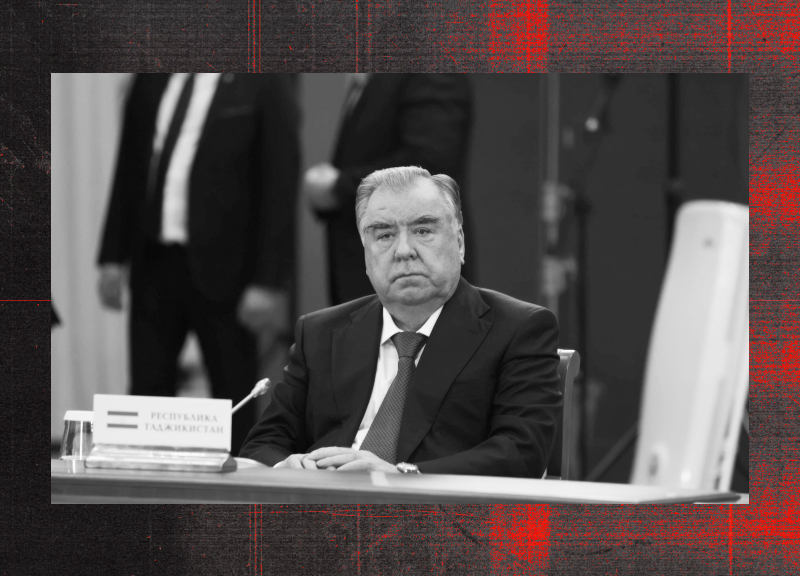
Tajikistan, Central Asia’s smallest country, is a former Soviet republic with a population of about 10 million people and it is known as one of the world’s most repressive dictatorships. President Emomali Rahmon, in power for 33 years, has been fighting ruthlessly those who oppose him with arbitrary arrests, forced disappearances and curbs on the media. For the manhunt which reaches far beyond the country’s borders, Interpol has been one of his favourite tools.
With 3,493 valid red notices in September 2024, Tajikistan is ranked third on the list of countries with the highest number of wanted requests in circulation, far ahead of the United States, France and even China with its population of 1.4 billion
This excessive use of red notices is believed to be connected with the enthusiasm shown by some poor Tajik youths for Islamic State in Khorassan (ISIS-K), an ISIS wing active in Central Asia. This is the argument Interpol’s bureau in Dushanbe, the capital, has put forward for a decade.
But things are actually quite different from the picture painted by the dictatorship. Our investigation, based on thousands of internal Interpol data, reveals that the regime has misused the databases at its disposal in a bid to track down around the world political opponents in exile and Muslim nationals with no links to terrorist organisations. Tajikistan, a member of Interpol since 2004, has not been subjected to enhanced surveillance measures by the organisation.
Eight months in jail in Belarus
“Interpol are like family,” Shabnam Khudoydodova told us on the phone. The Tajik national, 39, is a refugee in Warsaw, Poland. Persecution against the human rights activist began in 2015 and it has never really stopped.
At the time, Shabnam Khudoydodova lived in Saint Petersburg. She was a member of Group 24, a political movement banned in Tajikistan which fights for democratic reform and speaks out against the corruption of the regime. The Tajik dictatorship started hunting people down. On 5 March 2015, the founder of the movement was assassinated in Istanbul. Two and a half months later, another activist went missing in Saint Petersburg. Terrified, Khudoydodova left Russia in June. When she was stopped at the border between Belarus and Poland, she was told about the terrorism accusations and the red notice Tajikistan had issued against her. The activist spent eight months behind bars in Belarus. She says she was tortured. When she was released, she finally managed to reach Poland and Interpol removed the red notice against her. It took the police organisation close to one year to realise it had been abused by Tajikistan.
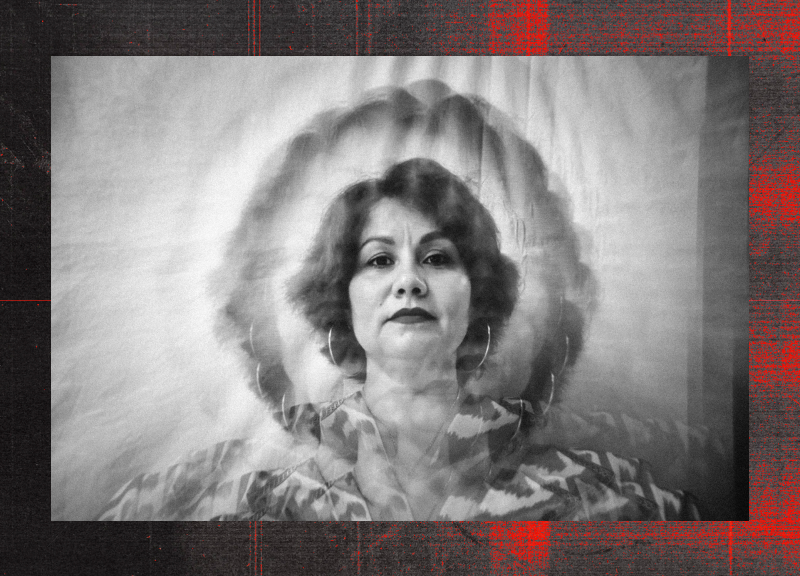
However, the persecution against Shabnam Khudoydodova continued. The activist says she was detained on three occasions at European airports between 2018 and 2023. She was released thanks to her refugee status. In other words, the persecution against her did not stop although the red notice had been removed. A European Union database for border management goes some way to explaining this. Her name was also added by Poland to an Interpol counter-terrorism file called CT CAF. Her name remained in the database for more than three years, between August 2019 and November 2022, and there is no indication why. Interpol’s General Secretariat acknowledged the mistake and rectified it, according to Interpol’s Commission for the Control of Files documents. “You have just informed me about this second file, I was not aware of it at all,” the Tajik activist told Disclose. “But I find this really sad, given that I have never harmed or attacked anyone.” Traumatised, Khudoydodova does not dare leave Poland. “With everything that happened to me, I always fear I’m going to be arrested. It’s engrained in me.”
An entire family flagged by Interpol
Disclose has drawn up a list of at least thirteen other political opponents and Muslim Tajik nationals who have been pursued unfairly by Interpol. Yet despite these serious infringments of the Constitution of the organisation, it has not taken any action. It could have strengthened checks by putting the country under “corrective measures” as it has done for Belarus and Syria. But it has failed to do that.
This lack of action is all the harder to understand as the Central Asian dictatorship knows no bounds. Our investigation has revealed that the Interpol bureau in Dushanbe has issued red notices against an entire family. It says the father, mother and children have fought with ISIS.
In fact, the Tajik authorities have targeted Umar*, the father. He is a supporter of the Islamic Renaissance Party of Tajikistan (IRPT), a Muslim opposition party banned by the authorities in 2015, when he, his wife and his six children fled the country for Turkey. Their exile is amply justified. Since the party was banned, its members have been hunted down and arbitrarily thrown into prison. Some prominent leaders of the movement have died “in prison under suspicious circumstances,” according to a report from the United States Commission on International Religious Freedom (USCIRF). In April 2025, several NGOs and the IRPT lodged a complaint with the prosecutor of the International Criminal Court (ICC), condemning “massive, persistent and systematic violations of human rights in the Republic of Tajikistan, which may constitute crimes against humanity”.
Bogus Islamic State “mercenary”
Umar knew he was wanted by Interpol. Because of the red notice, he was detained in Turkey in 2016 for his alleged links to the Islamic State. He spent close to two months in prison. His son Mustafa found out he was being pursued by Interpol during a trip to Eastern Europe in late 2022. The border police thought they had caught a “mercenary” for Islamic State in Syria. Solely on the basis of Interpol information, the judiciary of a European country, which shall remain nameless at the family’s request, ordered his arrest. He was imprisoned for forty days. Again, Interpol only reacted several months later. “The applicant is not a politician or former politician,” Interpol’s Commission for the Control of Files wrote in its conclusions dated October 2023. “However, he is a Muslim and his father was an active supporter of the Islamic Renaissance Party of Tajikistan […]. This confers a political or religious context to this case.” They ruled that there was no “precise information from the Tajikistan bureau about [Mustafa’s] criminal involvement with ISIS”.
Another arrest was made in early 2024. His mother, Jamila, was detained by Turkish police. Because of the red notice issued against her, the authorities suspected her of involvement in an attack on a church in Istanbul. She was eventually released without charge by the Turkish judiciary who admitted, according to its report seen by Disclose, that “there is no evidence that can create sufficient suspicion that requires prosecution on behalf of the public other than an abstract denunciation that the suspects are members of the terrorist organisation”. Umar and Jamila are now free. Umar, a cleaner in a mosque in Turkey, is no longer wanted by Interpol. Jamila’s case is still under review. They have not been able to renew their residence permits in Turkey because of their arrests. They may be deported to Tajikistan at any time.
*Names have been changed for security reasons.
Investigation : Mathieu Martinière, Robert Schmidt
Editorial coordination: Mathias Destal, with Ariane Lavrilleux
Fact-checking: Rémi Labed
Editing: Mathias Destal
Photos: Nicolas Serve
Cover image: Éric Delfosse, with Nicolas Serve
Translation from French: Béatrice Murail
This investigation is free of charge, thanks to you
Because information is a public good, Disclose offers you all its investigations free of charge, without subscription or advertising. This model is unique in France for an investigative news outlet.
But it’s only possible on one condition: that readers like you support our not-for-profit newsroom. Donations to Disclose are eligible for a 66% tax reduction in France. So a donation of €100 will only cost you €34. Thank you for your support!



On the same topic