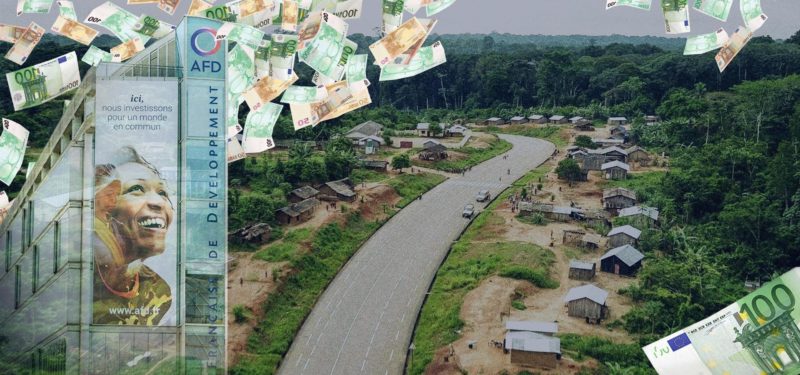
In Africa, French development aid equip soldiers accused of human rights abuses
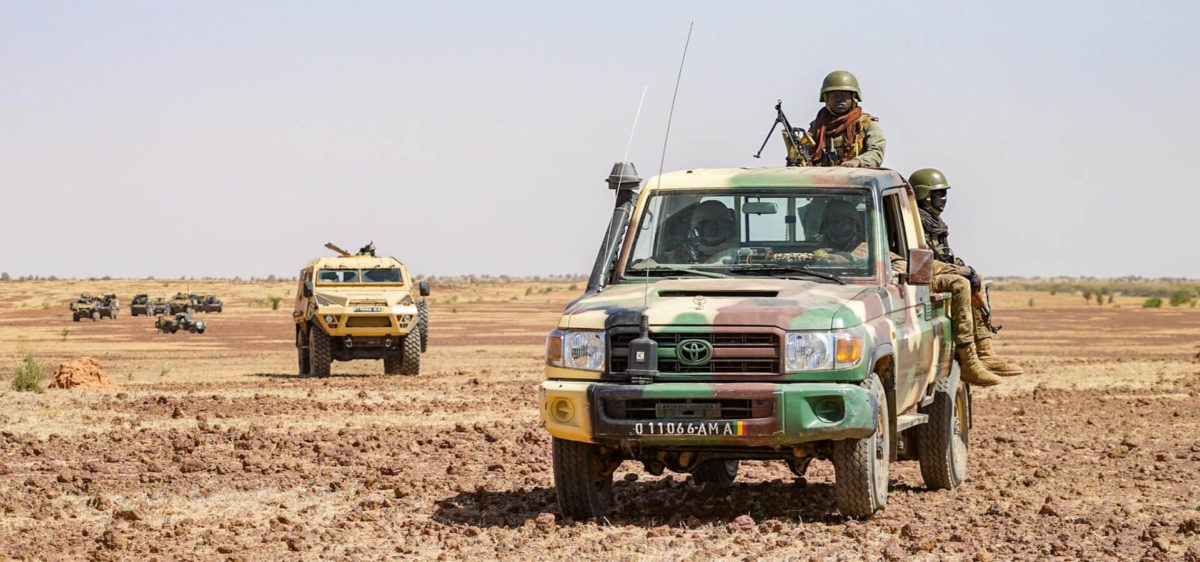
In Africa, French development aid equip soldiers accused of human rights abuses
Expertise France, a public body linked to France’s overseas development agency the Agence Française de Développement (AFD), is supplying military equipment to troops in the Sahel region of the continent who have been implicated in summary executions and rape.
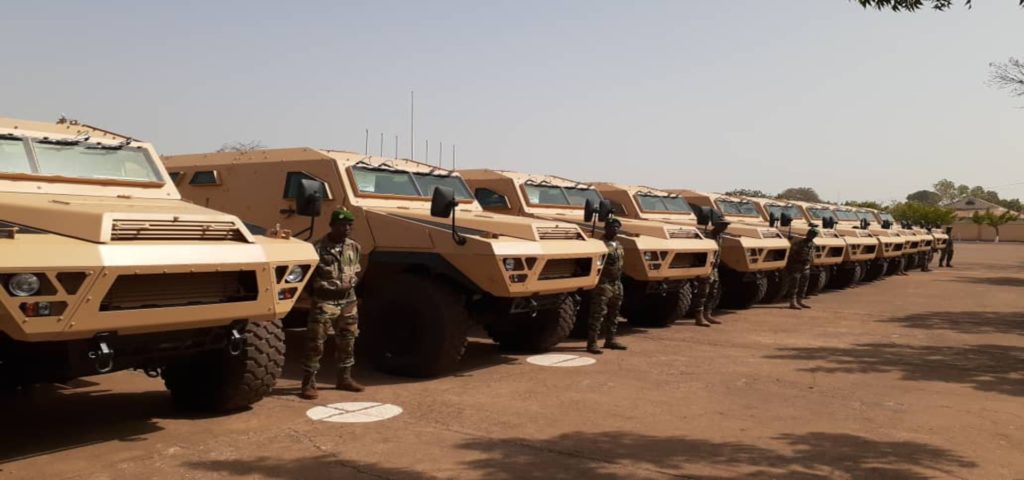
In 2020 a total of 46 brand-new armoured vehicles were supplied to Mali, Niger, Chad, Mauritania and Bukina Faso in the Sahel region of Africa. These ‘Bastion’ personnel carriers, made by the French company Arquus, were sent to support the joint military force known as “G5 Sahel”. Made up of troops from those five countries, G5’s mission is to fight against terrorism in border areas. Meanwhile, France recently announced the end of Operation Barkhane, its anti-insurgency operation in the region, and is beginning to withdraw from the Sahel. So this military “present” is of major importance for France; it allows African troops to take over from French soldiers.
The body behind this vast support operation for the G5 Sahel initiative is a French public agency called Expertise France. This organisation mostly reports to France’s development agency, the Agence Française de Développement (AFD), and in fact is due to become a full subsidiary of the AFD group by the end of 2021. Expertise France’s role is to provide expertise and training to foreign partners on questions as wide-ranging as sustainable development, human rights and health. It supplied the batch of all-terrain armoured vehicles thanks to a major contract with the European Union worth a total of 196.4 million euros. On top of the Bastion vehicles, the French agency was also tasked with supplying 676 all-terrain vehicles to the G5 Sahel troops, as well as 96 drones, more than 3,700 bullet-proof vests, 541 night-vision systems, generators, VHF radios and satellite phones. However, there is a major snag; these African armies supplied with equipment ‘made in France’ are facing serious allegations of human rights abuses.
For example, in July 2020 the NGO Human Rights Watch documented the extrajudicial execution of several hundred people by soldiers from the joint force. A month later the United Nations peacekeeping mission in Mali, MINUSMA, published a report showing that Burkina Faso’s forces had been guilty of at least 50 summary executions. The report’s authors also accused members of Mali’s defence and security forces of having carried out arbitrary execution of 94 people between April and May 2020.
An investigation by Human Rights Watch and Niger’s human rights body the Commission Nationale des Droits Humains (CNDH), meanwhile, showed that that country’s security forces carried out 82 extrajudicial executions and were involved in the disappearance of 105 other people between October 2019 and April 2020. More recently still, in April 2021, troops in Chad were accused of sexual assaults on civilians during an operation in Niger. Three rapes have been officially acknowledged.
Contacted by Disclose and Mediapart, Expertise France denied any responsibility, stating that its responsibility “ended when the ownership of the equipment was transferred to the recipients”. The public body also pointed out that its support for the G5 Sahel troops involved “non-lethal” equipment. The Bastion armoured personnel carriers were indeed delivered without weapons, though this did not stop the G5 Sahel countries from arming them once they had arrived.
When questioned about these abuses, the Agence Française de Développement (AFD) stated that “France … is extremely vigilant about the circumstances in which the equipment and finances provided to the G5 Sahel countries are employed and used” without giving details about the form this “vigilance” takes in practice. Asked about the hypocrisy of selling non-lethal equipment that can be weaponized later, the agency said that “we need security to be able to work on the ground”.
While France obtained guarantees that the exported equipment would not be used for lethal purposes, it still needs to be demonstrated that these exports contribute to the “security” and “development” of the countries involved, as the AFD’s actions in the Sahel presuppose they will. This becomes an even more pressing question given that the reality on the ground hardly suggests that this approach is proving effective. Despite a growing number of projects supporting defence and security, the situation in the region has in fact continued to get worse. According to data from the Armed Conflict Location & Event Data Project (ACLED), close to 400 civilians were killed in the G5 Sahel zone in 2020 alone.
When questioned about the worsening of the security situation, the AFD simply repeated that the “G5 Sahel joint force was created in order to ensure security in the sub-region, with the aim of promoting economic and social development that is positive for the local population”.
Academic Marc-André Boisvert, the author of a PhD dissertation on Mali’s armed forces, believes the problem lies in the very way these aid programmes were conceived, for short term results. “We want immediate results but reforming the security sector takes 15 years,” he said. “You don’t stop the war just by providing an aircraft and some armoured vehicles. The European Union spends its time training soldiers but there’s no monitoring, no requirements, nothing. How can you hope to build something solid and stable in these circumstances?”
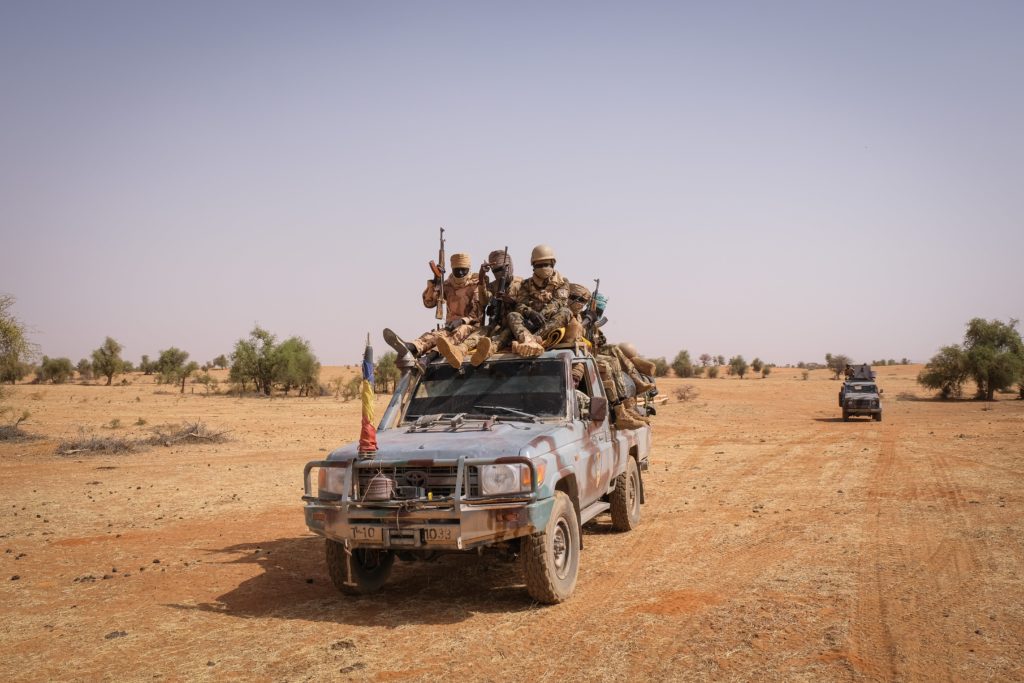
Another of Expertise France’s missions has also raised questions: its training of G5 Sahel soldiers. In 2017 the public agency received 29 million euros in funding from the European Union to provide support for Mali’s security forces. Three years later it received 7 million euros in funding to support the Burkina Faso’s Forces de Défense et de Sécurité (FDS) in their mission to make the area secure. Yet Human Rights Watch has accused those same Burkina Faso forces of having executed 31 inhabitants of the town of Djibo in the north of the country in April 2020. This operation was described by the NGO as a “brutal mockery of a counterterrorism operation that may amount to a war crime”.
“These national armies have little or no credibility and often don’t have the support of their own community. You could carry out training for five people or for 100,000, it wouldn’t change anything, because no one is tackling these armies’ major problems, which more than anything are structural,” said François Grunewald, director of strategic foresight at the independent think tank URD, which is regularly called on by the French state to evaluate public policies, in particular those being implemented in the Sahel.
These questions are not likely to change the strategy employed by Expertise France – the future subsidiary of AFD – in the short term. In 2020 it had a turnover of 237 million euros and envisages doing even better in the years to come, particularly because of the ever-growing budgets available in relation to military issues. The AFD group is already eyeing money from the “European Peace Facility” that the EU has introduced for the period 2021 to 2027 and which has a total funding of five billion euros. This new fund could be used for military and thus lethal aims. The AFD said that it will not make use of the funds for these purposes.
Anthony Fouchard & Justine Brabant (Mediapart)
On the same topic