PFAS in agriculture: the factories spreading their toxic waste in fields
PFAS in agriculture: the factories spreading their toxic waste in fields
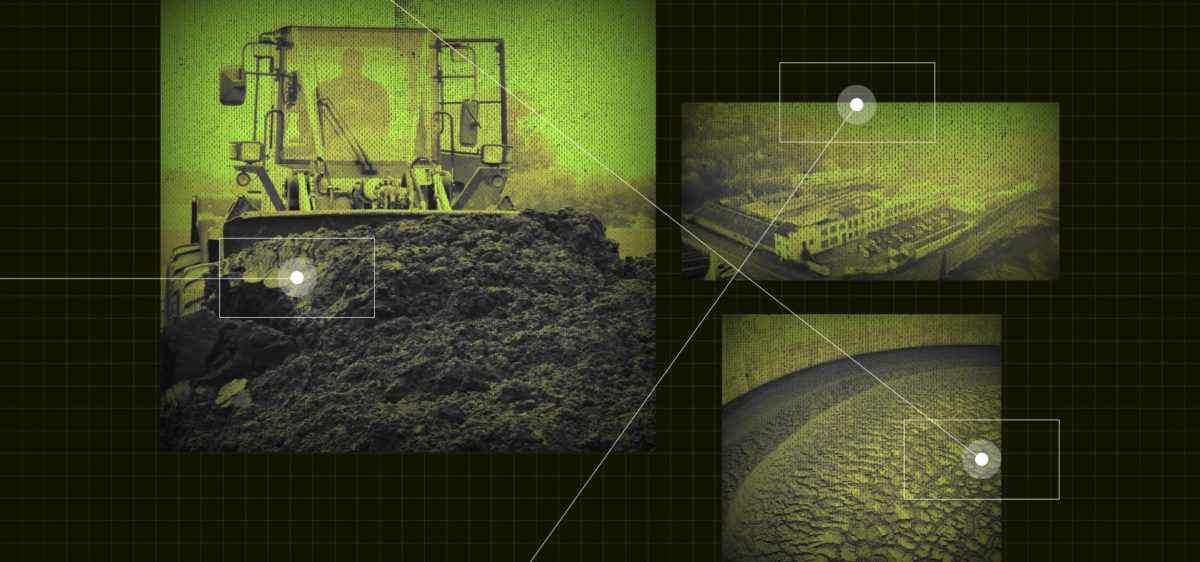
A quarter of the 100 industrial sites discharging the largest quantities of forever chemicals in France have been supplying the agricultural sector with “sewage sludge” meant to fertilise fields. The toxic fertiliser has been spread over several thousand hectares, Disclose can reveal in partnership with France 3. The French authorities have struggled to take the measure of this health and environmental time bomb.
The vicious cycle of PFAS pollution is taking on a new guise. In addition to non-stick pans, waterproof textiles and the chemical industry’s discharges into water, thousands of hectares of agricultural land have been contaminated across France. The pollution, undisclosed until now, is on an unprecedented scale. In the departments of Pas-de-Calais, Alpes-Maritimes, Mayenne and Bas-Rhin, among others, Disclose and France 3 Auvergne-Rhône-Alpes have uncovered that companies have been spreading on agricultural land tonnes of fertilisers contaminated with toxic compounds, including some linked to cancer, hormone disruption and stunted growth.
Government bodies have been on alert for several months in connection with this major new source of exposure to forever chemicals. Public authorities have asked industrialists on the quiet to start conducting tests on “sewage sludge”. The little known solid waste from wastewater treatment plants supplies farmers with precious fertiliser which can turn out to be extremely toxic.
“How can anyone believe that it won’t end up on our plates?”
Anne Abraham, a farmer whose vegetables have been contaminated with PFAS because of sewage sludge
That is precisely what happened in the Ardennes, where Disclose and France 3 met vegetable growers Anne and Sébastien Abraham, whose produce has record levels of PFAS. Their vegetables have been contaminated by sewage sludge saturated with forever chemicals from a former paper mill which was authorised to spread its sewage sludge on their plot of land before they started farming. “It is quite incredible that in 2026 this should be allowed to happen on land used to grow food,” Anne Abraham said. “We are talking about waste that is spread on land where we grow what we will eat. How can anyone believe that it won’t end up on our plates?” The Abrahams decided to stop farming in January 2026.
“Poison” in fields
Public authorities have promoted sewage sludge spreading since the late 1990s. With more than 1.1 million tonnes produced in 2023, and most of it meant for agriculture, French public plants generate more sewage sludge than any other country in Europe. And then there is sludge from private plants, produced within factories, but its volume is not known.
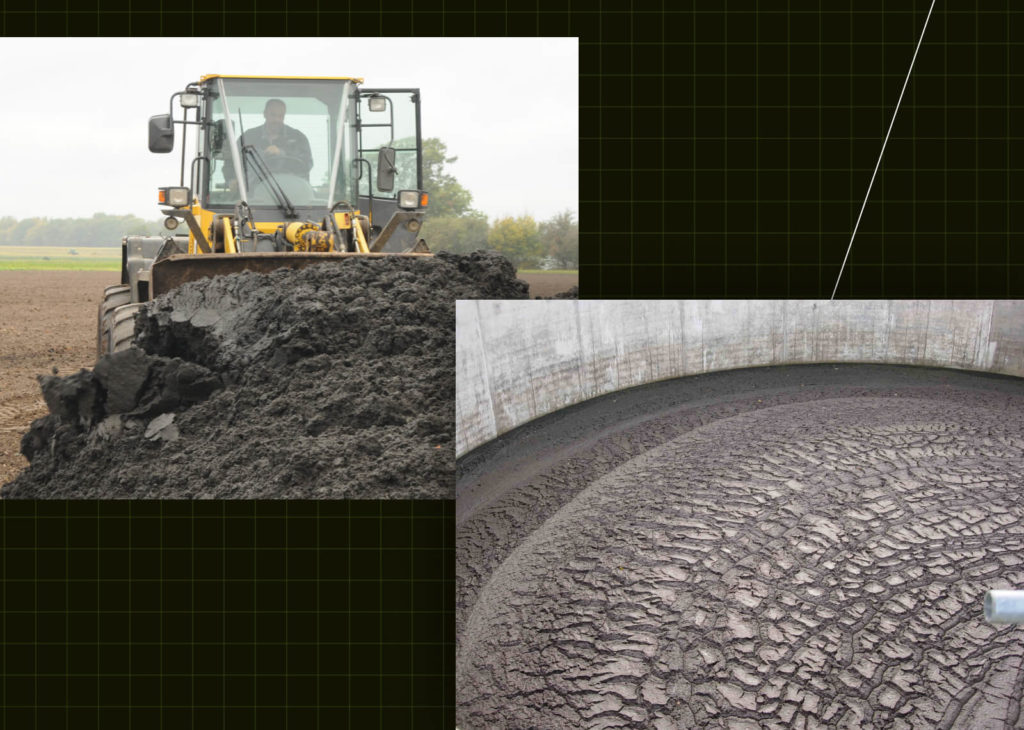
“Sewage sludge is a great product. It is rich in nitrogen, potassium and micro-nutrients,” enthuses a farmer south of Lyon who requested anonymity as the topic has become controversial for the sector. The practice appears to have all the hallmarks of a win-win partnership: local authorities and industrialists get rid of bulky waste that is costly to process, and farmers get cheap or free fertiliser. But when sewage sludge is saturated with PFAS, it becomes poisonous.
The investigation conducted by Disclose and France 3 shows that of the 100 facilities that produce the largest quantities of PFAS in France, a quarter have recycled their waste in agriculture over the past few years [see the map below for their location]. In order to identify these 23 factories, we analysed the results of more than 400,000 industrial wastewater tests carried out between July 2022 and December 2025. All of these factories produced at least 1.5 grammes of PFAS emissions per day yet they recycle their sewage sludge in agriculture.
There are three ways fields can be polluted by contaminated sewage sludge: through spreading, composting – where it is mixed with green waste before it is spread – and through the transfer of contaminated water to public water treatment plants which also resort to spreading and composting. In all three cases, PFAS are likely to contaminate foodstuffs.
Soil pollution is a major vehicle for human contamination, says Prof. Philippe Grandjean, who has published many research studies on the impact of forever chemicals on health. PFAS are very mobile and can migrate into crops. He explains that these crops “are fed to cattle, among other uses, and humans may be exposed to PFAS when they drink milk or eat cheese, for instance”. Grandjean stresses that PFAS “are poisonous for several organs and may cause increased risk of disease because of their harmful impact on the immune system, the hormonal system and liver metabolism”.
The textile and paper industry, a major source of contamination
Chemicals plants such as Arkema and Daikin, near Lyon, were until now one of the major known causes of PFAS dissemination into the environment. Our investigation has uncovered two other lines of business that are of concern: the paper and textile industries.
“Tests conducted on sewage sludge from national industries have shown worrying levels”
Meuse prefecture “restricted” memo, August 2025
A third of the 23 factories we have identified are active in these industries. They use PFAS because of their fat and damp resistance properties. However, the very persistent compounds permeate wastewater and are not removed by water treatment plants. This is confirmed by the prefect of the Meuse department in a “restricted” memo to the Ecological Transition Ministry in August 2025. “Tests conducted on sewage sludge from national industries, paper and textile industries in particular, show worrying [PFAS] levels,” he warned.
The Mathelin Apprêts Teintures (MAT) textile company, set up in 1925 in Chessy, Rhône department, is a prime example of pollution that goes under the radar. Over a century, the factory’s wastewater “has taken on all the colours of the rainbow,” says a technician responsible for monitoring the region’s water environment. “However, things are much better now,” he adds. But PFAS are colourless and odourless. They are invisible.
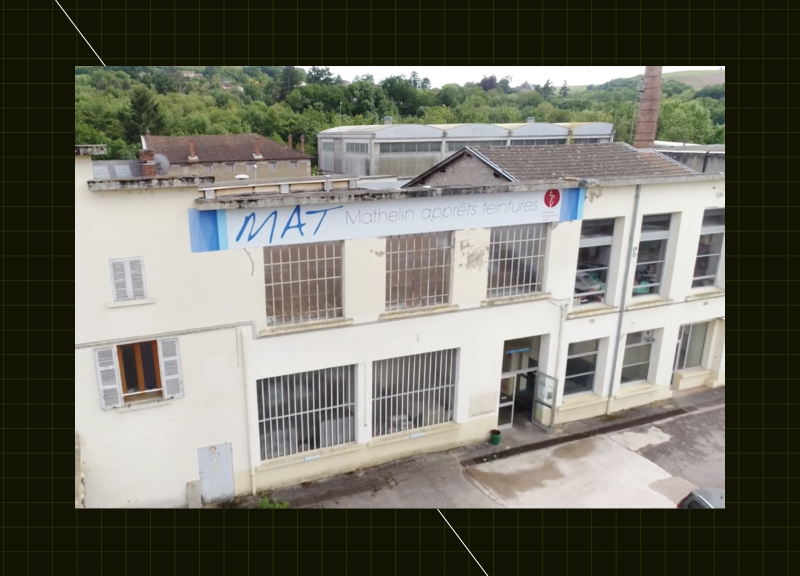
The latest known data shows that the company applied on its fabrics close to 10 tonnes of liquids containing PFAS in 2023. A year later, their level in sewage sludge reached 2,417 microgrammes per kilogramme (µg/kg), according to a test report provided by the Rhône prefecture. That’s much higher than the level we measured for the paper mill in Stenay, which is responsible for drinking water pollution in several municipalities of the Meuse and Ardennes departments.
Disclose and France 3 approached the manager of the factory, Didier Butor, for comment. He denies that any offence has been committed and argues that manufacturing is “standardised and meets specific requirements”. Yet the Environmental Code makes it clear that sewage sludge should not “be harmful, directly or indirectly, to human and animal health” and “to soil and water environment quality”. However, until 2024, MAT’s sewage sludge was sent to composting sites and ended up in agricultural plots. “Until we were told that it was a problem, we did not know,” the manager says. His factory’s sludge has been incinerated since 2024, at the request of the Rhône prefecture.
Seveso sites spread their waste
Chemical plants also feature among factories authorised to “recycle” their waste in agriculture. They include WeylChem Lamotte, a “higher threshold Seveso” site, which claims to be the glyoxylic acid “world leader”. The French Agency for Food, Environmental and Occupational Health & Safety (ANSES) recently called for the substance to be “restricted or even banned” because of its toxicity.
WeylChem Lamotte, in Trosly-Breuil, Oise department, produces large quantities of PFAS. The results of a test conducted by the company on 3 October 2023 and seen by Disclose and France 3, show that its wastewater contained up to 21 grammes of pollutants, including PFOS, whose estimated half-life in the soil is at least 41 years. The company has denied using PFAS and expressed “doubts about the reliability” of its own tests, but according to an inspection report dated November 2025, it has pledged to conduct additional tests. We requested to see them but received no reply. The Oise prefecture told us that “the results of these tests have not been forwarded to the authorities”.
Meanwhile, Weylchem Lamotte has been sending since 2019 no fewer than 16,000 tonnes of contaminated fertiliser per year to farmers and composting companies. A total of 4,100 hectares of land (the equivalent of 5,800 football pitches) are authorised to receive the sewage sludge shared between 69 municipalities in the Aisne and Oise departments, according to its authorisation file for sludge “recycling”.
Ink manufacturer Toyo Ink, in Oissel, Seine-Maritime department, also sends its sewage sludge to a composting company, and so does pharmaceutical company Zambon in Avrillé (Maine-et-Loire department), a “higher threshold Seveso” site. Wastewater from Zambon’s factory is forwarded to the water treatment plant in Angers, which also resorts to spreading and composting. It is pretty much impossible to know on which agricultural plots waste from Toyo Ink and Zambon has ended up.
Seriously underestimated pollution
What happened across the border from Alsace sheds light on the disastrous consequences of spreading sewage sludge contaminated with PFAS. In the town of Rastatt, in the southwest of Germany, composted waste from 14 paper factories saturated with forever chemicals was discharged into fields between 2006 and 2008. Contamination is on a scale that hardly bears thinking about: 490 million cubic metres of groundwater – or 200,000 Olympic-size swimming pools – and more than 1,100 hectares of land.
“Our water resources may be contaminated for more than 100 years”
Reiner Söhlmann, civil servant in Rastatt (Germany)
“We identified the problem in 2012,” says Reiner Söhlmann, who is in charge of the local government’s PFAS unit. “We had to ban the sale of some agricultural produce.” Several drinking water catchment areas have been sealed off and those that are still in use require expensive treatment. “Our water resources may be contaminated for more than 100 years. People who were exposed still have high levels in their bloodstream,” Söhlmann says. Decontamination in Rastatt could cost more than 3.5 billion euros.
In order to prevent something similar from happening elsewhere, the German authorities have set maximum PFAS levels for sewage sludge meant for agriculture, as have Denmark, Austria and Canada. In Switzerland, this is not even an issue: sewage sludge spreading was banned as early as 2006. Such a radical measure may not be necessary, says Aurélia Michaud, an engineer specialising in PFAS in solid matter at France’s Research Institue for Agriculture, Food and Environment (INRAE): “Not all sewage sludge is harmful. Identifying sludge that is contaminated is key. Sludge that is hazardous should be banned.”
France, however, has yet to take action. The Ecological Transition Ministry did not answer our questions. In 2024, a government plan on PFAS did make provision for “the implementation of fertilising materials monitoring” but this is contingent on the willingness of a few local players. In the Loire-Bretagne Basin, which stretches from Brest to Saint-Étienne, public waste water treatment plants can now get funding to detect PFAS in their sewage sludge. Initial results are worrying, says the man in charge of the environmental unit of the Centre-Val de Loire prefecture. In a letter to the Ecological Transition Ministry in October 2025, he stressed that “some levels are […] quite high compared with various international benchmarks”. The senior civil servant urged his ministry to act. “I believe it is crucial for rules and regulations to change fast in order to […] plan sewage sludge tests in a large number of waste water treatment plants”. At stake, he added, is “the possible impact on health of sewage sludge spreading on agricultural land” in mainland France.
Investigation: Nicolas Cossic (Enketo collective), Émilie Rosso (France 3), Rémi Labed
Fact-checking: Rémi Labed
Editorial coordination: Pierre Leibovici
Editing: Mathias Destal and Pierre Leibovici
Translation from French: Béatrice Murail
Photo: Nicolas Leblanc
Map: Nicolas Cossic, Rémi Labed and Pierre Leibovici
Composite: Éric Delfosse, with Nicolas Leblanc
This investigation is free of charge, thanks to you
Because information is a public good, Disclose offers you all its investigations free of charge, without subscription or advertising. This model is unique in France for an investigative news outlet.
But it’s only possible on one condition: that readers like you support our not-for-profit newsroom. Donations to Disclose are eligible for a 66% tax reduction in France. So a donation of €100 will only cost you €34. Thank you for your support!