Ukraine: unseen maps document war crimes committed by Russia
Ukraine: unseen maps document war crimes committed by Russia
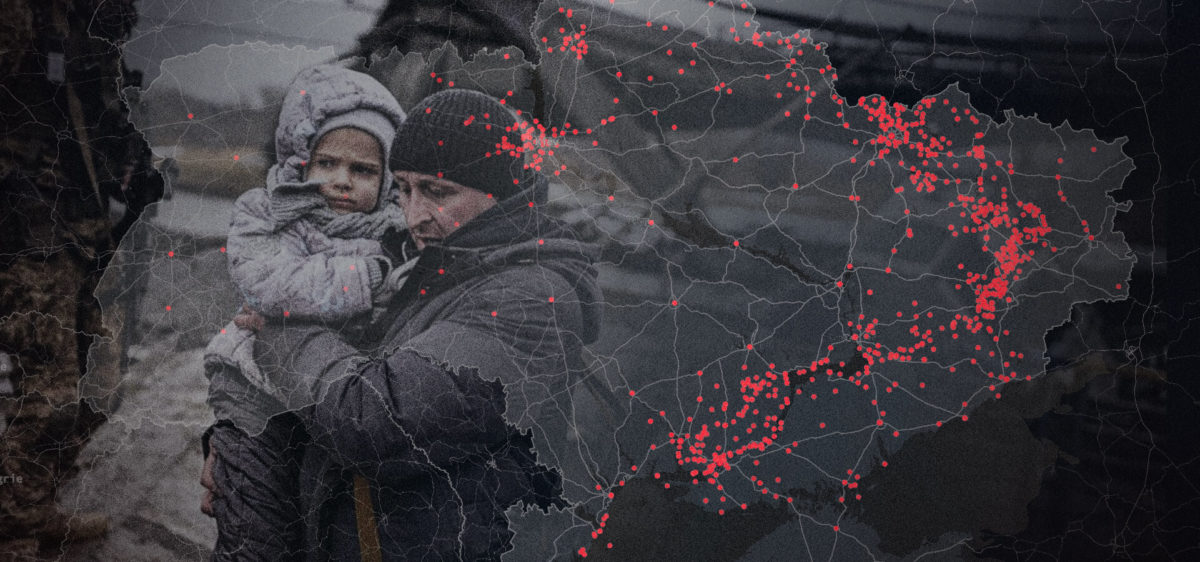
Over the past year, the Russian military has terrorised Ukrainian civilians with arbitrary executions, torture, rape as well as attacks on schools, hospitals and energy infrastructure. Disclose has identified and mapped close to 6,000 events likely to be defined as war crimes by the International Criminal Court.
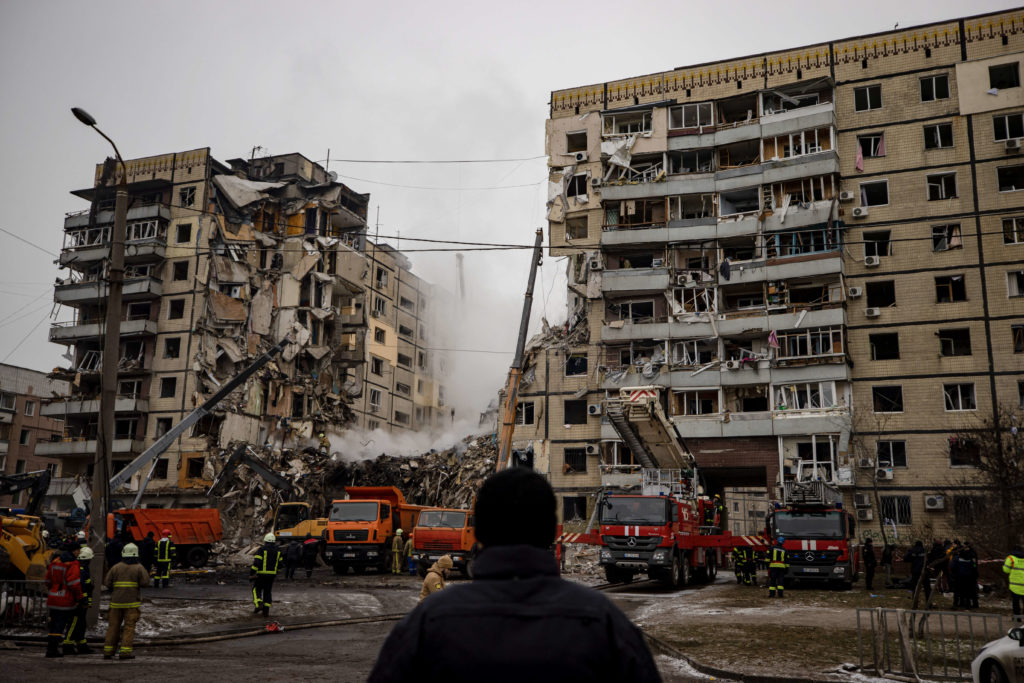
At 3.30pm on Thursday 14 January 2023, a Russian missile hit a nine-floor building in a residential area of Dnipro, a tourist city in eastern Ukraine. Neighbours rushed in, soon followed by rescue services, to give assistance to the many injured, including Nastya, 24. The young woman later told the local press that she was lying on her bed when the explosion happened. After a 69-hour rescue operation, the toll was heavy: 45 people were killed in the bombing, including six children. Nastya’s parents died instantly.
Since the invasion started on 24 February 2022, Russia has struck Ukrainian territory methodically: homes, hospitals and schools, as well as humanitarian convoys. Summary executions, rape, forced abductions and torture have been reported: civilians are paying a heavy price. Russia is also accused of using hunger as a weapon of war by destroying silos and looting agricultural resources.
To take the measure of the disaster, Disclose has analysed 32,528 events that took place in Ukraine between 24 February 2022 and 24 February 2023. We used a database set up by ACLED, a US-based NGO that specialises in collecting and analysing data on armed conflicts. We focused on events initiated by the Russian military and their allies, such as pro-Russian separatist militias and the Chechen units of Ramzan Kadyrov’s regime. We performed a second filtering operation to single out all the events where Ukrainian civilians were injured or killed and those where civilian infrastructure was destroyed by Russian armed forces. We aimed to identify events that may constitute war crimes with regard to the Geneva Conventions, a body of texts relating to civilian protection in time of war. We identified 5,834 events* involving Russian armed forces.
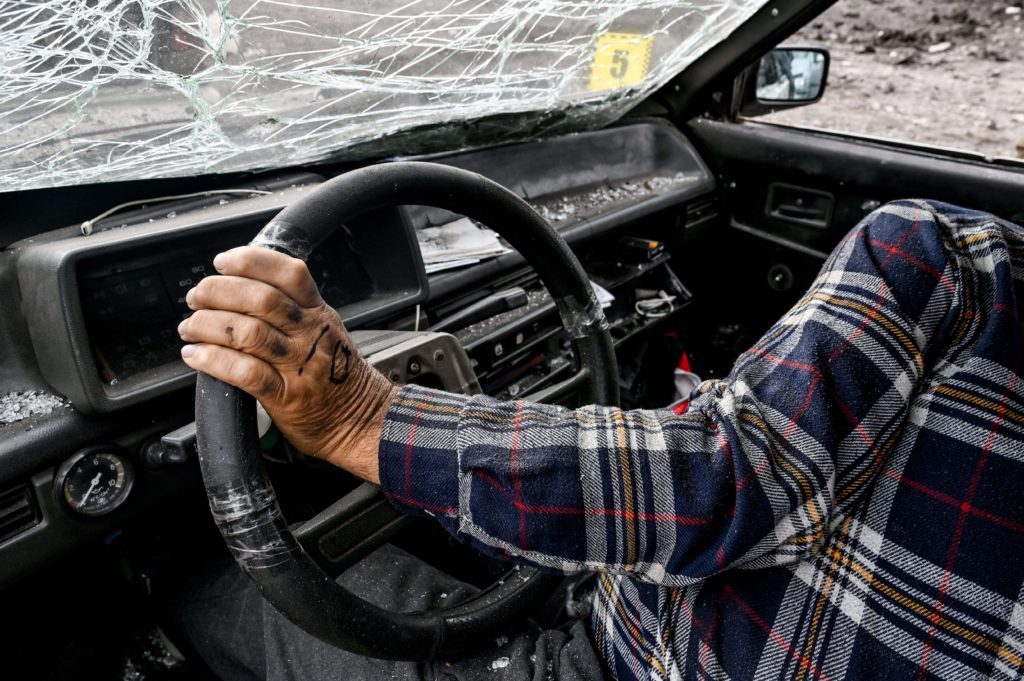
On occasions, Russian soldiers deliberately crushed civilian vehicles and their occupants with tanks and other armed vehicles. This has been widely documented in the town of Bucha, 25km northwest of Kyiv, the Ukrainian capital. The Russian military’s tanks are fitted with French military equipment, as Disclose revealed in March 2022.
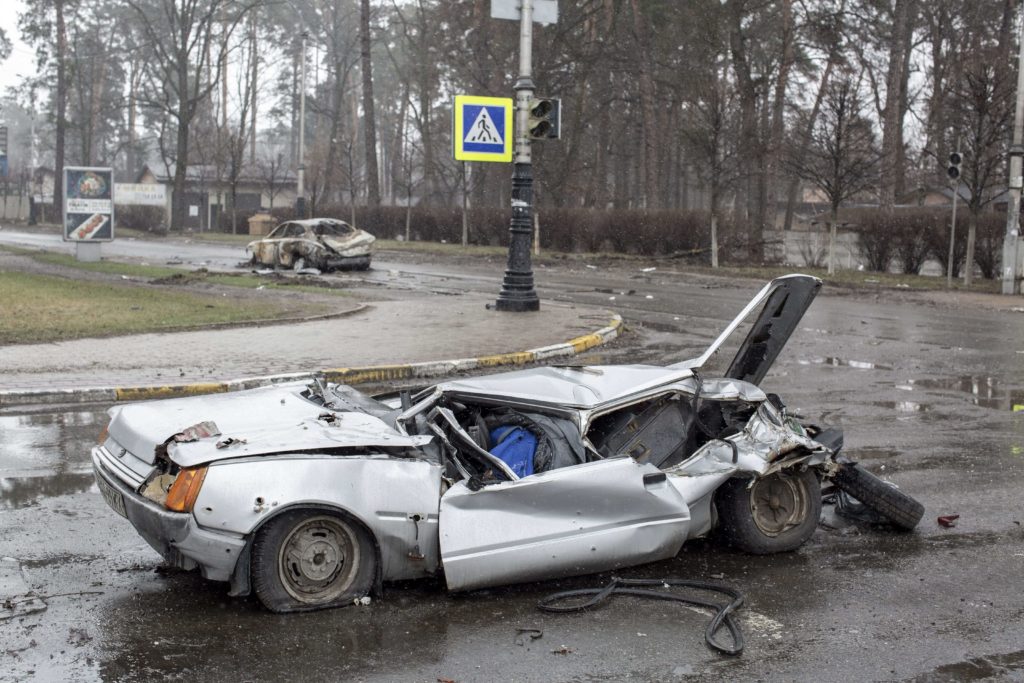
A year ago, on 31 March 2022, Bucha was liberated by the Ukrainian military after 33 days of occupation. Members of the armed forces found entire streets strewn with lifeless bodies. At the time, pictures of the “Bucha massacre” went round the world. Our investigation revealed that 35 events that may amount to war crimes took place in the city of 28,500 including rape, arbitrary abductions as well as the execution of many civilians. Similar crimes have been committed across Ukrainian territory.
Among atrocities committed against civilians over the past year, sexual violence took place in the context of at least 24 events. Our analysis of ACLED’s data reveals that Russian troops used rape as a weapon to spread fear. In March 2022, soldiers raped several times a group of 25 women aged 14-24 in the basement of a house. Nine of the women fell pregnant as a result. The following month, in Kherson, in the south of the country, members of the Russian military subjected children to sexual abuse, causing the death of at least three of them. In Luhansk, Donbas, eight women were raped between 13 July and 27 July 2022, before being killed by the occupiers. According to the United Nations, the scale of sexual violence suffered by civilians is believed to be still very much underestimated.
No escape
Since the start of the conflict, many Ukrainians have also been killed as they tried to flee combat zones.
Our investigation revealed that civilian evacuations, humanitarian corridors and humanitarian aid operations were hit or cut short by Russian military attacks on 121 occasions.
As they fled or simply moved about in their home areas, Ukrainians were wounded or killed because of anti-personnel mines. We have identified 109 events of this type since the beginning of the war. Our investigation also shows that cluster munitions, banned by the Oslo Convention since 2010 because of their inaccuracy, were used on 59 occasions by Russian forces.
Cities razed to the ground
Over the past year, bombings, artillery fire, rockets and missiles have hit Ukraine 26,024 times, mostly in the country’s urban areas. “The Russian military has shown blatant disregard for civilian life by using ballistic missiles and other explosive weapons with wide area effects in densely populated areas,” Amnesty International said in a statement on the day after the invasion.
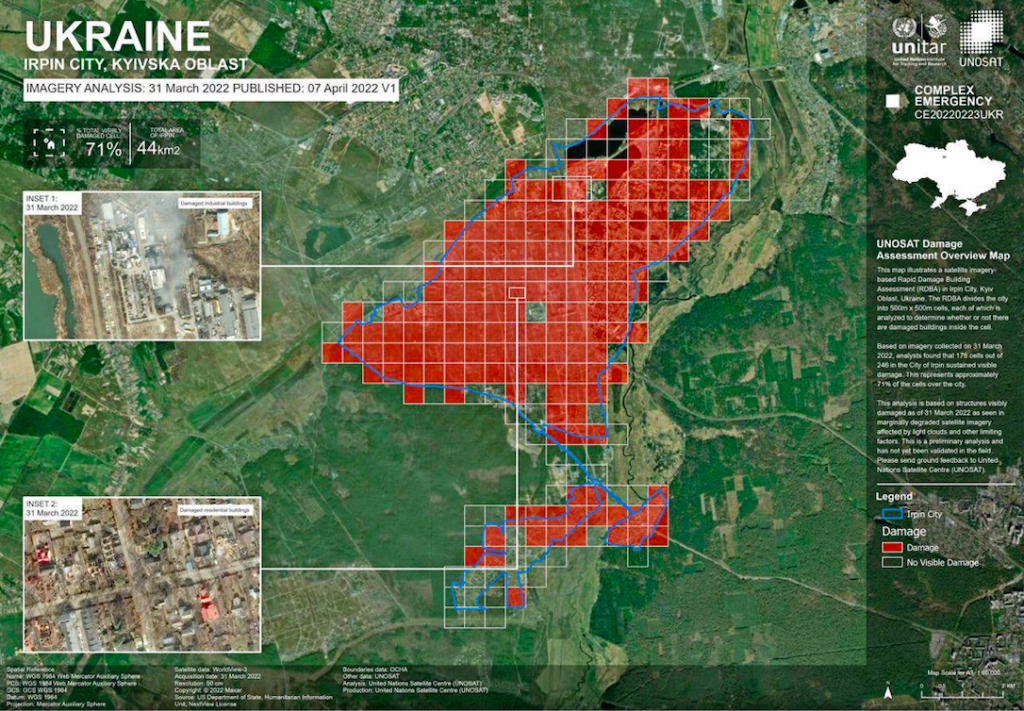
The destruction of living areas is confirmed by analysis of satellite images conducted by the United Nations Satellite Center (Unosat). In Irpin, for example, on the basis of images collected on 31 March 2022, Unosat estimates that 71% of buildings in the city in eastern Ukraine have been destroyed by bombings.
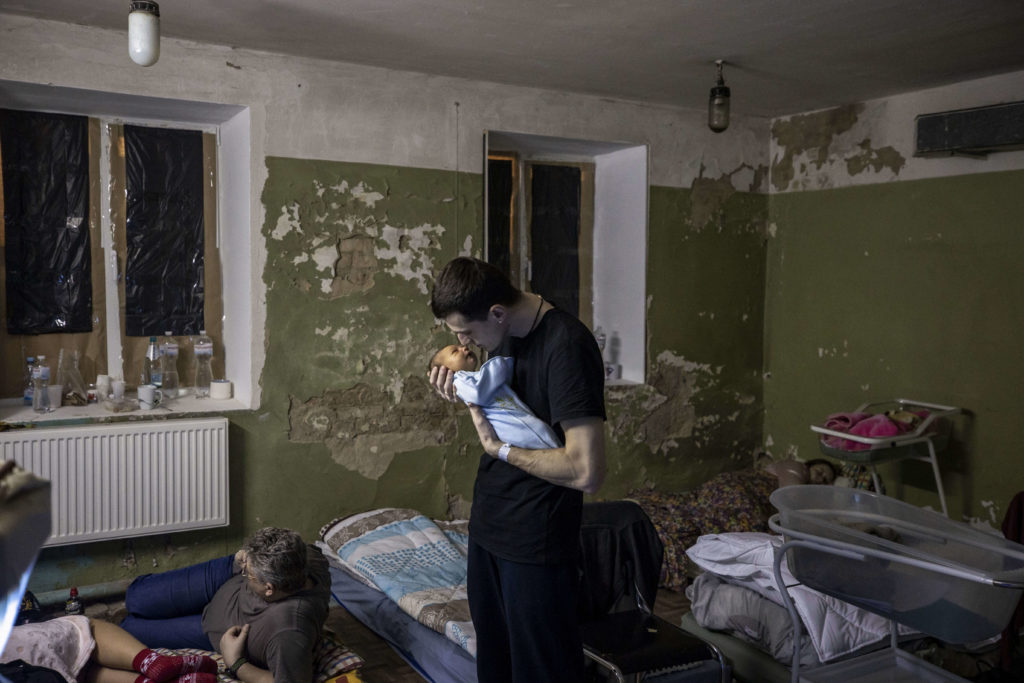
In the heart of Ukrainian cities, infrastructure essential to the survival of residents has come under fire from Russian military forces including health facilities although they are supposed to enjoy special protection under the Geneva Convention on international humanitarian law. We identified a total of 123 events where general hospitals, maternity hospitals, health centres and ambulances were damaged or destroyed. Health facilities that were not demolished were looted by Russian soldiers. On 29 April 2022, equipment used for intensive care in hospitals in Mariupol and Donetsk was stolen.
Other targeted civilian infrastructures included schools. From 24 February 2022, schools where residents could hide were hit on 184 occasions by heavy artillery fire and air strikes.
On 17 March 2023, the International Criminal Court issued an arrest warrant for Vladimir Putin, who is suspected of war crimes including the unlawful deportation and transfer of Ukrainian children to Russia and occupied territories. “There are reasonable grounds to believe that Mr Putin bears individual criminal responsibility for the aforementioned crimes,” the International Criminal Court said in a statement. Ukrainian officials say that more than 16,000 children are believed to have been forcibly displaced since 24 February 2022.
Mathias Destal, Rémi Labed, Geoffrey Livolsi et Denis Vannier (Le Plan)
* Disclose developed an interactive map with all the data listed: https://ukraine.disclose.ngo/explore