How Moscow tracks down its opponents thanks to Interpol
How Moscow tracks down its opponents thanks to Interpol
Russia is using all the tools offered by Interpol to track down opponents, journalists and activists in exile, reveal Disclose and the BBC, based on a leak of internal data from the organization. While increased controls were put in place after the 2022 invasion of Ukraine, the abuses have never stopped. According to our information, Interpol recently eased the surveillance measures imposed on Moscow.
It was a first in Interpol’s history. On 10 March 2022, the criminal police international organisation publicly announced that one of its 196 members, Russia, was being placed on a watch list with immediate effect. With this measure, a few days after the invasion of Ukraine, Interpol aimed to “prevent any potential misuse of Interpol’s channels in relation to the targeting of individuals within or beyond the conflict in Ukraine”. Since then, every diffusion notice or red notice submitted by Interpol’s Moscow bureau has had to be approved by the organisation’s headquarters in Lyon, France. Three months later, these “corrective measures” were extended to cover all the emails written by Russian police officers. Unfortunately, things did not go as planned.
According to the investigation by Disclose and the British public television BBC, Russia has never stopped tracking down opponents, journalists and dissidents in exile thanks to the organization’s tools. The leading country in terms of the number of valid search notices is also the country at the top of complaints to the CCF, the commission for controlling Interpol files. However, according to our information, the measures imposed on Moscow have recently been eased.
Igor Pestrikov, 58, a Russian entrepreneur, has spoken up for the first time. The businessman lives in a town in the south of France. His life was turned upside down three years ago. At the time, he was a major shareholder of Solikamsk Magnesium Plant (SMZ), a company specialising in the production of magnesium and rare earths for the metal industry to manufacture military hardware, among other products. Given the company’s strategic importance, the Russian authorities wanted to nationalise it. But Igor Pestrikov was seen as a threat, an enemy even, especially since his wife and daughter are Ukrainian. In June 2022, Pestrikov ended up being accused by the Russian authorities of “abetting the misappropriation of funds”. Fearing that he might be arrested and thrown into jail, he fled Russia.
But the regime did not let the matter rest there. It made use of an Interpol tool less well known than red notices called diffusion notices, which enables a state to request the arrest of a person from selected countries, rather than from all the members of the police organisation.
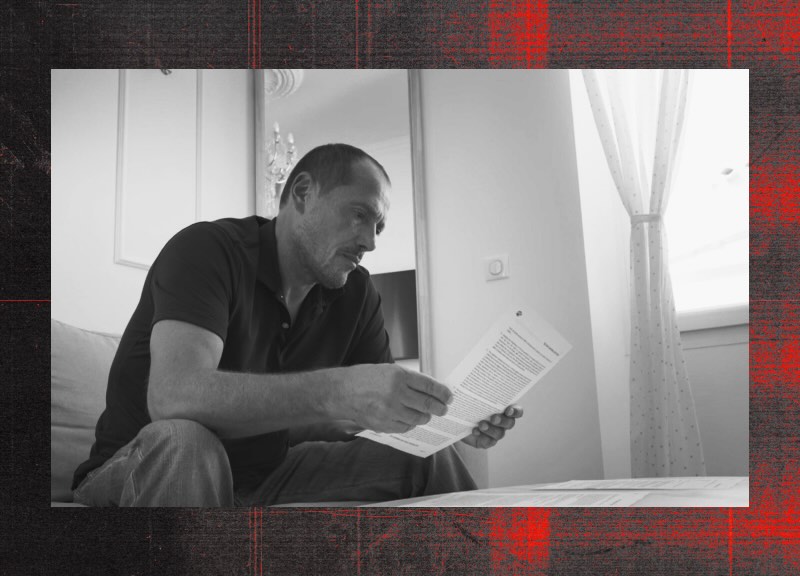
In France, where he has sought refuge, Igor Pestrikov lodged a complaint with the CCF, Interpol’s Commission for the Control of Files. After seven months of waiting, he was told on 17 April 2024 that the wanted notice had been removed. Interpol’s officers, in their conclusions seen by Disclose, expressed doubts regarding the charges against the claimant, writing that the information provided by Russian police was “formulaic” and that the file had a “mostly political dimension”. In the meantime, Igor Pestrikov has not been able to travel outside France for nearly two years. “The problem is that Russia still has the right to be in Interpol,” says and indignant Pestrikov. “By simply pressing a key, they may accuse you of any crime and continue to persecute you around the globe,” he says.
Igor Pestrikov is far from being the only victim of the Kremlin’s ruses. In 2024 alone, no fewer than 194 people lodged a complaint with Interpol’s Commission for the Control of Files. Our analysis of documents intended for Interpol’s Executive Comittee shows that close to half of the files were deemed non-compliant with the organisation’s Constitution, in particular articles 2 and 3, which require states to “respect the spirit of the Declaration of human rights” and not to intervene in “actions of a political, military, religious or racial character”.
But this is only half the story. Fourteen Russian requests were blocked before issuance between January and April 2024, according to a memo from Interpol’s general secretariat. Seven of them were against the International Criminal Court’s judges and its prosecutor, British national Karim Khan. In the document dated April 2024, Interpol’s directorate expressed its “concerns” regarding Russia’s abuse “of the International Criminal Court’s judges and its prosecutor, among others”. The targeting resembles a retaliatory measure after an arrest warrant was issued a year earlier against Vladimir Putin, suspected of the “war crime of unlawful deportation of children” with Ukrainian passports to Russia.
How many political files go under the radar of Interpol’s control mechanisms? How does the organisation account for such failure although the Moscow bureau has been under enhanced surveillance since 2022? Interpol did not answer our questions on Moscow’s manipulations.
Thirty-five days in jail
The Russian problem is far from being resolved yet for several years NGOs and human rights activists have been alerting the international community about Moscow’s weaponisation of Interpol. In 2021, in a memo about transnational repression in Russia, US NGO Freedom House expressed its concern that “the Kremlin is perhaps the world’s most prolific abuser of the Interpol notice system”.
The data seen by Disclose and the BBC confirms their suspicion: 4,817 red notices and 5,240 red diffusion notices were in circulation in Septembre 2024, with Russia the top Interpol wanted notice issuing country in the world. It is also the country that is subject to the largest number of complaints lodged with the Commission for the Control of Files.
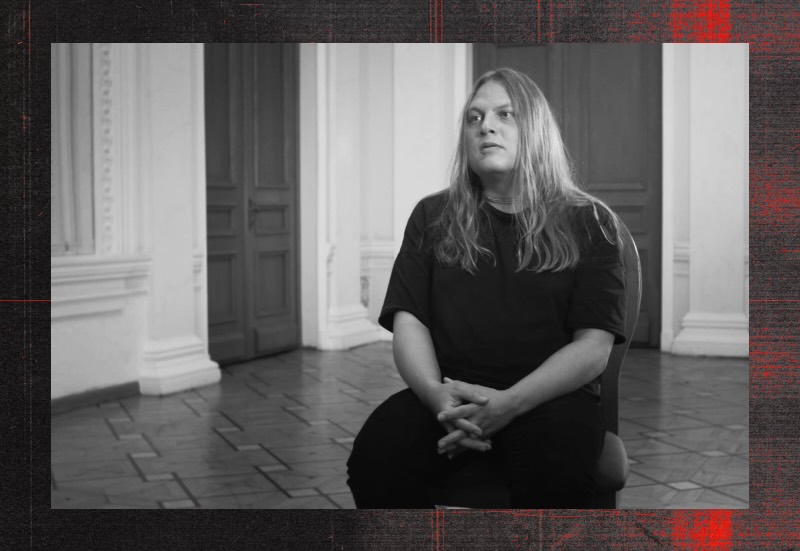
Ukrainian national Eugene Lavrenchuk spent 35 days in jail precisely because of a problematic diffusion notice by Russia. The opera and drama director’s ordeal began on 17 December 2021. Lavrenchuk, 39 at the time, was visiting his sister in Naples, Italy. He was about to fly back home to Ukraine when he was detained. He was jailed in Naples pending extradition to Moscow, where the authorities accused him of fraud when he was the head of a Moscow theatre between 2004 and 2014. “I don’t know what to tell you. This never happened,” he told our BBC partners. He says his public statements against the Russian regime is the only possible explanation for Moscow’s relentlessness. “Until 2013, I would always express my beliefs, openly say that Putin is a criminal. But then I started feeling the screws being tightened”. Feeling threatened, he fled Russia.
Eugene Lavrenchuk was released from prison in January 2022, a month after his arrest. Although Interpol eventually removed his name from the list of wanted persons, his case having been deemed political, he spent another two months under house arrest in Italy.
The track down for a journalist in exile
For several months, Disclose and the BBC also analysed hundreds of emails that reveal another type of misuse of Interpol by Russia. It does not involve abusing wanted notices but exploiting an instant messaging tool which enables the police of a member state to request sensitive information directly and in confidence from another country, the location of a person for instance.
On 17 February 2023, Interpol’s Russia bureau sent messages to Armenian and German colleagues about Armen Aramyan, who was sentenced in April 2022 to two years of community service and had his passport removed. He was charged with involvement of minors in dangerous activities in Russia. Aramyan, 28, managed to leave the country before he served his sentence. “In this respect, we kindly ask you to check your demographic, immigration and criminal registers, among others, and to give us any useful information you may have.” They left out some crucial information: Armen Aramyan is a Russian journalist in exile.
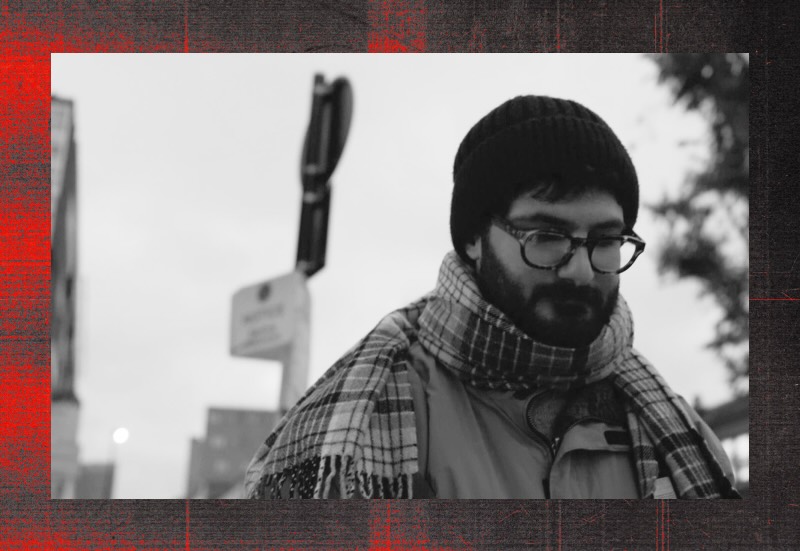
In fact, Armen Aramyan’s only crime was to set up Doxa, a student media for which he covered the 2021 student demonstrations in support of dissident Alexei Navalny. Our BBC colleagues met the journalist who lives between Germany and London where he studies. They told him about the Kremlin’s efforts to track him down. “I need to process the information,” he said. “I don’t think the Russian authorities expect Germany to just send them my address and my phone number and extradite me, but it’s as if getting even some tiny bits of information is valuable to them.” The German Federal Criminal Police (BKA), approached by Disclose, did not wish to comment “for reasons pertaining to data protection”.
Another exchange of emails reveals that the Moscow bureau asked from the Ankara bureau in Turkey, and obtained, detailed information about two of Vladimir Putin’s leading political opponents, Lyubov Sobol, an anti-corruption activist close to the late Navalny, and Gleb Karakulov, a former member of the Russian president’s security services. The exchange about Karakulov, who defected after the invasion of Ukraine, took place at a time when Moscow was subject to corrective measures.
Russia still does not seem to be prepared to review its methods, as shown by a memo written in January 2025 by Interpol’s corrective measures department. They mention “flagrant violations” of the organisation’s rules, including “messages about notices and diffusion notices which have already been declared non-compliant,” as well as “messages about persons who have expressed critical views of the Russian authorities and the Russia-Ukraine conflict”.
Investigation and data: Mathieu Martinière, Robert Schmidt and Rémi Labed, with the BBC
Editorial coordination: Mathias Destal, with Ariane Lavrilleux
Fact-checking: Rémi Labed
Editing: Élodie Emery
Photos: Nicolas Serve
Infographics: Éric Delfosse
Cover image: Éric Delfosse, with Nicolas Serve
Translation from French: Béatrice Murail
This investigation is free of charge, thanks to you
Because information is a public good, Disclose offers you all its investigations free of charge, without subscription or advertising. This model is unique in France for an investigative news outlet.
But it’s only possible on one condition: that readers like you support our not-for-profit newsroom. Donations to Disclose are eligible for a 66% tax reduction in France. So a donation of €100 will only cost you €34. Thank you for your support!


On the same topic